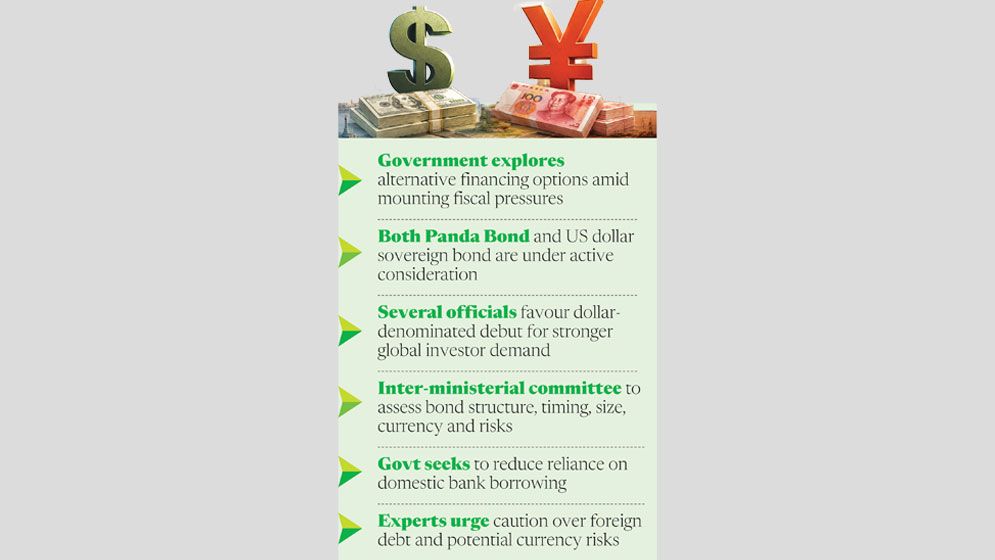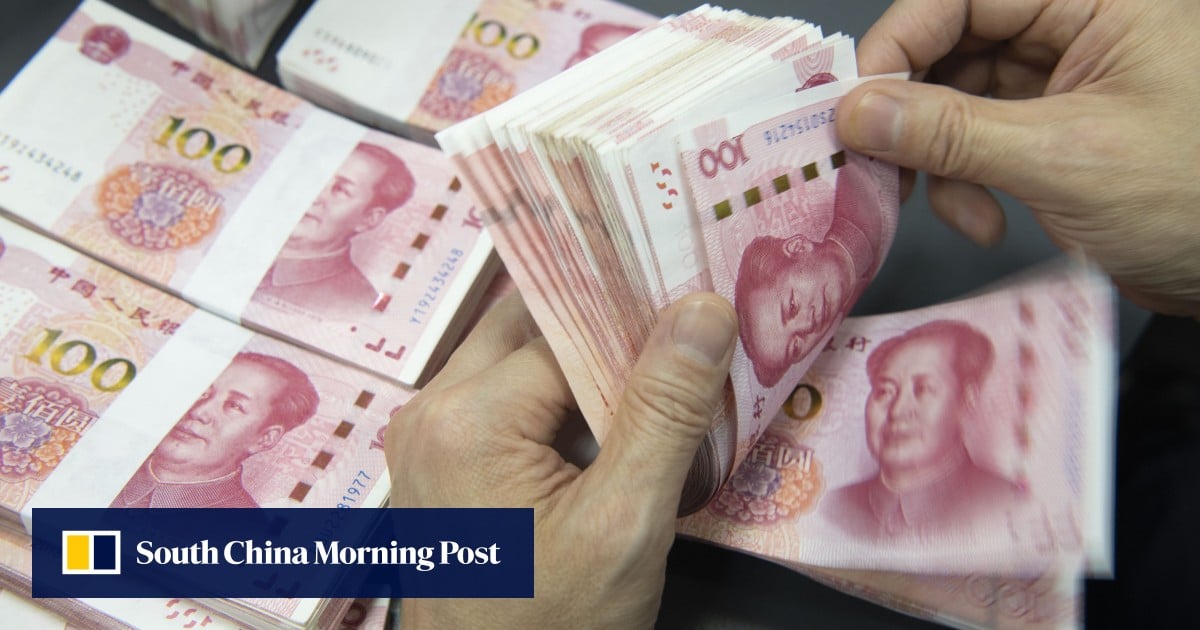
Brazil’s debut in China’s bond market, through an unprecedented sovereign debt issuance in yuan known as panda bonds, is planned for the next two to three months and comes as Beijing seeks to expand the international use of the renminbi, the official name of its currency. The deal will follow similar transactions by Kazakhstan, Slovenia, Hungary, and Pakistan over the past year and will make Brazil the first South American country to enter that market.
Through the issuance, announced last month by Finance Minister Dario Durigan, Brazil will raise funds directly in China’s financial market. Although the amount is relatively modest by Brazilian standards—up to 5 billion yuan, equivalent to about $750 million—the deal carries strong political and symbolic weight.
It broadens Brazil’s financing alternatives at a time of diversification in the global financial system and could open the door for future bond sales by Brazilian companies in China. So far, only Suzano, the world’s largest pulp producer, has carried out such a transaction.
The Ministry of Finance said the results of this inaugural issuance will be used to assess future opportunities in the Chinese market. The ministry added that the funds raised may be brought to Brazil, but that is not mandatory. The decision will depend on the National Treasury’s allocation strategy as part of public-debt management.
Although China is the world’s second-largest economy and its largest trading power, the renminbi still plays a limited role in international finance. According to economist Keyu Jin, author of “The New China Playbook: Beyond Socialism and Capitalism,” the currency accounts for 4% of global payments, compared with 39% for the dollar, 33% for the euro, and 7% for the pound sterling. It represents less than 1% of international bonds issued. In foreign-exchange markets, the renminbi accounts for about 4.3% of total trading volume, compared with 44.2% for the U.S. dollar.
Jin notes, however, that China has been pursuing a “carefully calibrated” strategy to expand the international use of its currency through several channels, including swap agreements with countries around the world, incentives for Chinese and foreign companies to issue renminbi-denominated bonds, and encouragement of alternative payment networks.
For Brazil, the issuance also serves its own public-debt management goals. The transaction is aligned with the National Treasury’s strategy of gradually increasing the share of external debt in its portfolio, broadening the investor base, and diversifying indexers, said Luis Felipe Vital, chief macro and public-debt strategist at Warren Investimentos.
The deal also helps extend the average maturity of debt, since bonds issued abroad have an average maturity of 6.99 years, compared with 3.96 years for securities placed in the domestic market, he said.
According to Vital, the Chinese investor will also be able to buy Brazilian sovereign credit under Chinese law and in the local currency. “Gradually, that same investor may expand its participation in credit and could, at some point, become a relevant player in the domestic market as well,” the strategist said.
The Ministry of Finance also said the issuance should help develop the panda bond market for Brazilian issuers by creating a benchmark for pricing, structure, and documentation in future deals.
“The consolidation of a track record of sovereign renminbi issuances tends to increase Chinese investors’ familiarity with Brazilian risk and national issuers. From there, it will be up to each company to assess the attractiveness of that market based on its financing needs, its presence in China, and prevailing market conditions,” the ministry added.
According to Suzano Chief Financial and Investor Relations Officer Marcos Assumpção, the company’s bond issue in China, where it has an office, was aimed at diversifying funding sources, deepening ties with Chinese investors, and taking advantage of China’s lower interest rates to raise funds at competitive costs.
The company carried out its first issuance in November 2024, raising 1.2 billion renminbi, or about $165 million. After swapping the debt into dollars, the transaction’s annual interest rate was 4.7%, between 40 and 50 basis points below an equivalent issuance in the U.S. market. The deal required a long structuring process, with adjustments to local regulatory and financial requirements as well as relationship-building with Chinese banks and investors.
That experience paved the way for a second issuance in October 2025, totaling 1.4 billion renminbi, with a lower cost, at 2.55%, and a longer maturity. Ten percent of the deal was issued in five-year bonds, while the first issuance had been entirely concentrated in three-year notes. “It is a trend [extending maturities] that we believe will continue,” Assumpção said.
Assumpção noted that the results reflect the credibility Suzano has built in the Chinese market, where long-term relationships are essential. In its latest export prepayment transactions, for example, Chinese banks joined the pool of financial institutions participating in the deal.
Maurício Santoro, a political scientist and researcher at the Brazilian Navy’s Center for Political and Strategic Studies,said that this market is likely to become more relevant in the coming years, both for Brazilian companies and the government itself. He said the Treasury issuance is part of a broader move to diversify international financial assets, with a gradual increase in the use of alternatives to the dollar, such as the renminbi.
“We are seeing some alternatives that did not exist until very recently. The dollar’s leadership, although it remains, is no longer as complete as it had been in the recent past,” Santoro said. “That does not mean the dollar will soon be replaced as a global currency. Far from it. But the Chinese currency is gaining a little more relevance.”
Santoro said this process remains limited because China still maintains controls over capital flows and has a currency that is not fully convertible, reflecting the country’s strategy of preserving greater control over its financial system.
At the same time, he noted that Brazil and China have different interests. For Beijing, reducing dependence on the dollar is a matter of national security because of the risk of U.S. financial sanctions. For Brazil, the goal is to diversify funding sources and expand alternatives for Brazilian companies.
Amid recent tensions with the U.S., closer financial ties with China also signal greater strategic autonomy for Brazil, Santoro said.