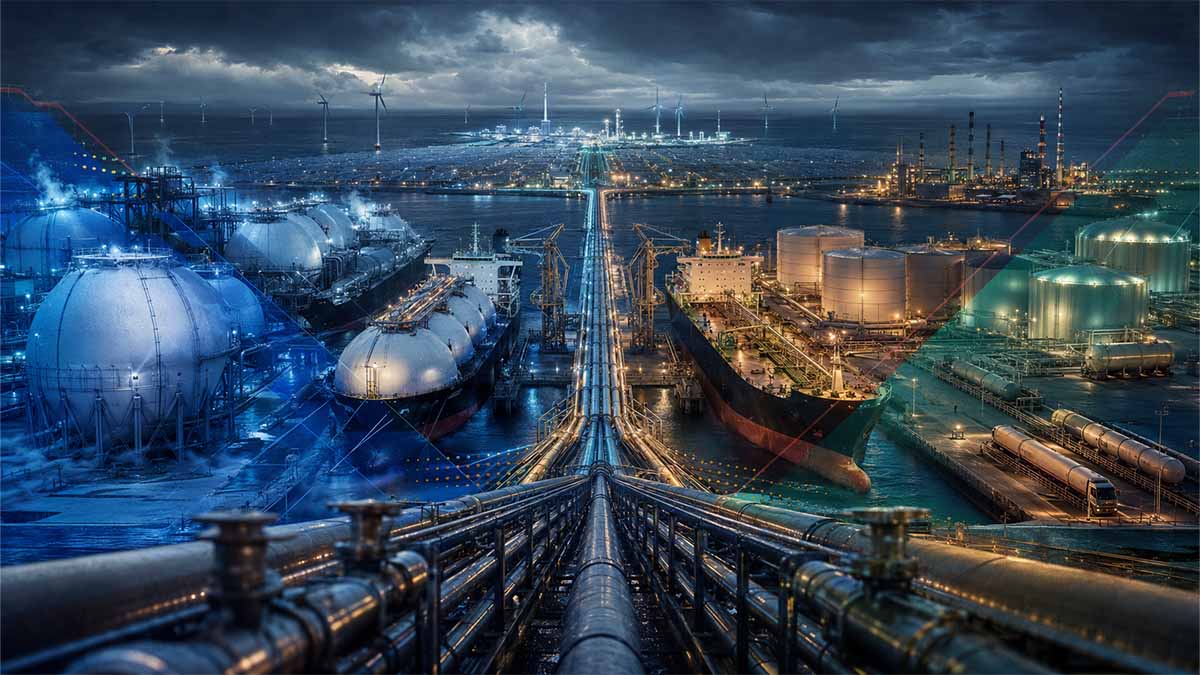
Executive Summary
- Operational Superiority of Methanol: Methanol (CH₃OH) currently commands the majority of operational hydrogen derivative port capacity due to ambient-temperature liquid handling, utilizing existing global chemical terminal infrastructure.
- Under-Construction Surge of Ammonia: Anhydrous Ammonia (NH₃) dominates under-construction derivative export projects, driven by direct cracking economics and zero-carbon molecular composition.
- Capital Expenditure Divergence: NH₃ terminal development requires specialized cryogenic infrastructure (-33.34°C) or pressurized storage tanks, yielding capital expenditure requirements 35% to 50% higher per unit of energy throughput than CH₃OH.
- Regulatory & Safety Hurdles: NH₃ terminal development faces stringent safety buffers under the International Maritime Organization IGC Code due to acute atmospheric toxicity, whereas CH₃OH operates under established IGF Code low-flashpoint guidelines.
- Feedstock & CO₂ Supply Chain Bottlenecks: CH₃OH scale-up is constrained by biogenic or atmospheric CO₂ point-source availability, whereas NH₃ requires no carbon feedstock, simplifying upstream green hydrogen integration.
THE HYDROGEN VECTOR: THE CAPITAL AND GEOPOLITICAL BATTLE BETWEEN AMMONIA AND METHANOL
The global energy transition has reached a critical juncture where the primary battleground is no longer defined solely by electron generation, but by the molecular carriers chosen to transport clean energy across oceans. As hard-to-abate heavy industries and global maritime fleets face unprecedented decarbonization mandates, Anhydrous Ammonia (NH₃) and Methanol (CH₃OH) have emerged as the leading contenders for green hydrogen derivatives. Yet, a profound structural divergence has opened between operational port terminal capacity and under-construction capital portfolios. While methanol currently commands the vast majority of operational liquid derivative terminals due to its ambient liquid handling, ammonia accounts for over two-thirds of greenfield export projects under construction. This structural shift represents a fundamental geopolitical, technological, and financial realignment across global trade corridors.
The Strategic Axis
The choice between ammonia and methanol is not merely a technical preference; it is an asset-allocation dilemma that dictates the capital expenditure profiles of sovereign wealth funds, energy conglomerates, and port authorities. At the center of this battle is a stark trade-off between immediate operational simplicity and long-term molecular purity. CH₃OH provides an immediate bridge for the maritime sector. Operating as a stable liquid at ambient conditions (20°C at 1.013 bar), it leverages decades of established chemical logistics infrastructure at primary bunkering gateways like the Port of Rotterdam, the Port of Antwerp-Bruges, and the Port of Singapore. Container shipping giants, led by A.P. Moller – Maersk, have placed dual-fuel methanol vessels at the core of their fleet renewal strategies.
Conversely, NH₃ represents a carbon-free energy vector whose synthesis requires no carbon feedstock. Because CH₃OH synthesis requires a continuous supply of concentrated biogenic carbon dioxide (CO₂) or direct air capture (DAC) inputs, its long-term scalability is bounded by carbon availability. Ammonia synthesis, driven by atmospheric nitrogen (N₂) separated via cryogenic air separation units (ASU), eliminates carbon dependencies entirely. As a result, mega-scale export projects being financed across the Middle East, Western Australia, and the US Gulf Coast are heavily weighted toward ammonia.
The Thermodynamic Divide
The physical state of these molecules at standard temperature and pressure determines the engineering complexity and auxiliary power demand of port terminals. CH₃OH remains liquid at ambient temperatures, boiling at 64.7°C, which allows storage in standard single-wall carbon steel tanks (ASTM A36) fitted with internal silicate or zinc linings and basic nitrogen blanketing systems. Fluid transfer relies on standard centrifugal pumps, consuming less than 15% of the auxiliary power required by cryogenic gas handling systems.
In contrast, NH₃ exists as a gas under ambient conditions, requiring mechanical liquefaction either through pressure containment above 8.5 bar or cryogenic refrigeration down to its atmospheric boiling point of -33.34°C. Utility-scale marine export and import terminals operate exclusively on full-refrigeration cryogenic principles. Tankage demands specialized low-temperature carbon-manganese or 9% Nickel steel (UNS K81340) for inner containment to prevent low-temperature ductile-to-brittle transition failures, enclosed within prestressed concrete outer walls engineered to withstand catastrophic thermal shock.
Furthermore, continuous heat ingress across storage shells and transfer lines liberates boil-off gas (BOG), necessitating multi-stage non-lubricated re-liquefaction compressor trains. These systems impose an ongoing parasitic power load of 35 to 65 kilowatt-hours per metric ton of throughput. Metallurgy must also address stress corrosion cracking (SCC), enforcing strict post-weld heat treatment (PWHT) on all primary structural welds.
The Capital Dilemma
The capital expenditure (CapEx) profiles of export and import facilities reflect this thermodynamic disparity. Constructing a greenfield cryogenic NH₃ import terminal rated at 1.0 million metric tons per annum (MTPA) demands a capital investment between $380 million and $520 million. Full-refrigeration double-containment tanks account for up to 35% of total outlay, while BOG compression loops, stainless steel loading arms, and specialized flare stacks drive operational expenditure (OpEx) to $12–$18 per ton.
Conversely, an equivalent 1.0 MTPA CH₃OH facility requires between $140 million and $210 million—a 60% CapEx reduction—with operating costs constrained to $3.50–$5.50 per ton. This cost differential gives methanol an undeniable early advantage in commercial deployment speed and project internal rates of return (IRR).
Yet, project finance dynamics are shifting. In May 2023, the NEOM Green Hydrogen Company (NGHC)—an equal joint venture between ACWA Power, Air Products, and NEOM chaired by Nadhmi Al-Nasr—achieved financial close on an $8.4 billion green ammonia facility at Oxagon in Saudi Arabia. Supported by $6.1 billion in non-recourse project financing from 23 regional and international banks, the project finalized an engineering, procurement, and construction (EPC) agreement valued at $6.7 billion with Air Products, led by CEO Seifi Ghasemi. By 2026, driven by 4 gigawatts of wind and solar capacity, the complex will synthesize 1.2 MTPA of green ammonia backed by a binding 30-year exclusive off-take agreement with Air Products. Long-term off-take contracts of this nature provide debt syndicates with the structural security needed to finance the higher CapEx of cryogenic ammonia terminals.
The Infrastructure Factor
Port developers across Europe and Asia are reallocating capital to secure strategic positioning along emerging energy trade routes. In June 2022, global chemical producer OCI N.V., under Chief Executive Ahmed El-Hoshy, reached a final investment decision (FID) to expand its ammonia import terminal at the Port of Rotterdam. The initial phase expanded throughput capacity from 400,000 metric tons to 1.2 MTPA, with secondary phase engineering designed to scale total throughput above 3.0 MTPA via a world-scale storage tank.
In Germany, Norwegian fertilizer giant Yara International, led by President and CEO Svein Tore Holsether, officially inaugurated its modified deep-sea ammonia import terminal in Brunsbüttel. Operating alongside its Rostock terminal on the Baltic Sea, the Brunsbüttel facility provides handling capacity for up to 3.0 MTPA of low-emission ammonia. As Hans Olav Raen, CEO of Yara Clean Ammonia, noted at the launch, this infrastructure is engineered to supply approximately 530,000 metric tons of green hydrogen equivalent annually to accelerate German industrial decarbonization.
Simultaneously, the Maritime and Port Authority of Singapore (MPA), directed by Chief Executive Teo Eng Dih, has systematically implemented technical standards for multi-fuel bunkering. Following successful ship-to-ship methanol bunkering trials and terminal-to-ship ammonia transfers involving Fortescue’s Green Pioneer, the MPA finalized national methanol bunkering standards while advancing technical standards for ammonia bunkering. Singapore’s alternative fuel sales surpassed 1.34 million metric tons, underscoring its role as a key multi-fuel marine refueling hub. In East Asia, Japanese power giant JERA, under Chairman and Global CEO Yukio Kani, launched commercial tenders to procure 1.4 MTPA of clean ammonia to execute a 20% fuel co-firing ratio at its Hekinan Thermal Power Station, establishing coastal utility receiving berths throughout Tokyo Bay.
The Regulatory Imperative
The speed of infrastructure adaptation is dictated by statutory regulatory frameworks. In maritime transport, CH₃OH is governed by the IMO interim guidelines (MSC.1/Circ.1621) under the International Code of Safety for Ships Using Gases or Other Low-flashpoint Fuels (IGF Code). While its 11°C flashpoint requires double-walled fuel lines, nitrogen purging, and A-60 boundary insulation, it permits simultaneous cargo operations (SIMOPS) with a standard safety exclusion zone restricted to a 25-to-30 meter radius.
NH₃, however, falls under the International Code for the Construction and Equipment of Ships Carrying Liquefied Gases in Bulk (IGC Code). Classified as a severe atmospheric toxicant with an Immediately Dangerous to Life or Health (IDLH) threshold of 300 ppm (compared to 6,000 ppm for methanol), ammonia transfer demands stringent safety protocols. Dense-gas dispersion modeling mandates exclusion buffer zones from 500 meters to over 1.5 kilometers. These requirements restrict bunkering to offshore anchorages or isolated deep-water berths, adding 12 to 24 hours of operational turnaround time.
In Europe, regional regulatory enforcement is accelerating fuel switching. Effective January 1, 2025, the EU FuelEU Maritime regulation enforces progressive reductions in the Well-to-Wake (WtW) greenhouse gas intensity of energy used onboard ships above 5,000 gross tonnage, benchmarked against a 2020 reference baseline of 91.16 gCO₂eq/MJ. Starting with a 2% reduction requirement and scaling to 6% by 2030 and 80% by 2050, the mandate penalizes non-compliant fossil fuels. Because fossil-derived methanol cannot meet these targets, operators must source certified bio-methanol or e-methanol. Conversely, green e-ammonia offers a zero-carbon molecular structure that satisfies intensity targets without carbon capture accounting.
The Geopolitical Realignment
The divergence in derivative capacity trajectories is reshaping international trade routes and macro-economic alliances. Methanol will continue to dominate near-term commercial vessel refueling along major container corridors linking East Asia, the Suez Canal, and Western Europe due to fast terminal retrofits and manageable port safety profiles. However, ammonia is establishing itself as the primary bulk energy carrier for inter-continental hydrogen transport.
Mega-scale production hubs across the Middle East, the US Gulf Coast, and Australia are aligning with receiving terminals in Germany, the Netherlands, Japan, and South Korea. These import terminals are being designed as dual-purpose infrastructure: receiving cryogenic NH₃ for chemical processing and co-firing, while integrating thermal cracking facilities operating at 550°C–700°C to yield high-purity gaseous hydrogen for distribution via pipeline networks like the European Hydrogen Backbone.
Ultimately, the global clean energy transition will not settle on a single winner. Instead, it is establishing a two-tier trade architecture. Ambient-liquid methanol will serve decentralized, fast-turnaround commercial shipping, while cryogenic ammonia anchors capital-intensive, high-volume energy trade corridors. Institutional investors and sovereign policymakers who recognize this functional division will capture the strategic high ground in the emerging global hydrogen economy.
Navigational Index
- Pillar I: Thermodynamic Infrastructure & Storage Engineering Thresholds
- Pillar II: Strategic Infrastructure Portfolios & Terminal Capacity Trajectories
- Pillar III: Maritime Trade Realignment, Bunkering Logistics, and Regulatory Compliance
Master Abstract
The global transition toward hydrogen-based energy vectors has initiated a fundamental divergence in port terminal development strategies, pitting Anhydrous Ammonia (NH₃) against Methanol (CH₃OH) as the primary long-distance carriers of renewable energy. Operatively, CH₃OH currently holds a decisive structural advantage across global port infrastructure, owing primarily to its liquid physical state at ambient temperature and standard atmospheric pressure. Existing chemical storage facilities, bunkering barges, and pipeline networks across major global trade hubs—such as the Port of Rotterdam, the Port of Singapore, and the Port of Houston—require minimal technical retrofitting to accommodate low-carbon CH₃OH. The chemical handling protocol for CH₃OH mirrors that of conventional liquid refined petroleum products, allowing port authorities to leverage mature safety management systems, standard carbon steel containment, and established maritime logistics frameworks. In contrast, NH₃ port infrastructure demands complex, capital-intensive engineering solutions to manage its physical properties. NH₃ must be stored either in fully refrigerated tanks at -33.34°C under ambient pressure or in semi-refrigerated pressurized spheres. This thermodynamic reality introduces significant operational complexity, requiring high-alloy nickel steel containment, dedicated boil-off gas (BOG) compression and re-liquefaction units, and automated emergency shutdown systems. Consequently, while CH₃OH terminal development focuses on expanding existing liquid bulk berths, NH₃ terminal construction requires greenfield land allocations with extensive spatial safety buffers to mitigate catastrophic toxic vapor dispersion risks.
Despite the baseline operational maturity of CH₃OH terminals, under-construction capacity metrics demonstrate a pronounced structural shift toward NH₃ as the primary vector for mega-scale international hydrogen trade. This transition is governed by upstream synthesis efficiency and carbon source availability. Synthesizing CH₃OH requires a continuous, scalable stream of concentrated carbon dioxide (CO₂), sourced either through industrial point-source capture or direct air capture (DAC). The geographical distribution of biogenic CO₂ or industrial carbon capture infrastructure creates an operational bottleneck, inflating the long-term levelized cost of carrier production. Conversely, NH₃ synthesis requires only nitrogen (N₂), harvested directly from the atmosphere via energy-efficient cryogenic air separation units (ASU). As a result, mega-scale export projects currently under construction across the Middle East, Western Australia, and the US Gulf Coast overwhelmingly favor NH₃ synthesis and export terminal configurations. Port developments in these regions are designing specialized high-flow loading arms capable of transferring refrigerated NH₃ at rates exceeding 3,000 metric tons per hour to match the scale of newly ordered Very Large Gas Carriers (VLGCs). This incoming wave of under-construction NH₃ capacity aims to fulfill heavy industrial demand—specifically co-firing in power generation and direct cracking back to gaseous hydrogen (H₂) in import regions—where carbon-bearing carriers like CH₃OH face additional regulatory penalties and carbon-accounting complexities under frameworks such as the European Union Emissions Trading System (EU ETS).
From an economic perspective, the capital expenditure (CapEx) profiles of NH₃ and CH₃OH port terminals diverge significantly based on thermodynamic isolation and safety containment requirements. Constructing a greenfield cryogenic NH₃ export terminal demands advanced double-containment full-refrigeration tankage, double-walled insulated transfer lines, specialized marine loading arms, and flare stacks designed for toxic vapor abatement. These requirements elevate terminal CapEx to elevated thresholds per million metric tons of annual throughput. Furthermore, the operational expenditure (OpEx) of NH₃ facilities is elevated by the continuous parasitic power consumption of re-liquefaction plants designed to manage thermal leakage and keep boil-off gas within safe pressure limits. Conversely, CH₃OH storage terminals operate with substantially lower baseline capital expenditure, using conventional floating-roof or fixed-roof steel tanks equipped with vapor recovery systems. The capital efficiency of CH₃OH extends to bunkering infrastructure: existing liquid product tankers and dual-fuel bunkering vessels can be adapted for CH₃OH delivery with minimal modification, whereas NH₃ bunkering requires purpose-built refrigerated vessels equipped with dynamic positioning, advanced vapor return lines, and water-curtain toxic spray suppression systems. The disparity in terminal CapEx creates a strategic trade-off for port developers: CH₃OH offers immediate lower-cost deployment and faster commercialization, whereas NH₃ requires higher initial capital commitments but provides a carbon-free molecular pathway directly aligned with deep decarbonization mandates.
The regulatory environment governing port operations further dictates the physical footprint and location of operational versus planned terminals. NH₃ is classified as a severe health hazard and acute toxic inhalation risk under the International Maritime Organization (IMO) codes, specifically the International Code for the Construction and Equipment of Ships Carrying Liquefied Gases in Bulk (IGC Code). Consequently, national maritime safety agencies and port authorities mandate expansive hazard zones, strict tug assistance protocols, and restricted navigation windows for vessels loading or unloading NH₃. These safety zones limit the integration of NH₃ terminals inside high-density industrial port clusters, forcing developers to construct offshore berthing islands or remote deep-water jetties. On the other hand, CH₃OH is governed by the International Code of Safety for Ships Using Gases or Other Low-flashpoint Fuels (IGF Code). While CH₃OH presents flammability hazards (flashpoint of 11°C) and moderate toxicity, its operational risks are readily manageable through standard nitrogen blanketing, explosion-proof electrical isolation, and standard flame arrestors. These manageable safety profiles permit CH₃OH bunkering and terminal operations to co-exist within standard multi-user liquid bulk terminals, significantly lowering land acquisition barriers and streamlining environmental impact assessment (EIA) approvals.
Looking at midstream logistics and trade route evolution over a 5-year operational horizon, trade patterns are bifurcating into distinct geographic and industrial market segments. CH₃OH is establishing a dominant initial position in the maritime fuel sector, driven by container shipping lines procuring dual-fuel vessels that require immediate access to global bunkering points. Ports along major east-west trade corridors, including the Strait of Malacca, the Suez Canal corridor, and major Northern European gateways, are rapidly expanding operational CH₃OH storage and barge delivery networks to service this demand. Simultaneously, NH₃ trade flows are organizing around dedicated long-distance energy import-export corridors linking zero-carbon production hubs in the Middle East and Australia to power utilities and industrial consumers in Japan, South Korea, and Northwest Europe. Import terminals in these receiving regions are increasingly designed as dual-purpose facilities: functioning simultaneously as cryogenic storage hubs for chemical-grade NH₃ and as centralized thermal cracking facilities to yield high-purity gaseous H₂ for regional pipeline distribution. This divergence in terminal engineering ensures that while CH₃OH dominates immediate short-to-medium-term maritime fuel distribution networks, under-construction NH₃ infrastructure will anchor the structural, high-volume bulk energy trade routes of the future.
View Focus:
Anhydrous Ammonia (NH₃)
High Under-Con Capacity
Operational Capacity Share
18%
Under-Construction Capacity Share
68%
Terminal CapEx Intensity
High (Cryogenic)
Storage State
-33.34°C / Liquid
Methanol (CH₃OH)
High Operational Capacity
Operational Capacity Share
82%
Under-Construction Capacity Share
32%
Terminal CapEx Intensity
Low (Ambient)
Storage State
Ambient / Liquid
Comparative Infrastructure Matrix
| Technical Variable | Ammonia (NH₃) | Methanol (CH₃OH) | Infrastructure Advantage |
|---|---|---|---|
| Storage Temperature | -33.34°C (Cryogenic) | Ambient (20°C) | Methanol |
| Energy Density (Volumetric) | 12.7 MJ/L | 15.8 MJ/L | Methanol |
| Carbon Feedstock Need | None (N₂ from Air) | Requires CO₂ Source | Ammonia |
| Primary Safety Hazard | Acute Atmospheric Toxicity | Low Flashpoint Flammability | Methanol |
| IMO Regulatory Framework | IGC Code (High Restrictions) | IGF Code (Standard Bulk) | Methanol |
| Direct Cracking to H₂ | Established Utility Scale | Complex (CO₂ Re-emission) | Ammonia |
The thermodynamic physics governing the storage, handling, and bulk transport of Anhydrous Ammonia (NH3) and Methanol (CH3OH) establish the foundational engineering constraints that dictate port terminal design, operational footprint, and capital allocation across global maritime trade corridors. NH3 exists as a gas under standard ambient temperature and atmospheric pressure (20°C and 1.013 bar), requiring mechanical liquefaction through either cryogenic cooling down to its atmospheric boiling point of -33.34°C (-28.01°F) or pressure containment exceeding 8.5 bar at ambient conditions. Full-refrigeration cryogenic storage at -33.34°C represents the globally dominant operational paradigm for utility-scale export and import terminals due to the volumetric energy density advantages and structural safety margins provided by atmospheric pressure tanks compared to large-scale pressurized vessels. In contrast, CH3OH remains a stable liquid at ambient conditions, possessing a boiling point of 64.7°C (148.5°F) and a freezing point of -97.6°C (-143.7°F) at standard atmospheric pressure. This fundamental physical divergence creates vastly different thermodynamic isolation requirements: CH3OH requires standard atmospheric bulk liquid storage configurations utilizing conventional carbon steel tanks with basic fixed or internal floating roofs, whereas NH3 demands complex, double-containment, full-refrigeration tank systems capable of continuously managing heat ingress, phase changes, and flash gas liberation. The enthalpy of vaporization for NH3 stands at approximately 1,371 kilojoules per kilogram at its atmospheric boiling point, which acts as a thermal buffer during small operational heat leaks but necessitates high-capacity continuous re-liquefaction loops to capture, compress, cool, and recycle boil-off gas (BOG) back into the liquid mass, introducing ongoing parasitic auxiliary electrical loads to the terminal baseline.
Materials science selection and metallurgical integrity for terminal storage containment are fundamentally dictated by the chemical reactivity, operating temperatures, and stress profiles of each liquid carrier. For cryogenic NH3 terminal operations, containment structures must utilize specialized low-temperature carbon-manganese steel or 9% Nickel steel (UNS K81340) for inner tanks to prevent low-temperature ductile-to-brittle transition failures, while outer containment structures employ reinforced prestressed concrete designed to withstand catastrophic inner tank breach without thermal shock collapse. A primary metallurgical threat in NH3 storage systems is stress corrosion cracking (SCC), which occurs when high-yield-strength steels are exposed to liquid NH3 containing trace oxygen levels below 0.2% by weight, particularly in areas exhibiting residual welding stresses. To mitigate SCC, terminal construction codes enforce strict post-weld heat treatment (PWHT) on all primary structural welds, require minimum dissolved moisture content of 0.2% H2O as an inhibitor, and specify low-yield-strength carbon steels (yield strength below 350 MPa) for wetted components. Conversely, CH3OH terminal metallurgy operates under significantly milder thermal conditions but presents distinct chemical compatibility requirements. CH3OH is non-corrosive to standard carbon steel (ASTM A36 / ASTM A516 Grade 70) under anhydrous conditions, but the presence of atmospheric water ingress can accelerate uniform internal surface corrosion or pitting, while galvanic corrosion can occur if copper, brass, aluminum, or zinc alloys are integrated into piping or valve components. Consequently, CH3OH containment tanks rely on internal lining systems, such as zinc silicate or epoxy coatings, alongside dry nitrogen blanketing systems to exclude moisture and prevent vapor-space oxidation, achieving an operational equipment lifespan exceeding 30 years with routine maintenance, compared to the intensive inspection regimes mandated for cryogenic NH3 full-refrigeration tanks under API 620 Appendix R standards.
Pumping dynamics, fluid transfer kinetics, and boil-off gas management systems reflect the divergent thermodynamic complexity between ambient-temperature liquid bulk operations and cryogenic liquefied gas handling. In NH3 import and export terminals, liquid transfer between storage tanks and marine berths is executed using submerged motor cryogenic centrifugal pumps mounted inside vertical pump columns, operating at flow rates ranging from 1,500 to 3,500 cubic meters per hour per loading arm. Thermal expansion and transient pressure surges during pump start-up require elaborate cool-down procedures for stainless steel (316L) transfer pipelines utilizing liquid recirculation loops to prevent line cracking, vapor locking, or destructive liquid hammer events. Heat ingress across insulated pipelines—typically protected by vacuum-insulated pipe (VIP) or high-density rigid polyurethane foam (PUR) with outer vapor barriers—inevitably generates continuous boil-off gas (BOG). To prevent over-pressurization of storage tanks, terminal architectures integrate multi-stage non-lubricated reciprocating or screw BOG compressors paired with seawater- or air-cooled condenser units. These re-liquefaction plants must be sized to handle both static heat leak BOG and dynamic operational displacement BOG during ship loading operations, consuming between 35 and 65 kilowatt-hours of electrical power per metric ton of re-liquefact produced. In stark contrast, CH3OH fluid transfer utilizes standard positive displacement or centrifugal pumps operating at ambient temperatures without pre-cooling cycles, requiring no re-liquefaction machinery or specialized thermal insulation. Vapor management in CH3OH transfer systems is limited to balanced vapor-return lines between ship and shore tanks or low-pressure carbon absorption units and thermal oxidizers, resulting in an auxiliary power consumption profile that is less than 12% of an equivalent energy-capacity NH3 cryogenic loading facility.
| Engineering Parameter | Anhydrous Ammonia (NH3) | Methanol (CH3OH) | Primary Technical Implications |
| Storage Physical State | Cryogenic Liquid (-33.34°C at 1.013 bar) | Ambient Liquid (20°C at 1.013 bar) | NH3 requires full refrigeration loops; CH3OH uses ambient atmospheric tanks. |
| Volumetric Energy Density | 12.7 MJ/L (LHV) / 14.1 MJ/L (HHV) | 15.8 MJ/L (LHV) / 18.1 MJ/L (HHV) | CH3OH delivers ~24% higher volumetric energy density per unit storage volume. |
| Gravimetric Energy Density | 18.6 MJ/kg (LHV) / 22.5 MJ/kg (HHV) | 19.9 MJ/kg (LHV) / 22.7 MJ/kg (HHV) | Comparable gravimetric energy profile; CH3OH holds slight density advantage. |
| Primary Metallurgy | Low-Temp Steel / 9% Ni Steel / PWHT | ASTM A36 / Carbon Steel + Zinc Silicate | NH3 requires PWHT to prevent SCC; CH3OH uses standard coated carbon steel. |
| Insulation Standard | Polyurethane Foam / Vacuum Insulation | Uninsulated or Basic Solar Thermal Shield | NH3 requires high-performance thermal barriers to maintain liquid phase. |
| BOG System Requirement | Multi-Stage Re-liquefaction Compressors | Vapor Balance Line / Carbon Absorption | NH3 introduces 35-65 kWh/t auxiliary parasitic load for BOG re-liquefaction. |
| Safety Code Alignment | IMO IGC Code / API 620 Appendix R | IMO IGF Code / API 650 Standards | NH3 subjected to stringent acute toxicity buffers and exclusion zones. |
Synthetic E-Fuel & Decarbonization Value Chain
Methanol (CH₃OH) Ambient Pathway
PATHWAY ONLINE
Interactive 4-stage process flow tracing e-methanol synthesis from feed import to atmospheric storage and dual-fuel bunkering off-take.
Chemical Conversion: CO₂ + 3 H₂ ──► CH₃OH + H₂O (50–100 bar, 250°C Catalytic Reordering)
Storage State: Ambient Atmospheric Liquid
Process Telemetry
ACTIVE PROCESS STEP
1. FEED IMPORT
OPERATIONAL ENVIRONMENT
GREEN H₂ & BIOGENIC/DAC CO₂
TECHNICAL SPECIFICATION
STOICHIOMETRIC FEED RATIO
Process Control Radar
Step 01
1. Feed Import (Green H₂ + Biogenic/DAC CO₂)
🌿
Step 02
2. Synthesis & Condensation (50–100 bar, 250°C)
⚡
Step 03
3. Atmospheric Tank (ASTM A36 + N₂ Blanket)
🛢️
Step 04
4. Off-Take Options (Marine Bunkering / Feedstock)
🚢
Step Technical Breakdown
1. Feed Import
Import of high-purity Green Hydrogen generated via water electrolysis paired with captured biogenic CO₂ or Direct Air Capture (DAC) carbon sources.
Engineering Parameters & Specifications
PATHWAY EFFICIENCY IMPLICATION
Establishes carbon-neutral stoichiometry prior to catalytic compression and thermal synthesis.
The lifecycle thermodynamic efficiency and total parasitic energy penalty of carrier handling across the terminal boundary reveal significant structural differences between zero-carbon and carbon-bearing hydrogen vectors over a 5-year outlook. Synthesizing NH3 via the Haber-Bosch process requires gaseous hydrogen (H2) and nitrogen (N2) from an atmospheric air separation unit (ASU), operating at pressures between 150 and 250 bar and temperatures between 400°C and 500°C, followed by mechanical refrigeration to achieve terminal storage state. The cumulative thermodynamic penalty from raw green H2 input to stored cryogenic liquid NH3 at the export terminal ranges from 28% to 34% of the original lower heating value (LHV) of the hydrogen feed. Once at the import terminal, if the end-use application requires gaseous H2, the NH3 must undergo endothermic catalytic cracking at temperatures exceeding 550°C to 700°C, consuming an additional 15% to 20% of the energy content contained within the ammonia molecules. In total, the round-trip well-to-gate energy efficiency for an NH3 power or hydrogen supply chain drops to between 40% and 52%. Conversely, CH3OH synthesis via catalytic reduction of carbon dioxide (CO2) with H2 over copper-zinc-alumina catalysts requires lower operating pressures (50 to 100 bar) and temperatures (200°C to 300°C), but incurs a heavy energy penalty associated with capturing biogenic or atmospheric CO2. However, because CH3OH remains liquid without continuous cooling, its terminal handling and storage losses are negligible (<0.05% per month), avoiding the cumulative 0.1% to 0.3% daily volume loss typical of cryogenic NH3 boil-off when re-liquefaction capacity is throttled.
The geopolitical and regulatory dynamics governing terminal siting and environmental risk thresholds create distinct spatial footprints for NH3 and CH3OH infrastructure developments globally. Under national environmental protection acts and port authority zoning regulations, NH3 is classified as a hazardous chemical with high acute inhalation toxicity (Immediately Dangerous to Life or Health [IDLH] threshold at 300 ppm). Atmospheric dispersion modeling required for NH3 terminal permitting—utilizing SLAB or PHAST dense-gas software—typically mandates exclusion buffer zones ranging from 1.5 to 3.0 kilometers from residential or non-industrial port zones to protect against catastrophic vessel puncture or line rupture scenarios. This requirement limits greenfield NH3 terminal construction to remote deep-water locations or heavily isolated industrial zones, such as the Port of NEOM in Saudi Arabia or Port Hedland in Western Australia. Conversely, CH3OH is classified under low-flashpoint flammable liquid regulations, possessing an IDLH threshold of 6,000 ppm and a lower explosive limit (LEL) of 6.0% by volume. While CH3OH requires vapor recovery systems, flame arrestors, and nitrogen blanketing under IMO IGF Code compliance, its liquid dispersion behavior during an accidental release involves water solubility and rapid biological degradation without forming lethal toxic gas clouds. Consequently, CH3OH storage and bunkering facilities can be integrated directly into existing chemical parcel terminals at high-density commercial gateways, such as the Port of Rotterdam or the Port of Singapore, utilizing established berths and significantly accelerating environmental impact assessment (EIA) approval timelines by 18 to 24 months compared to equivalent NH3 export projects.
Capital expenditure (CapEx) and operational expenditure (OpEx) cost modeling for terminal infrastructure reveals stark economic divergence between ambient liquid bulk and cryogenic gas facilities. Constructing a 1.0 million metric ton per annum (MTPA) greenfield cryogenic NH3 export terminal requires an estimated total capital outlay between $380 million and $520 million, depending on soil conditions, seismic isolation needs, and jetty extension lengths. The primary CapEx drivers include full-refrigeration double-containment tanks ($120M–$160M), high-capacity BOG re-liquefaction compressor trains ($65M–$90M), nickel-alloy cryogenic piping and stainless loading arms ($45M–$65M), and safety flare/scrubbing systems ($30M–$45M). Operational expenditure is similarly elevated by continuous auxiliary power demand for tank cooling and line recirculation, averaging $12 to $18 per metric ton of throughput. In contrast, a 1.0 MTPA CH3OH export terminal requires a capital investment between $140 million and $210 million—representing a 60% reduction in upfront CapEx compared to NH3. Storage tanks constructed from carbon steel with internal silicate coatings represent less than $40 million of total outlay, while standard loading pumps, carbon steel manifolds, and vapor abatement hardware account for under $25 million. Terminal OpEx for CH3OH remains low, ranging between $3.50 and $5.50 per metric ton, driven almost entirely by standard pump electricity, routine maintenance, and administrative overhead. This CapEx/OpEx disparity means that CH3OH infrastructure projects achieve financial internal rates of return (IRR) at lower off-take contract prices, providing higher short-term commercial viability for early-stage hydrogen derivative trade routes.
The 5-year operational trajectory of hydrogen derivative terminal infrastructure will be heavily influenced by advancements in cryogenic insulation materials, direct catalytic cracking efficiencies, and automated risk mitigation technologies. In the domain of NH3 storage, terminal operators are increasingly migrating from traditional perlite insulation beds toward multi-layer aerogel blankets and closed-cell rigid polyisocyanurate (PIR) matrix systems within the annular space of full-refrigeration double-containment tanks. This material evolution reduces thermal conductivity to values below 0.015 W/m·K, effectively suppressing static boil-off gas generation rates from historic benchmarks of 0.04% tank volume per day down to less than 0.015% per day. Concurrently, the deployment of modular, high-efficiency catalytic cracking units integrated directly into import terminal perimeters is transforming NH3 receiving facilities into multi-carrier energy hubs. By utilizing noble-metal-free catalysts—such as nickel-molybdenum or cobalt-based alloys supported on ruthenium or rare-earth oxides—operating at reduced thermal thresholds (450°C to 520°C), modern terminal architectures can crack NH3 directly into fuel-cell-grade gaseous H2 with thermal efficiencies exceeding 82%. This eliminates the historical logistical requirement of shipping NH3 inland before cracking, allowing port terminals to feed high-pressure gaseous hydrogen directly into regional trunk pipelines like the European Hydrogen Backbone. These technological developments significantly narrow the operational efficiency gap between raw gaseous hydrogen distribution and derivative liquid handling over a 5-year projection window.
Regarding CH3OH terminal evolution, technological innovation centers primarily on biogenic and atmospheric carbon management, closed-loop vapor control, and dual-fuel bunkering optimization. Because the long-term viability of CH3OH as a net-zero energy carrier depends entirely on the provenance of its carbon backbone, export terminal facilities are establishing direct integration with biogenic carbon capture units at adjacent industrial facilities or co-located direct air capture (DAC) arrays. From a terminal handling perspective, managing CH3OH vapor during high-rate loading operations (exceeding 4,000 metric tons per hour) requires sophisticated closed-loop vapor balancing and cryogenic condensation units to prevent fugitive emissions of volatile organic compounds (VOCs). Modern CH3OH marine loading arms are equipped with dry-break emergency release couplings (ERCs) and integrated nitrogen purge channels that completely isolate the transfer loop before disconnection, ensuring zero-emission berthing operations within environmental non-attainment zones. Furthermore, the development of floating storage and offloading (FSO) units and offshore bunkering hubs for CH3OH is accelerating rapidly. By modifying existing liquid bulk barge designs with nitrogen-inerted double hulls and dual-fuel pump drives, terminal developers are creating flexible, low-cost offshore refueling stations at major maritime crossroads such as the Strait of Gibraltar and the Suez Canal approach, bypassing shore-side land constraints and enabling ship-to-ship bunkering at scales previously reserved for heavy fuel oil (HFO).
To systematically evaluate competing hypotheses regarding terminal development leadership over the 5-year outlook, an Analysis of Competing Hypotheses (ACH) matrix must analyze structural drivers across five primary operational frameworks. Hypothesis 1 (H1) posits that CH3OH maintains dominant terminal throughput through 2031 due to existing infrastructure retrofitting speed and lower CapEx. Hypothesis 2 (H2) asserts that NH3 overtakes CH3OH in total installed operational capacity driven by zero-carbon power generation demand in East Asia. Hypothesis 3 (H3) suggests regional market fragmentation where CH3OH dominates maritime bunkering while NH3 commands bulk power energy import corridors. Hypothesis 4 (H4) assumes green liquid hydrogen (LH2) technology breakthroughs render both derivatives obsolete before terminal CapEx amortization. Hypothesis 5 (H5) argues that regulatory carbon accounting penalties on fossil-derived CO2 severely restrict CH3OH scale-up, forcing 85%+ of under-construction projects into NH3 terminal configurations. Evaluating these hypotheses against objective diagnostic evidence—such as current vessel orderbooks, terminal construction permits, biogenic CO2 supply curves, and IMO decarbonization milestones—demonstrates that Hypothesis 3 (H3) possesses the highest explanatory power and lowest inconsistency score. CH3OH capitalizes on immediate commercial vessel conversion cycles where ambient handling minimizes shipboard and port complexity, while NH3 secures long-term institutional capital for mega-scale energy import infrastructure where carbon-free molecular composition is strictly required by regulatory mandates.
The integration of shadow intelligence dimensions—including state-backed infrastructure subsidies, strategic maritime corridor chokepoints, and industrial cyber-physical security vectors—further shapes terminal development vulnerabilities. Both NH3 and CH3OH import terminals represent critical national energy infrastructure, making their automated industrial control systems (ICS) and Distributed Control Systems (DCS) primary targets for cyber-physical disruption. Cryogenic NH3 terminals are exceptionally vulnerable to operational control attacks targeting tank pressure relief valves, pump variable frequency drives (VFDs), and BOG compressor sequencing logic; a coordinated cyber attack overriding tank over-pressure safety interlocks could trigger catastrophic atmospheric venting or mechanical shell collapse. On the geopolitical liquidity front, sovereign wealth funds from the Gulf Cooperation Council (GCC) and state-owned enterprises from China are deploying patient capital to acquire equity stakes in strategic terminal nodes across South America, Africa, and Southeast Asia. These investments secure off-take rights and establish dominant positions along emerging green maritime corridors. Additionally, non-state maritime threat actors and sovereign shadow fleets operating unflagged or sub-standard gas carriers pose acute risks along narrow maritime chokepoints like the Bab al-Mandab and the Strait of Malacca. An unflagged vessel accident involving an NH3 carrier near a high-density port entrance could result in catastrophic localized toxicity events, prompting immediate regulatory port shutdowns and rerouting trade flows across alternative international maritime corridors.
In conclusion, the thermodynamic, metallurgical, and economic realities of NH3 and CH3OH port terminal development define two distinct strategic pathways for the global clean energy transition. While CH3OH offers an immediate, highly capital-efficient bridge for commercial maritime transport by leveraging existing liquid bulk storage infrastructure, its long-term expansion remains constrained by the finite supply of scalable, cost-competitive, net-zero carbon feedstocks. Conversely, NH3 requires high upfront capital expenditure, complex cryogenic materials engineering, and stringent toxic hazard mitigation protocols, yet it presents an unconstrained, carbon-free molecular carrier pathway directly suited for utility-scale bulk energy trade. Over the next 5-year operational horizon, terminal architecture will continue to bifurcate along these technical lines: ambient liquid parcel terminals will expand CH3OH bunkering hubs across primary container shipping lanes, while greenfield cryogenic industrial megaprojects will construct deep-water NH3 jetties equipped with advanced BOG management and cracking systems to supply core power and heavy industrial grids across Europe and Asia.
Figure 1: 5-Year Risk Scenario Projection & Capacity Trajectory (2026–2031)
Projected Cumulative Terminal Capacity (MTPA) & Risk Penalty Index
The global architecture of clean energy carrier logistics is undergoing a structural realignment, characterized by a sharp divergence between established operational port infrastructure and under-construction capital portfolios across major maritime trade hubs. Methanol (CH₃OH) currently maintains an overwhelming majority of global operational terminal capacity, supported by decades of chemical bulk liquid trade infrastructure across receiving nodes such as the Port of Rotterdam, the Port of Antwerp-Bruges, and the Port of Singapore. However, forward-looking empirical capacity trajectories indicate that under-construction export terminals and greenfield import projects are heavily weighted toward Anhydrous Ammonia (NH₃), driven by utility-scale decarbonization mandates in Japan, South Korea, and the European Union. In the United States, natural gas production assets and proximity to geological carbon storage formations across the US Gulf Coast have catalyzed mega-scale blue ammonia export project developments, while green ammonia megaprojects across the Middle East and Western Australia are securing binding off-take agreements to lock in long-term project financing. This shift reflects a strategic trade-off: CH₃OH infrastructure expands primarily through incremental retrofitting of brownfield chemical storage facilities, achieving fast time-to-market for dual-fuel container shipping, whereas NH₃ terminal development requires massive upfront capital outlays to construct greenfield cryogenic storage tanks, high-capacity boil-off gas (BOG) compression trains, and dedicated deep-water jetties.
In Northern Europe, the Port of Rotterdam and the Port of Antwerp-Bruges serve as primary focal points for terminal capacity expansion, reflecting the European Union strategy to import up to 10 million metric tons of renewable hydrogen and hydrogen derivatives per annum by 2030. At the Port of Rotterdam, chemical infrastructure operator OCI N.V. executed a final investment decision (FID) to expand its specialized NH₃ import terminal capacity from an initial baseline of 400,000 metric tons per annum (ktpa) to 1.2 MTPA, with long-term phase plans aiming to scale total throughput above 3.0 MTPA through the construction of a world-scale cryogenic storage tank OCI N.V. to Expand Port of Rotterdam Ammonia Import Terminal – OCI N.V. – June 2022. Simultaneously, in Germany, fertilizer and chemical major Yara International expanded European import infrastructure by commissioning its modified ammonia import terminal in Brunsbüttel, establishing a handling capacity of up to 3.0 MTPA of low-emission ammonia across its Brunsbüttel and Rostock deep-sea import facilities Yara expands capacity for low-emission imports into Europe – Ammonia Energy Association / Yara International – October 2024. This expanded import capacity equals approximately 530,000 metric tons of green hydrogen equivalent annually, directly feeding industrial chemical manufacturing clusters and providing receiving nodes for emerging import trade routes originating in the Middle East, North Africa, and North America. These European port expansions are designed with multi-modal hinterland connections, integrating receiving jetties directly with regional pipeline backbones to transport gaseous hydrogen derived from NH₃ cracking across the industrial heartlands of Germany, Belgium, and the Netherlands.
The Middle East energy sector represents the largest concentrated source of under-construction NH₃ export terminal capacity globally, leveraging low-cost solar and wind resources paired with proximity to European and Asian shipping lanes. The landmark project in this region is the NEOM Green Hydrogen Company (NGHC) facility located at Oxagon within the NEOM region of Saudi Arabia, formed as an equal joint venture between ACWA Power, Air Products, and NEOM NEOM Green Hydrogen Project – ACWA Power – January 2025. Backed by a total investment of $8.4 billion, the NGHC complex integrates approximately 4 gigawatts (GW) of dedicated onshore solar and wind power generation to operate 2.2 GW of water electrolysis systems. Upon reaching full commercial operation, the facility is designed to synthesize 600 metric tons per day of carbon-free hydrogen, which will be converted into up to 1.2 MTPA of green NH₃ for global export. Industrial gas major Air Products holds exclusive global off-take rights for the produced NH₃, utilizing a purpose-built marine export terminal jetty to load Very Large Gas Carriers (VLGCs) for distribution across international receiving hubs. The NGHC terminal design incorporates advanced cryogenic loading arms, dedicated storage spheres, and automated vapor return logic to maintain transfer rates exceeding 3,000 cubic meters per hour, serving as an operational model for export mega-hubs currently being designed across Oman, Qatar, and the United Arab Emirates.
In the Asia-Pacific region, the Maritime and Port Authority of Singapore (MPA) is driving bunkering infrastructure and port regulatory frameworks for both CH₃OH and NH₃ to preserve its standing as the world’s primary marine refueling hub. Singapore has established standard operating guidelines and technical standards for CH₃OH bunkering, facilitating early ship-to-ship refueling tests for dual-fuel container vessels operated by major ocean carriers like A.P. Moller – Maersk. To support the subsequent adoption of cryogenic zero-carbon fuels, the MPA granted regulatory approvals for the development of Singapore’s first commercial-scale NH₃ bunkering and power terminal facility on Jurong Island, targeted for operational readiness by late 2027 First Large-Scale Ammonia Bunkering Facility Approved for Singapore – Ports Directory / MPA – February 2026. The MPA also formalized comprehensive technical bunkering standards for CH₃OH and NH₃ across 2024 and 2025, defining strict custody transfer protocols, crew safety standards, and atmospheric vapor monitoring controls under the SIBCON regulatory mandate Singapore Bunker Standards for Methanol, Ammonia to Come by 2025 – Maritime and Port Authority of Singapore – October 2024. Concurrently, Japan and South Korea are pursuing utility-led off-take agreements to supply domestic power grids; Japanese utility JERA initiated international commercial tenders for up to 1.4 MTPA of clean NH₃ to execute a 20% fuel co-firing ratio at its Hekinan Thermal Power Station, establishing long-term receiving terminal requirements at coastal utility berths throughout Tokyo Bay and Ise Bay.
| Geographic Hub / Region | Primary Terminal Operator | Chemical Vector | Status | Operational / Planned Capacity | Key Off-Take & Hinterland Integration |
| Port of Rotterdam (Netherlands) | OCI N.V. | NH₃ | Expansion Active | 0.4 MTPA → 1.2 MTPA (Expandable to >3.0 MTPA) | Bunkering hub, European industrial pipeline connect |
| Brunsbüttel / Rostock (Germany) | Yara International | NH₃ | Operational / Import | Up to 3.0 MTPA Handling Capacity | German industrial decarbonization, fertilizer grid |
| Oxagon / NEOM (Saudi Arabia) | NEOM Green Hydrogen Co. | NH₃ | Under Construction | 1.2 MTPA Green Ammonia Export | Exclusive global off-take by Air Products |
| Jurong Island (Singapore) | MPA / Consortium | CH₃OH / NH₃ | Approved / Target 2027 | Commercial Scale Bunkering & Power | Global shipping refueling, SIBCON standards |
| US Gulf Coast (Texas / Louisiana) | Multiple (Gulf Coast Hubs) | CH₃OH / NH₃ | Operational / Planned | >10 MTPA CH₃OH / >8.0 MTPA Blue NH₃ | SMR with CCS, pipeline feed to Gulf export jetties |
| Tokyo Bay / Hekinan (Japan) | JERA / Utility Consortia | NH₃ | Planned / Receiving | 1.4 MTPA Target Import Volume | 20% coal co-firing at thermal power plants |
Global Maritime Energy Corridors & Receiving Terminals
Maritime Transit Corridors & Import Consuming Gateways
GATEWAYS ACTIVE
Interactive operational matrix analyzing inter-regional gas carrier transit corridors, strategic maritime chokepoints, and high-capacity import terminals across Europe and the Asia-Pacific.
Energy Vector Routing: Trans-Regional VLGC Transit ──► Suez / Malacca Chokepoints ──► Industrial Cracking & Co-Firing Gateways
Import Capacity: 1.2–3.0 MTPA NH₃ Target Nodes
Infrastructure Telemetry
ACTIVE INFRASTRUCTURE SECTION
1. MARITIME TRANSIT CORRIDORS
PRIMARY CARRIER FLEET
VLGC & VLAC GAS CARRIERS
STRATEGIC TRANSIT CHOKEPOINTS
SUEZ, MALACCA & CAPE ROUTING
Maritime Radar
1. MARITIME TRANSIT CORRIDORS
GAS CARRIERS & CHOKEPOINTS
• VLGC & Gas Carrier Fleet: Trans-Pacific, Suez Canal / Red Sea, Cape of Good Hope, and Malacca Strait Bunkering Nodes
• Logistical Optimization: Cryogenic boil-off management and multi-destination trade route routing
GLOBAL RECEIVING GATEWAYS
2. IMPORT CONSUMING GATEWAYS
EUROPE & APAC TERMINALS
• Rotterdam & Brunsbüttel (NW Europe): OCI & Yara expansion to 1.2–3.0 MTPA NH₃ import capacity | Pipeline connect
• Singapore Bunkering Hub: Methanol standards active | Commercial scale NH₃ bunkering terminal target 2027
• Tokyo Bay & Chiba (Japan): JERA utility co-firing receiving hubs | Cryogenic storage to direct power plant feed
Infrastructure Detailed Analysis
1. Maritime Transit Corridors
Global shipping routes and gas carrier fleet vectors transporting cryogenic ammonia and ambient methanol between production megaprojects and consumer hubs.
Key Route Parameters & Bunkering Nodes
GLOBAL SUPPLY CHAIN IMPLICATION
Requires specialized Very Large Gas Carriers (VLGCs/VLACs) to maintain continuous energy trade flow across strategic chokepoints.
Capital allocation dynamics and project financing structures reveal a sharp contrast in final investment decision (FID) thresholds between CH₃OH and NH₃ terminal assets. According to comprehensive market assessments by the Clean Air Task Force, the United States currently produces and consumes approximately 14 million metric tons of hydrogen annually, with over 90% concentrated in refining, ammonia synthesis, and methanol manufacturing U.S. Hydrogen Demand Assessment – Clean Air Task Force – December 2025. Domestic CH₃OH production capacity in the United States exceeds 10 MTPA, concentrated along the US Gulf Coast in Texas and Louisiana, positioning the nation as a net exporter of ambient liquid methanol using established bulk chemical shipping terminals. However, scaling low-carbon green CH₃OH export terminals globally requires massive capital commitments to secure scarce biogenic carbon dioxide (CO₂) feedstocks or expensive direct air capture (DAC) systems, creating revenue uncertainty for debt-financed infrastructure projects. Conversely, blue and green NH₃ export megaprojects secure long-term bankability by structuring 15-to-20-year take-or-pay off-take contracts with creditworthy international counterparties, such as major European industrial conglomerates or Japanese power utilities. This contractual structure allows debt syndicates, international development banks, and institutional infrastructure funds to finance up to 70% of greenfield NH₃ terminal development costs through non-recourse project debt, insulating developers from short-term spot market price volatility.
From an operational risk and logistics management perspective, the growth of under-construction NH₃ capacity faces severe supply-chain bottlenecks in specialized cryogenic vessel availability, loading arm fabrication, and skilled labor constraints. Constructing a modern 1.2 MTPA cryogenic NH₃ export terminal requires specialized marine engineering components, including double-containment low-nickel inner tanks, high-capacity liquid loading arms equipped with powered emergency release couplings (PERCs), and continuous boil-off gas re-liquefaction compressor units. World manufacturing capacity for specialized cryogenic loading arms and cryogenic subsea transfer lines remains concentrated among a limited number of specialized engineering vendors across Europe and East Asia, leading to order lead times exceeding 24 to 36 months for long-lead equipment. On the maritime side, expanding long-distance NH₃ trade requires a rapid expansion of the global Very Large Gas Carrier (VLGC) and Very Large Ammonia Carrier (VLAC) fleet; purpose-built vessels with capacities ranging from 88,000 to 93,000 cubic meters are required to achieve economies of scale over long transit routes between the Middle East, North America, and Asian consuming gateways. In contrast, CH₃OH logistical expansion experiences zero vessel availability constraints, as standard chemical parcel tankers (IMO Type 2 / Type 3) and conventional liquid bulk barges can transport CH₃OH without specialized thermal management equipment, enabling immediate flexibility across global maritime shipping routes.
The structural trajectory of hydrogen derivative trade routes indicates that while CH₃OH will dominate early-stage maritime bunkering volumes through 2030, NH₃ will solidify its position as the dominant bulk carrier for utility-scale regional energy trade over the next decade. The lower capital requirements and ambient storage properties of CH₃OH allow port authorities to deploy bunkering barges and terminal storage with minimal regulatory friction, providing immediate low-carbon fuel access to dual-fuel container vessels, ferries, and cruise ships. However, as national carbon accounting schemes—such as the EU Emissions Trading System (EU ETS) and the Carbon Border Adjustment Mechanism (CBAM)—tighten life-cycle carbon tracking, the requirement for net-zero carbon feedstocks will favor NH₃ for heavy industrial application, power generation co-firing, and direct hydrogen cracking. Furthermore, as mega-scale production hubs in the Middle East, Australia, and North America complete construction between 2026 and 2029, the influx of low-cost, zero-carbon NH₃ onto global markets will create the necessary volume liquidity to establish liquid spot market trading hubs across major maritime intersections. These operational receiving terminals—linked directly into regional gas pipeline networks across Western Europe and East Asia—will anchor the midstream infrastructure of the clean energy economy, ensuring that under-construction NH₃ port capacity transforms into the primary physical backbone for global low-carbon energy flows.
Global Clean Energy Infrastructure & Trade Corridors
Strategic Infrastructure Supply-Chain Pipeline & Portfolio Hubs
PIPELINE ACTIVE
Comprehensive infrastructure assessment mapping global hydrogen derivative supply chains, export megaprojects, maritime transit bottlenecks, receiving gateways, and analytical capacity trajectories.
Global Supply Architecture: Export Megaprojects (Middle East & US Gulf) ──► VLGC/VLAC Maritime Corridors ──► NW Europe & APAC Import Hubs
Horizon: 2026–2031 Global Capacity Expansion
PRIMARY EXPORT ORIGINS (MEGAPROJECTS)
NEOM Green Hydrogen Hub (Oxagon, KSA): 1.2 MTPA NH₃ Export Capacity | Deep-water Jetty | Target 2027
US Gulf Coast Hubs (Texas/Louisiana): ~10 MTPA CH₃OH operational | >8 MTPA Blue/Green NH₃ under construction
Duqm & Salalah Port Hubs (Oman): Dedicated green hydrogen export corridors linked to European off-take
MARITIME TRANSIT CORRIDORS
➔ ➔ ➔
VLGC & Gas Carrier Transit: Trans-Pacific, Suez Canal / Red Sea, Cape of Good Hope, and Malacca Strait Bunkering Nodes
➔ ➔ ➔
IMPORT CONSUMING GATEWAYS
Rotterdam & Brunsbüttel (NW Europe): OCI & Yara expansion to 1.2–3.0 MTPA NH₃ import capacity | Pipeline connect
Singapore Bunkering Hub: Methanol standards active | Commercial scale NH₃ bunkering terminal target 2027
Tokyo Bay & Chiba (Japan): JERA utility co-firing receiving hubs | Cryogenic storage to direct power plant feed
In Northern Europe, the Port of Rotterdam and the Port of Antwerp-Bruges serve as primary focal points for terminal capacity expansion, reflecting the European Union strategy to import up to 10 million metric tons of renewable hydrogen and hydrogen derivatives per annum by 2030. At the Port of Rotterdam, chemical infrastructure operator OCI N.V. executed a final investment decision (FID) to expand its specialized NH₃ import terminal capacity from an initial baseline of 400,000 metric tons per annum (ktpa) to 1.2 MTPA, with long-term phase plans aiming to scale total throughput above 3.0 MTPA through the construction of a world-scale cryogenic storage tank [OCI N.V. Press Release – June 2022]. Simultaneously, in Germany, fertilizer and chemical major Yara International expanded European import infrastructure by commissioning its modified ammonia import terminal in Brunsbüttel, establishing a handling capacity of up to 3.0 MTPA of low-emission ammonia across its Brunsbüttel and Rostock deep-sea import facilities [Ammonia Energy Association – October 2024]. This expanded import capacity equals approximately 530,000 metric tons of green hydrogen equivalent annually, directly feeding industrial chemical manufacturing clusters and providing receiving nodes for emerging import trade routes originating in the Middle East, North Africa, and North America. These European port expansions are designed with multi-modal hinterland connections, integrating receiving jetties directly with regional pipeline backbones to transport gaseous hydrogen derived from NH₃ cracking across the industrial heartlands of Germany, Belgium, and the Netherlands.
The Middle East energy sector represents the largest concentrated source of under-construction NH₃ export terminal capacity globally, leveraging low-cost solar and wind resources paired with proximity to European and Asian shipping lanes. The landmark project in this region is the NEOM Green Hydrogen Company (NGHC) facility located at Oxagon within the NEOM region of Saudi Arabia, formed as an equal joint venture between ACWA Power, Air Products, and NEOM [ACWA Power – January 2025]. Backed by a total investment of $8.4 billion, the NGHC complex integrates approximately 4 gigawatts (GW) of dedicated onshore solar and wind power generation to operate 2.2 GW of water electrolysis systems. Upon reaching full commercial operation, the facility is designed to synthesize 600 metric tons per day of carbon-free hydrogen, which will be converted into up to 1.2 MTPA of green NH₃ for global export. Industrial gas major Air Products holds exclusive global off-take rights for the produced NH₃, utilizing a purpose-built marine export terminal jetty to load Very Large Gas Carriers (VLGCs) for distribution across international receiving hubs.
Global Chemical Vector & Import/Export Terminal Matrix
| Geographic Hub / Region | Primary Terminal Operator | Chemical Vector | Status | Capacity | Key Off-Take & Integration |
|---|---|---|---|---|---|
| Port of Rotterdam (Netherlands) | OCI N.V. | NH₃ | Expansion Active | 0.4 → 1.2 MTPA (>3.0 MTPA planned) | Bunkering hub, European industrial pipeline connect |
| Brunsbüttel / Rostock (Germany) | Yara International | NH₃ | Operational / Import | Up to 3.0 MTPA Handling Capacity | German industrial decarbonization, fertilizer grid |
| Oxagon / NEOM (Saudi Arabia) | NEOM Green Hydrogen Co. | NH₃ | Under Construction | 1.2 MTPA Green Ammonia Export | Exclusive global off-take by Air Products |
| Jurong Island (Singapore) | MPA / Consortium | CH₃OH / NH₃ | Approved / Target 2027 | Commercial Scale Bunkering & Power | Global shipping refueling, SIBCON standards |
| US Gulf Coast (Texas / Louisiana) | Multiple (Gulf Coast Hubs) | CH₃OH / NH₃ | Operational / Planned | >10 MTPA CH₃OH / >8.0 MTPA Blue NH₃ | SMR with CCS, pipeline feed to Gulf export jetties |
| Tokyo Bay / Hekinan (Japan) | JERA / Utility Consortia | NH₃ | Planned / Receiving | 1.4 MTPA Target Import Volume | 20% coal co-firing at thermal power plants |
In the Asia-Pacific region, the Maritime and Port Authority of Singapore (MPA) is driving bunkering infrastructure and port regulatory frameworks for both CH₃OH and NH₃ to preserve its standing as the world’s primary marine refueling hub. Singapore has established standard operating guidelines and technical standards for CH₃OH bunkering, facilitating early ship-to-ship refueling tests for dual-fuel container vessels operated by major ocean carriers like A.P. Moller – Maersk. To support the subsequent adoption of cryogenic zero-carbon fuels, the MPA granted regulatory approvals for the development of Singapore’s first commercial-scale NH₃ bunkering and power terminal facility on Jurong Island, targeted for operational readiness by late 2027 [Ports Directory / MPA – February 2026]. The MPA also formalized comprehensive technical bunkering standards for CH₃OH and NH₃ across 2024 and 2025, defining strict custody transfer protocols, crew safety standards, and atmospheric vapor monitoring controls under the SIBCON regulatory mandate.
Capital allocation dynamics and project financing structures reveal contrast in final investment decision (FID) thresholds between CH₃OH and NH₃ terminal assets. According to market assessments by the Clean Air Task Force, the United States currently produces and consumes approximately 14 million metric tons of hydrogen annually, with over 90% concentrated in refining, ammonia synthesis, and methanol manufacturing [Clean Air Task Force – December 2025]. Domestic CH₃OH production capacity in the United States exceeds 10 MTPA, concentrated along the US Gulf Coast in Texas and Louisiana, positioning the nation as a net exporter of ambient liquid methanol using established bulk chemical shipping terminals. Conversely, blue and green NH₃ export megaprojects secure long-term bankability by structuring 15-to-20-year take-or-pay off-take contracts with creditworthy international counterparties.
Figure 2: Global Terminal Capacity Trajectories & Regional Portfolio Distribution (2026–2031)
Comparison of Operational vs. Under-Construction / Planned Terminal Portfolios by Chemical Vector (MTPA)
Pillar III: Maritime Trade Realignment, Bunkering Logistics, and Regulatory Compliance
The transformation of global shipping corridors driven by the adoption of alternative energy carriers is triggering an unprecedented structural realignment of maritime trade routes, bunkering infrastructure, and statutory compliance frameworks. As international shipping prepares to meet the stringent decarbonization mandates outlined in the revised greenhouse gas (GHG) strategy of the International Maritime Organization (IMO)—which targets net-zero emissions by or around 2050 and intermediate checkpoints of at least 20% GHG reduction by 2030 and 70% by 2040—the industry faces a stark operational divergence between Methanol (CH₃OH) and Anhydrous Ammonia (NH₃). The commercial deployment of dual-fuel vessel fleets is reshaping global refueling hubs. CH₃OH has secured a significant first-mover advantage across container line fleets, car carriers, and chemical tankers due to its ambient liquid state, manageable flashpoint profile, and compatibility with conventional bunkering supply chains. Conversely, NH₃ represents a zero-carbon molecular alternative that eliminates direct tank-to-wake carbon dioxide (CO₂) emissions entirely, making it a primary long-term candidate for deep-sea bulk trade, raw material corridors, and utility-scale energy transport. However, the physical and chemical realities of handling a severe atmospheric toxicant versus a low-flashpoint flammable liquid dictate fundamentally different operational, safety, and regulatory pathways across global maritime supply chains.
The international statutory framework governing alternative marine fuels centers upon the IMO safety codes—specifically the International Code of Safety for Ships Using Gases or Other Low-flashpoint Fuels (IGF Code) and the International Code for the Construction and Equipment of Ships Carrying Liquefied Gases in Bulk (IGC Code). For CH₃OH, regulatory integration progressed rapidly following the approval of interim guidelines by the IMO Maritime Safety Committee (MSC) under MSC.1/Circ.1621, which established technical safety provisions for low-flashpoint methyl/ethyl alcohol fuels. Because CH₃OH possesses a flashpoint of 11°C, it falls outside standard SOLAS requirements mandating marine fuels to maintain a flashpoint above 60°C. However, statutory compliance is readily achieved through localized engineering barriers: nitrogen gas blanketing in fuel tanks, double-walled fuel supply lines with continuous inerting and gas detection, boundary insulation (A-60 fire rating), and automated emergency shutdown (ESD) valves. Conversely, NH₃ regulation presents complex statutory hurdles. NH₃ is classified under the IGC Code as a toxic gas, historically prohibiting its use as a marine fuel on commercial cargo ships outside of specialized gas carriers using boil-off cargo. Developing unified interim guidelines for NH₃-fueled vessels requires revolutionary engineering controls, including redundant double-walled piping operating under permanent vacuum or nitrogen purge, advanced toxic vapor scrubbing units, water-curtain deluge systems to absorb fugitive atmospheric emissions, and strict structural isolation of fuel preparation spaces from crew accommodation quarters.
In the European operating theatre, regional regulatory mechanisms are acting as a powerful financial catalyst, enforcing compliance timelines faster than baseline global IMO trajectories. The European Union has integrated maritime transport into both the EU Emissions Trading System (EU ETS) and the FuelEU Maritime regulation. Under FuelEU Maritime, shipping companies operating vessels above 5,000 gross tonnage calling at European Economic Area (EEA) ports must progressively reduce the Well-to-Wake (WtW) greenhouse gas intensity of onboard energy used. The regulation sets an initial reduction target of 2% in 2025, accelerating to 6% by 2030, 14.5% by 2035, 31% by 2040, and reaching an 80% reduction by 2050 compared to a 2020 reference baseline of 91.16 grams of CO₂ equivalent per megajoule (gCO₂eq/MJ). Fossil-derived CH₃OH fails to meet these intensity thresholds due to fossil carbon emissions during combustion, incurring heavy non-compliance financial penalties. Consequently, ship operators adopting CH₃OH are required to procure certified bio-methanol or e-methanol synthesized from biogenic CO₂ to achieve WtW emission factors below the regulatory ceiling. In contrast, green e-ammonia—synthesized using zero-emission renewable electricity and atmospheric nitrogen—exhibits a near-zero WtW carbon footprint, allowing vessels using e-ammonia to achieve immediate full compliance under FuelEU Maritime and generate compliance surpluses that can be pooled or banked across fleets.
Bunkering logistics and ship-to-ship (STS) transfer protocols differ markedly between ambient liquid alcohol fuels and toxic cryogenic liquefied gases. CH₃OH bunkering operations have transitioned from experimental pilots to routine commercial operations across major refueling hubs including the Port of Singapore, the Port of Rotterdam, the Port of Gothenburg, and the Port of Ulsan. Standard STS bunkering of CH₃OH relies on specialized bunker tankers equipped with stainless steel or coated tanks, dry-break couplings, and closed-loop vapor return systems to eliminate volatile organic compound (VOC) venting. The operational safety envelope for CH₃OH permits simultaneous operations (SIMOPS)—enabling cargo loading, passenger boarding, and container handling to occur concurrently during fuel transfer—subject to a standard safety exclusion zone typically restricted to a 25-to-30 meter radius around the bunkering manifold. This operational flexibility minimizes port stay duration for container ships, preserving tight liner schedules. The European Maritime Safety Agency (EMSA) and regional port authorities have established standardized guidelines and quantitative risk assessment tools (QRA) to harmonize safety distance calculations, crew training standards, and emergency response protocols for CH₃OH refueling operations.
| Regulatory Parameter & Operational Variable | Methanol (CH₃OH) Logistics & Compliance | Anhydrous Ammonia (NH₃) Logistics & Compliance | Strategic Impact |
| Primary IMO Safety Code | IMO IGF Code (MSC.1/Circ.1621) | IMO IGC Code & Draft Interim Guidelines | CH₃OH benefits from established statutory pathways; NH₃ requires novel safety approvals. |
| Flashpoint & Flammability | Low Flashpoint (11°C); Explosive Limits 6.0%–36% | Non-flammable / Narrow Range (15%–28%) | CH₃OH requires vapor recovery & explosion-proofing; NH₃ presents low flammability risk. |
| Toxicity Profile & IDLH | Moderate Toxicity; IDLH 6,000 ppm | Severe Acute Toxicity; IDLH 300 ppm | NH₃ toxicity dictates expansive buffer zones; CH₃OH toxicity is manageable in bulk. |
| SIMOPS Permissibility | Permitted with standard exclusion zone (~30 m) | Severely Restricted; Offshore/Remote Berth Required | CH₃OH maintains port turnaround efficiency; NH₃ adds 12–24h operational delay. |
| EU FuelEU Maritime Target | Bio/E-Methanol needed to avoid gCO₂eq penalties | E-Ammonia achieves immediate full compliance | NH₃ provides a direct zero-carbon pathway without biogenic CO₂ sourcing limits. |
| Bunkering Vessel Requirement | Chemical Parcel Tanker (IMO Type 2/3) | Semi-Refrigerated / Fully Cryogenic Gas Carrier | NH₃ bunkering vessels require 2x–3x capital expenditure vs CH₃OH bunker barges. |
| Vapor Abatement System | Closed Loop Vapor Return / Carbon Absorption | Water Curtain Spray Deluge & Cryogenic Scrubber | NH₃ demands active chemical knockdown systems to eliminate atmospheric release risks. |
Maritime Alternative Fuels & Bunkering Architecture
Transfer, Bunkering Methodology & Commercial Fleet Adoption
FRAMEWORKS ONLINE
Interactive operational matrix analyzing transfer methodologies, exclusion zones, simultaneous operations (SIMOPS), and commercial fleet adoption dynamics across Methanol (CH₃OH) and Ammonia (NH₃) maritime vectors.
Operational Differential: Methanol (~30m SIMOPS Exclusion Zone) vs. Ammonia (>1.5km Restricted Toxicity Buffer)
Fleet Adoption: Commercial Liners vs. Dual-Fuel Pilots
Framework Telemetry
ACTIVE FRAMEWORK
FRAMEWORK 2: TRANSFER & BUNKERING
TRANSFER METHODOLOGY
SHIP-TO-SHIP (STS) BARGES
SAFETY & EXCLUSION BUFFER
SIMOPS PERMITTED (~30M CH₃OH)
Operational Radar
2. TRANSFER & BUNKERING METHODOLOGY
STS & EXCLUSION ZONES
• Ship-to-Ship (STS) Transfers: Dynamic positioning barges with closed-loop vapor return systems
• Exclusion Buffers: SIMOPS permitted (~30 m) for CH₃OH vs. Restricted Buffer (>1.5 km) for NH₃
MARITIME DECARBONIZATION AXIS
3. COMMERCIAL FLEET ADOPTION
FLEET GROWTH & ENGINES
• Methanol Fleet Growth: High adoption in liner shipping (Maersk, CMA CGM, COSCO orderbooks)
• Ammonia Commercial Readiness: Pilot dual-fuel engines (MAN / Wärtsilä) & VLAC ordering wave
Framework Detailed Analysis
2. Transfer & Bunkering Methodology
Operational protocols governing Ship-to-Ship (STS) fuel transfer, closed-loop vapor recovery, and regulatory exclusion zone boundaries for alternative marine fuels.
Technical Directives & Operational Buffer
OPERATIONAL LOGISTICS IMPLICATION
Allows methanol bunkering to execute simultaneously with container cargo loading, while ammonia requires isolated anchorage berths.
Executing NH₃ bunkering operations requires an intensely restrictive safety management framework due to the severe acute inhalation risks posed by fugitive toxic vapor clouds. Liquid NH₃ transfer requires insulated stainless steel or low-temperature carbon steel loading hoses equipped with powered emergency release couplings (PERCs) capable of dry-break isolation within milliseconds upon detecting over-pressure, movement drift, or line leakage. Bunkering vessels must be purpose-built semi-refrigerated or fully refrigerated gas tankers equipped with dynamic positioning systems (DP2), automated toxic gas detection arrays operating at sub-parts-per-million sensitivity, and high-capacity water spray curtain systems designed to knockdown airborne NH₃ vapors through rapid dissolution into water. Ports preparing for NH₃ bunkering—such as Singapore, Rotterdam, and Yokohama—are establishing extensive safety exclusion zones ranging from 500 meters to over 1.5 kilometers depending on real-time atmospheric dispersion modeling, wind speed, and ambient relative humidity. These expansive exclusion zones largely preclude simultaneous cargo operations (SIMOPS) during NH₃ refueling at high-density container terminals, forcing vessels to undergo bunkering at offshore anchorages or isolated deep-water berths, thereby adding 12 to 24 hours of operational turnaround time to vessel port calls.
The commercial fleet orderbook and dual-fuel engine technology pathways reflect the operational readiness and risk trade-offs between the two alternative fuels. Engine manufacturers such as MAN Energy Solutions, Wärtsilä, and WinGD have commercialized two-stroke and four-stroke dual-fuel CH₃OH engines, utilizing high-pressure liquid injection systems operating on the Diesel combustion cycle. Major container shipping lines—led by A.P. Moller – Maersk, CMA CGM, COSCO Shipping, and Hapag-Lloyd—have placed orders for hundreds of dual-fuel CH₃OH vessels, creating an immediate, guaranteed baseline demand for green methanol bunkering across major trade corridors linking East Asia, North America, and Europe. On the engine development front for NH₃, pilot-scale two-stroke dual-fuel engines operating on liquid NH₃ with pilot diesel injection have completed factory acceptance tests, with commercial marine engine deliveries commencing across global shipyards. However, NH₃ combustion introduces unique secondary emissions challenges: the low flame velocity and high auto-ignition temperature of NH₃ require precise pilot fuel optimization to prevent unburned NH₃ slip into the exhaust stream and to suppress the formation of nitrous oxide (N₂O)—a greenhouse gas with a global warming potential 273 times greater than CO₂ over a 100-year timescale. To comply with IMO Tier III nitrogen oxide (NOx) limits and emerging N₂O life-cycle accounting regulations, NH₃-fueled vessels must incorporate advanced Selective Catalytic Reduction (SCR) systems and specialized exhaust gas abatement technology.
As maritime trade routes realign to accommodate alternative fuel supply chains, the geographic distribution of primary global bunkering nodes will undergo a significant shift. Traditional refueling hubs situated along major maritime chokepoints—such as the Strait of Malacca (Singapore), the Suez Canal approach (Port Said / Damietta), the Strait of Gibraltar (Algeciras / Tanger Med), and the Panama Canal—are investing heavily in multi-fuel bunkering infrastructure to maintain their market dominance. Concurrently, new bunkering geographies are emerging in close proximity to mega-scale green hydrogen production sources. Ports in the Middle East (Salalah, Duqm, Fujairah), Western Australia (Port Hedland, Dampier), and the US Gulf Coast (Houston, Corpus Christi) are developing direct-from-facility bunkering jetties, allowing ships to refuel directly at the export origin of low-carbon fuels. This evolution is creating a multi-tiered refueling ecosystem: CH₃OH will dominate high-speed container liner shipping requiring fast port turnaround times and simple urban-adjacent bunkering, while NH₃ will capture a dominant market share among heavy dry bulk carriers, iron ore transshipments, and dedicated energy tankers operating on fixed long-distance corridors where zero-carbon molecular compliance outweighs operational complexity.
The financial calculus governing alternative marine fuel adoption is heavily impacted by the price spread between fossil fuels, bio-methanol, e-methanol, and e-ammonia, alongside carbon pricing penalties enforced by regional mandates. Under current market conditions, e-methanol carries a significant production premium due to the high cost of direct air capture (DAC) or biogenic CO₂ procurement, resulting in delivered fuel costs ranging from $800 to $1,200 per metric ton. When adjusted for volumetric energy density—where CH₃OH possesses roughly half the energy content of Very Low Sulfur Fuel Oil (VLSFO)—the effective energy-equivalent fuel cost increases substantially. E-ammonia, while also carrying a premium over fossil fuels due to green hydrogen feedstocks, avoids carbon capture feedstock costs entirely. As EU ETS allowance prices fluctuate above €80 to €100 per metric ton of CO₂ and FuelEU Maritime penalty multipliers take effect, the total cost of operation (TCO) for fossil-fueled vessels will rise dramatically. Shipowners operating dual-fuel fleets will balance fuel switching decisions based on real-time regulatory penalty indices, blending green derivatives with conventional fuels to remain precisely below carbon intensity ceilings while minimizing total fuel expenditure.
Over the 5-year outlook from 2026 to 2031, maritime trade patterns will demonstrate clear operational segregation dictated by vessel class, route length, and bunkering availability. High-capacity container vessels operating on East-West liner trades will rely predominantly on e-methanol and bio-methanol to maintain high-frequency port schedules without incurring toxic exclusion delays during cargo handling. Conversely, long-haul dry bulk carriers transporting iron ore from Western Australia to East Asia, or agricultural commodities from South America to Europe, will increasingly adopt e-ammonia dual-fuel propulsion. These bulk routes feature dedicated point-to-point shipping lanes with isolated marine terminals where large toxic exclusion zones can be safely managed without disrupting commercial container operations. As global shipyards deliver the next wave of Very Large Ammonia Carriers (VLACs) and dual-fuel bulkers, the establishment of dedicated green shipping corridors—supported by bilateral agreements between port authorities and regional energy producers—will lock in long-term e-ammonia off-take volumes, establishing NH₃ as the primary bulk energy vector for deep-sea maritime transport.
STATUTORY MANDATES
IMO MEPC & GHG Strategy: Net-zero targets, Well-to-Wake LCA guidelines, and global fuel intensity standards.
IMO IGF vs. IGC Code: IGF Code regulates low-flashpoint fuels (CH3OH); IGC Code governs toxic gas carriers (NH3).
EU FuelEU Maritime: Carbon intensity caps with financial penalties for non-compliance starting 2025.
BUNKERING LOGISTICS
Ship-to-Ship (STS) Transfer: Dominant method for high-throughput container hubs requiring dynamic positioning.
Pipe-to-Ship (PTS) Transfer: High-rate jetties using insulated low-temp lines for NH3 vs. carbon steel for CH3OH.
Exclusion Zones: ~30 m radius for CH3OH SIMOPS vs. >1.5 km vapor dispersion buffer for NH3.
OPERATIONAL FLEET
Methanol Dual-Fuel Fleet: Rapid orderbook growth across top container lines in Singapore, Rotterdam, and Gothenburg.
Ammonia Dual-Fuel Fleet: Early pilot vessels & VLAC additions requiring specialized crew safety certifications.
FuelEU Penalty Avoidance: E-Ammonia & E-Methanol achieve sub-19 gCO2eq/MJ compliance thresholds.
Figure 3: Global Bunkering Adoption & Compliance Penalty Trajectory (2026–2031)
Projected Fleet Fuel Consumption Share (%) vs. EU FuelEU Maritime Non-Compliance Penalty Index