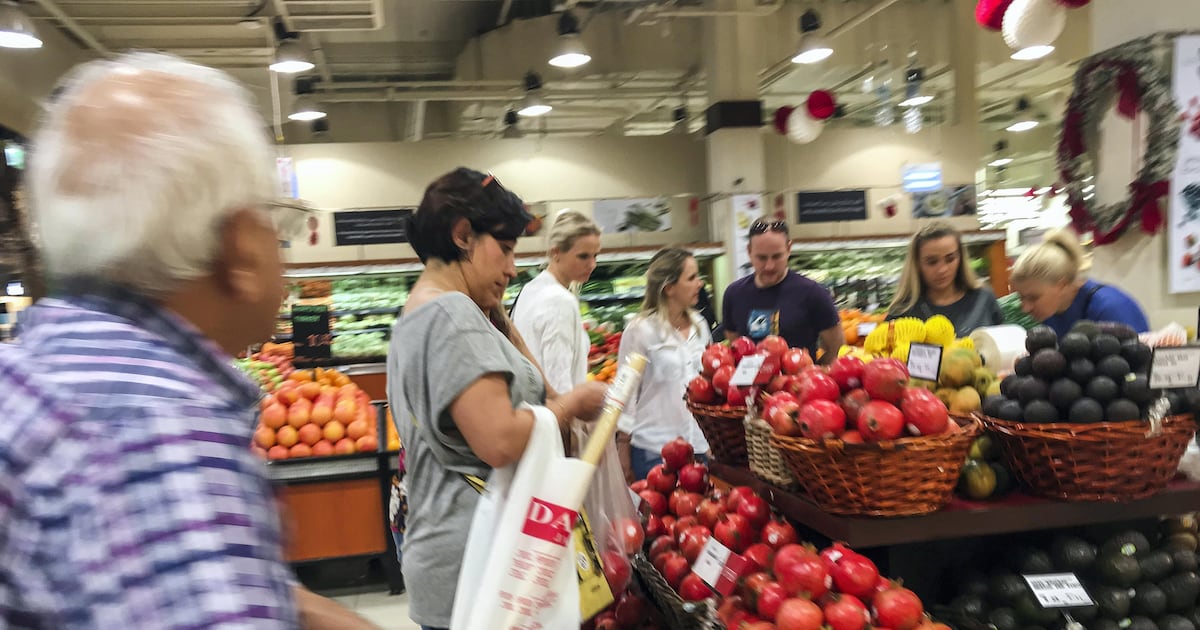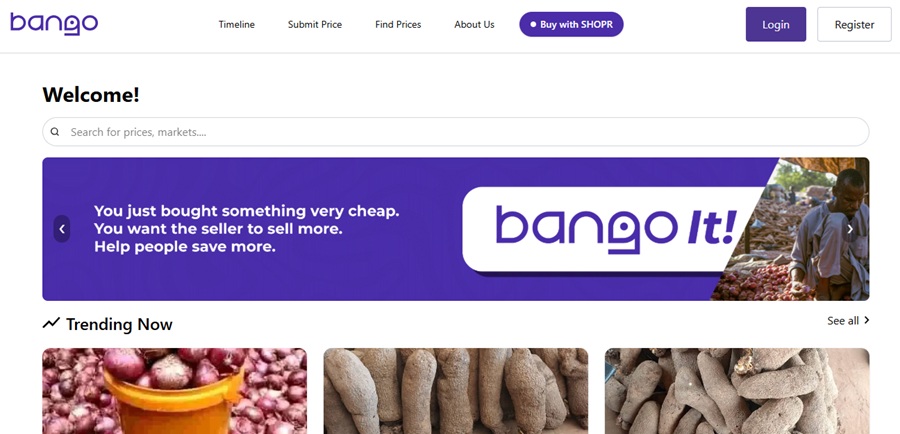
Nigerian startup Bango has developed a community-driven price intelligence platform for food commodities in Nigeria, which allows shoppers to see prices for different items at different markets.
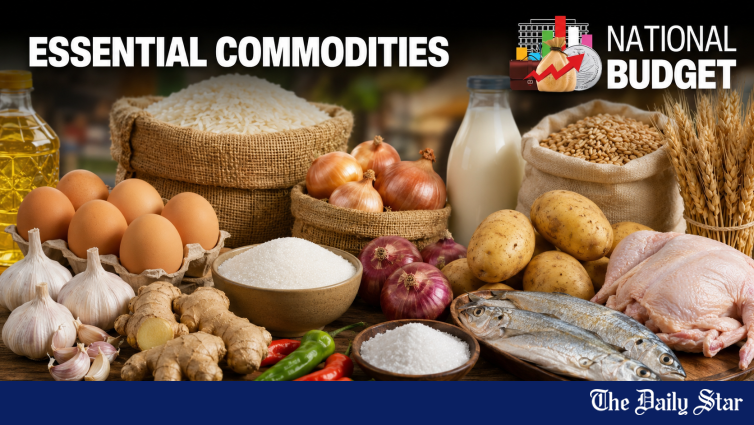
Using Bango, buyers submit what they paid for something, where they bought it, who they bought it from, the quantity, and a photo, building a searchable feed so anyone can see a range of prices for a commodity tied to a specific market before they go and buy it themselves.
On top of that, the startup has built a commerce layer called Shopr by Bango.
“Once people could see where things were cheaper, the obvious next question was how to actually get it at that price, so Shopr lets users buy commodities directly through us, sourced from a network of farmers, with shared delivery to keep costs down,” Bango co-founder Caleb Adenegan told Disrupt Africa.
The idea for Bango, he said, came up during the 2024 Sallah period, the festive celebrations of Eid al-Fitr and Eid al-Kabir. Fellow co-founder Ademuyiwa Taofeek was buying tomatoes and peppers in Lagos, and noticed the prices were too expensive.
“When he asked why, he was told it was the logistics cost of moving produce down from the north. He tested that himself, sourced the same commodities from Jos, paid to transport them to Lagos, and still spent way less than half the price he would have paid locally,” Adenegan said.
“That told him the real issue wasn’t logistics, it was that people simply don’t have visibility into what things cost outside their own market.”
Together, Taofeek and Adenegan worked on a solution to this problem, and launched Bango in November 2025.
“There are no fixed prices in Nigerian commodity markets. Walk a few stalls down and the same basket of tomatoes can be quoted differently, and the basket itself might not hold the same quantity,” Adenegan said.
“That used to be manageable because people shared information with each other, neighbours telling neighbours where they got something cheaper. That system has broken down, and it leaves sellers free to quote whatever they want because buyers don’t have another source of truth.”
Bango provides that truth, and then providers customers with a way of buying food. In this regard, it competes with Chowdeck, Mano, GoLemon, and other quick commerce grocery platforms.
“The difference is we don’t start with selling. We start with information. Most of those platforms go straight to “here’s a product, buy it”. We help people see where something is cheapest first, then build the way to access it,” said Adenegan.
Bango had gained 1,000 users in its first month, and now has about 2,500. Shopr, launched last month, has already processed over 60 orders. For now, the bootstrapped startup is only active in Abuja, but Adenegan said the startup plans to expand operations and is exploring partnerships across the agricultural value chain.
“The core price intelligence product isn’t limited the same way, since it addresses Nigeria’s food market broadly, which is projected to reach close to US$98.97 billion by 2033, with food already accounting for over half of household spending in the country,” he said.
Shopr charges a service fee and a delivery fee on every order.
“We’re also building Bango Market Day, a waitlist based system for bulk collective buying where we aggregate demand and coordinate supply through our farmer network. That will run on the same fee structure as Shopr, plus an additional waitlist fee for reserving a spot ahead of each round,” Adenegan said.
“Longer-term, we want to introduce a subscription tier bundling benefits across our products.”