Kimco Realty stock represents exposure to one of the largest publicly listed owners and operators of open-air, grocery-anchored shopping centers in North America, with Kimco Realty Corporation (ISIN US49446R1095) structured as a real estate investment trust listed on the New York Stock Exchange. The company reports recurring metrics such as funds from operations, net income, and occupancy to give investors a view of cash-generating capacity across its retail-focused portfolio.
Funds from operations drive Kimco Realty
As a real estate investment trust, Kimco Realty Corporation emphasizes funds from operations as a core performance indicator because it adjusts accounting net income for non-cash items such as property depreciation. This REIT structure allows Kimco Realty to pass through rental income from a large base of tenants as dividends, subject to maintaining sufficient cash to reinvest in property improvements and new developments. By focusing on open-air, grocery-anchored assets, Kimco Realty positions its portfolio in segments of retail real estate that tend to benefit from consistent foot traffic driven by everyday consumer necessities.
Management reports funds from operations on both a total and per-share basis for each quarter and full fiscal year, reflecting rents collected, operating expenses, interest costs, and other income items. Over time, investors often compare Kimco Realty funds from operations against previous periods to evaluate whether leasing efforts, rent escalations, and property dispositions are strengthening or weakening recurring cash generation. Because the company owns a diversified set of centers across multiple U.S. states, funds from operations also integrate regional performance across different local economies, consumer spending levels, and competitive retail dynamics.
Portfolio scale and tenant diversification
Kimco Realty Corporation highlights its portfolio scale as a strategic advantage, with hundreds of shopping centers spread across major metropolitan and suburban areas. A broad footprint allows Kimco Realty to work with national, regional, and local retailers, including grocers, discount stores, specialty merchants, and service providers, thereby reducing reliance on any single tenant or geographic market. For investors, portfolio size and diversification help mitigate the risk that localized economic weakness or tenant distress could materially disrupt total rental revenues.
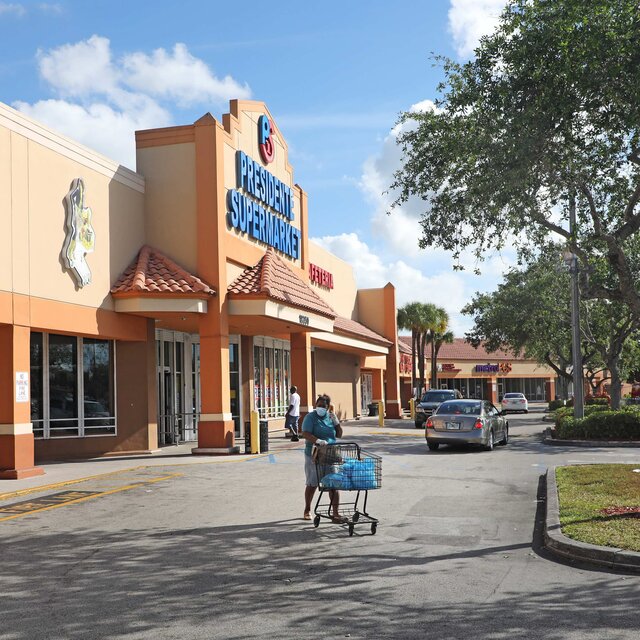
The company describes its centers as primarily grocery-anchored, meaning that a supermarket or similar essential retailer serves as a key tenant driving regular customer visits. This grocery focus tends to support relatively resilient rental demand compared with more discretionary retail segments, as consumers continue to purchase food and household items even during economic slowdowns. Kimco Realty supplements grocery anchors with complementary tenants such as pharmacies, fitness centers, quick-service restaurants, and personal services, creating multi-purpose destinations that generate cross-traffic between stores.
Kimco Realty operating metrics and occupancy trends
Kimco Realty Corporation regularly reports operating metrics such as occupancy rates, leasing spreads, and same-property net operating income growth to illustrate how effectively its centers are leased and how rents evolve over time. High occupancy levels across the portfolio signal that tenant demand for space remains solid, while positive leasing spreads indicate that new leases or renewals are being signed at rental rates above expiring leases. Same-property net operating income trends further show whether existing centers are generating increasing or decreasing income after accounting for changes in rent, recoveries, and operating expenses.
Investors use these metrics to compare Kimco Realty performance with broader retail real estate benchmarks and with other REITs focused on shopping centers. Sustained occupancy near full capacity suggests that Kimco Realty continues to attract and retain tenants, while stable or rising same-property net operating income demonstrates that the portfolio is managing inflationary cost pressures and competitive dynamics. Over multi-year periods, these operating statistics also help investors understand how modernization initiatives, redevelopment projects, and selective dispositions influence the overall quality and cash-generating capability of the asset base.
Balance sheet, leverage, and capital allocation
Kimco Realty Corporation publishes balance sheet metrics that show how much debt the company carries relative to total assets and equity, as well as how debt maturities are scheduled over future years. As a REIT, Kimco Realty typically relies on a mix of unsecured bonds, mortgage debt, and credit facilities to finance property acquisitions, redevelopment, and general corporate needs, while also preserving access to liquidity for potential opportunities. Investors monitor leverage ratios such as debt to total capitalization or debt to earnings-based metrics to evaluate whether Kimco Realty maintains a conservative capital structure compatible with the cyclicality of retail real estate.
Capital allocation decisions at Kimco Realty reflect a balance between reinvestment in existing centers, selective new development, opportunistic acquisitions, and dividend payments to shareholders. Because U.S. REIT regulations require the distribution of a substantial portion of taxable income as dividends, Kimco Realty aims to align its payout policy with recurring funds from operations while leaving room to maintain property quality and pursue growth. Over time, changes in leverage, interest costs, and refinancing terms also affect net income and funds from operations, influencing how much cash can be returned to investors versus reinvested in the portfolio.
Dividend framework for Kimco Realty shareholders
Kimco Realty Corporation pays regular cash dividends to shareholders as part of its REIT status, which is designed to allow investors to receive a share of rental income generated by the underlying shopping centers. The company typically declares dividends on a quarterly basis, with the board assessing funds from operations, taxable income, balance sheet strength, and longer-term investment needs when determining payout levels. For shareholders, the dividend yield represents an important component of total return, alongside any changes in Kimco Realty stock price over time.
Over multi-year periods, Kimco Realty may adjust dividend levels to reflect evolving market conditions, tenant performance, and capital allocation priorities. For example, during periods of economic expansion and stable tenant demand, the company may increase dividends as recurring cash flows strengthen, whereas during more uncertain environments it could choose to maintain or trim dividend levels to preserve flexibility. The interaction between dividend policy, growth investments, and leverage management forms a central part of how investors evaluate Kimco Realty as a long-term income-oriented holding within the broader real estate sector.
Kimco Realty strategic positioning in retail real estate
Kimco Realty Corporation positions itself within the U.S. retail real estate landscape by focusing predominantly on open-air, grocery-anchored centers, which differ from enclosed regional malls and power centers. This strategy allows the company to concentrate on properties that often have lower construction and operating costs compared with enclosed malls, while benefiting from stable traffic generated by food and everyday essentials. In addition, open-air centers are frequently easier to reconfigure for new tenant formats, such as adding medical offices, fitness concepts, or pickup and drive-through facilities aligned with evolving consumer preferences.
From an investor perspective, Kimco Realty strategic focus on necessity-based retail and adaptable layouts can help moderate volatility across economic cycles relative to more discretionary retail segments. Furthermore, by maintaining a wide geographic footprint encompassing diverse markets, the company can capture growth opportunities arising from population shifts, urban densification, and changing shopping patterns. These features contribute to how Kimco Realty differentiates itself among retail-focused REITs and influences how market participants weigh its valuation against peers.
Representative property and tenant mix
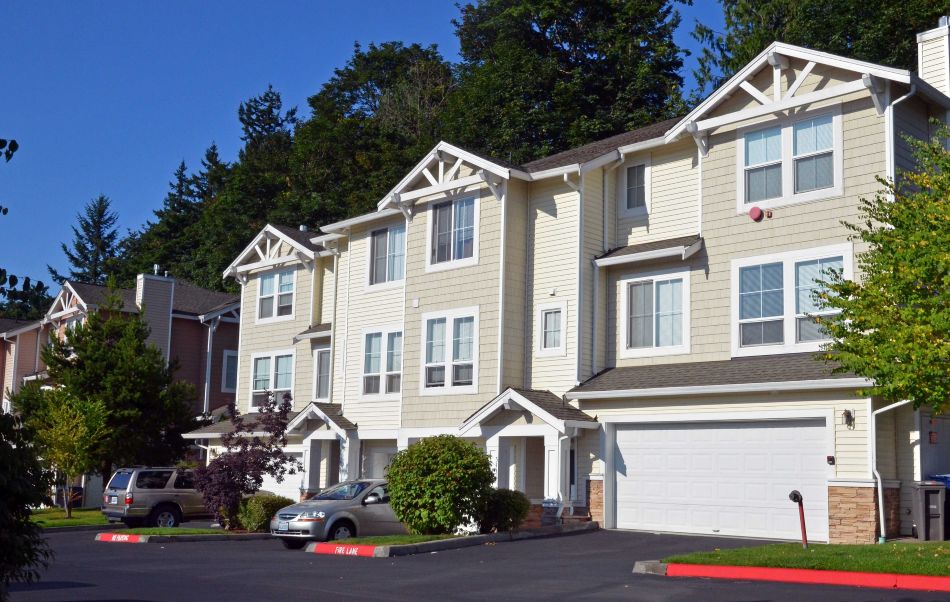
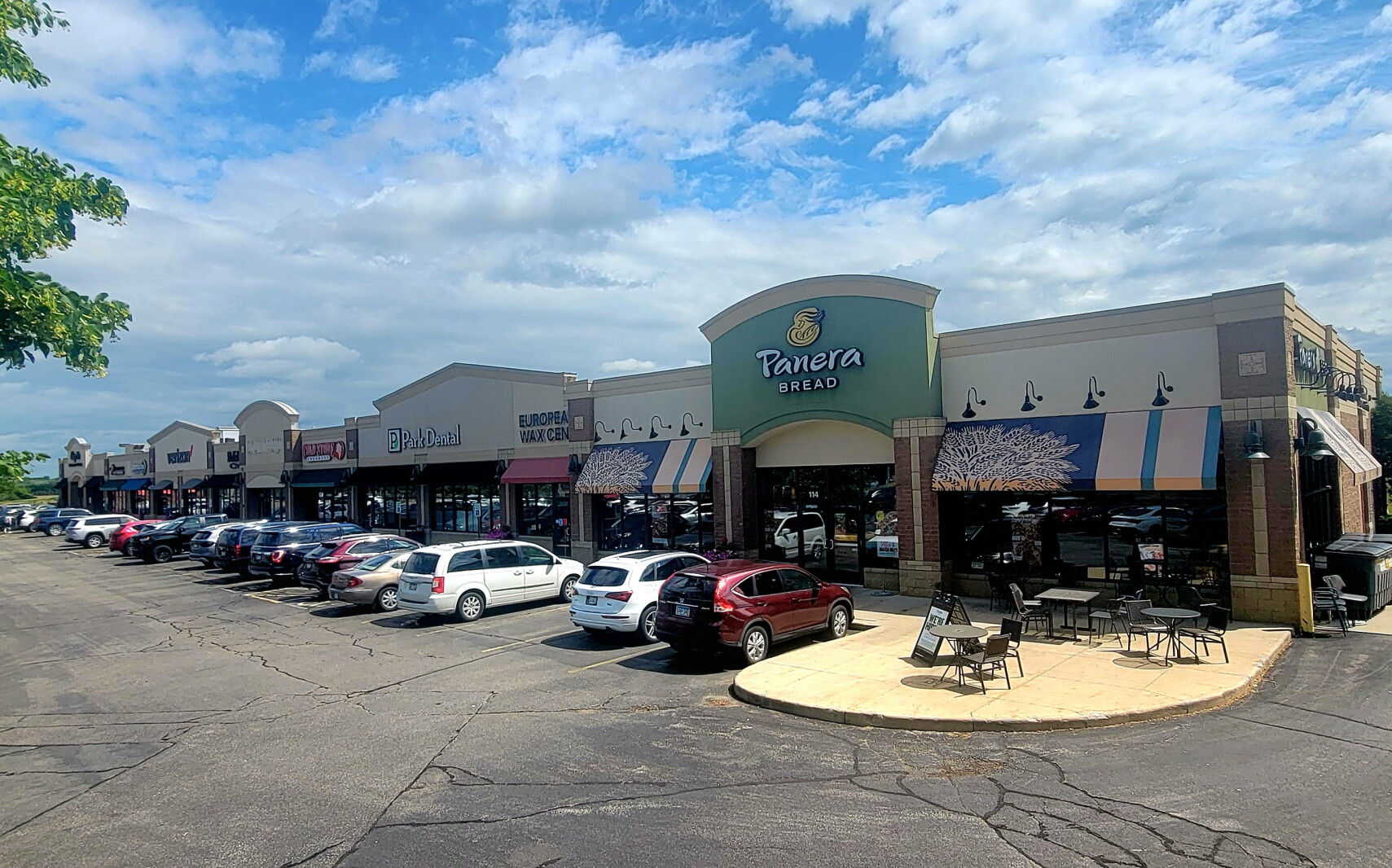
A representative Kimco Realty center typically combines a large grocery anchor with smaller inline spaces leased to complementary tenants. The grocery anchor often occupies a significant portion of the leasable area, providing a steady draw of shoppers from the surrounding neighborhood. Smaller tenants can include quick-service restaurants, coffee shops, apparel stores, health and beauty retailers, local service providers such as dry cleaners, and medical or dental practices. This mix creates a convenient cluster of services and retail offerings that encourages shoppers to visit the center regularly and patronize multiple tenants during each visit.
To support long-term tenant success, Kimco Realty evaluates demographic trends, traffic flows, and competitive landscapes when planning and managing property layouts. The company may choose to re-tenant or redevelop portions of a center to better align with evolving consumer demand, for example by integrating more food and beverage concepts or experiential offerings. By maintaining active asset management, Kimco Realty seeks to keep centers relevant and financially healthy, which in turn supports rental stability and occupancy.
Kimco Realty stock in an income-focused portfolio
Kimco Realty stock is often considered by income-focused investors who seek regular cash distributions from a diversified real estate portfolio. Because the company operates as a REIT, its shares provide exposure to physical assets and tenant relationships while offering a dividend stream that reflects rental income and funds from operations. For investors building diversified portfolios, Kimco Realty can complement holdings in other asset classes such as equities, fixed income, and alternative investments, providing potential benefits related to income generation and long-term asset backing.
When assessing Kimco Realty stock, investors typically analyze a combination of valuation metrics, dividend sustainability, balance sheet strength, and operating performance. Comparable metrics across peer groups of shopping center REITs may include price to funds from operations ratios, dividend yields, and leverage measures. Through such analysis, market participants aim to determine whether Kimco Realty shares trade at discounts or premiums relative to peers and historical ranges, taking into account factors such as geographic exposure, tenant quality, property modernization, and management track record.
Read deeper
More context on Kimco Realty financials
Investors can explore detailed filings and investor presentations to better understand Kimco Realty Corporation leverage profile, funds from operations trends, and dividend framework.
Kimco Realty representative product line
Kimco Realty Corporation does not manufacture or sell traditional consumer products; instead, its core offering is leased space within open-air shopping centers tailored for grocery anchors and complementary tenants. The company effectively provides a real estate platform on which grocery stores, pharmacies, restaurants, gyms, and other retailers can operate. By designing and maintaining centers that meet retailer requirements, Kimco Realty supports tenants in serving local communities, enabling convenient access to food, health products, services, and daily essentials.
Kimco Realty stock and market value context
Kimco Realty stock reflects the market valuation of a REIT whose primary assets are income-generating shopping centers, with the share price capturing investor expectations about future rental streams, property values, and dividend stability. Rather than focusing on short-term movements, many investors consider how Kimco Realty market capitalization compares with the estimated value of its properties and with long-run funds from operations. This perspective emphasizes the REIT role of Kimco Realty stock as a vehicle for accessing real estate-derived income while maintaining liquidity through publicly traded shares.
Kimco Realty key data
- Company: Kimco Realty Corporation
- ISIN: US49446R1095
- Ticker: NYSE: KIM
- Trading venue: NYSE
- Sector / Industry: Real Estate / Retail REITs
- Index membership: S&P 500
Explore Kimco Realty across social platforms
Disclaimer zu unseren Artikeln: Keine Anlageberatung, keine Kauf oder Verkaufsempfehlung. Angaben zu Kursen, Unternehmen und Märkten ohne Gewähr; Änderungen jederzeit möglich. Börsengeschäfte können zu hohen Verlusten führen. Unsere Beiträge werden ganz oder teilweise automatisiert mit Unterstützung von AI erstellt und geprüft.