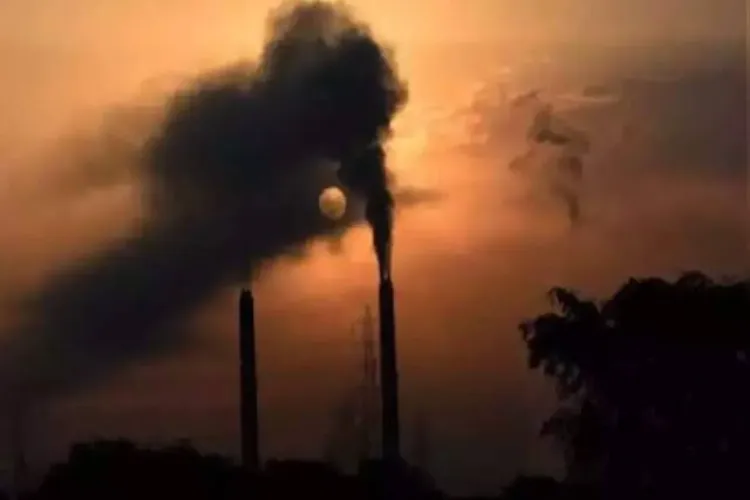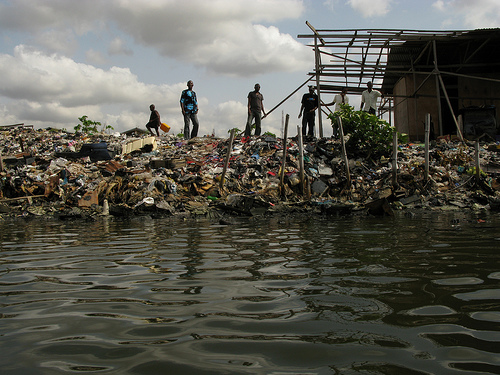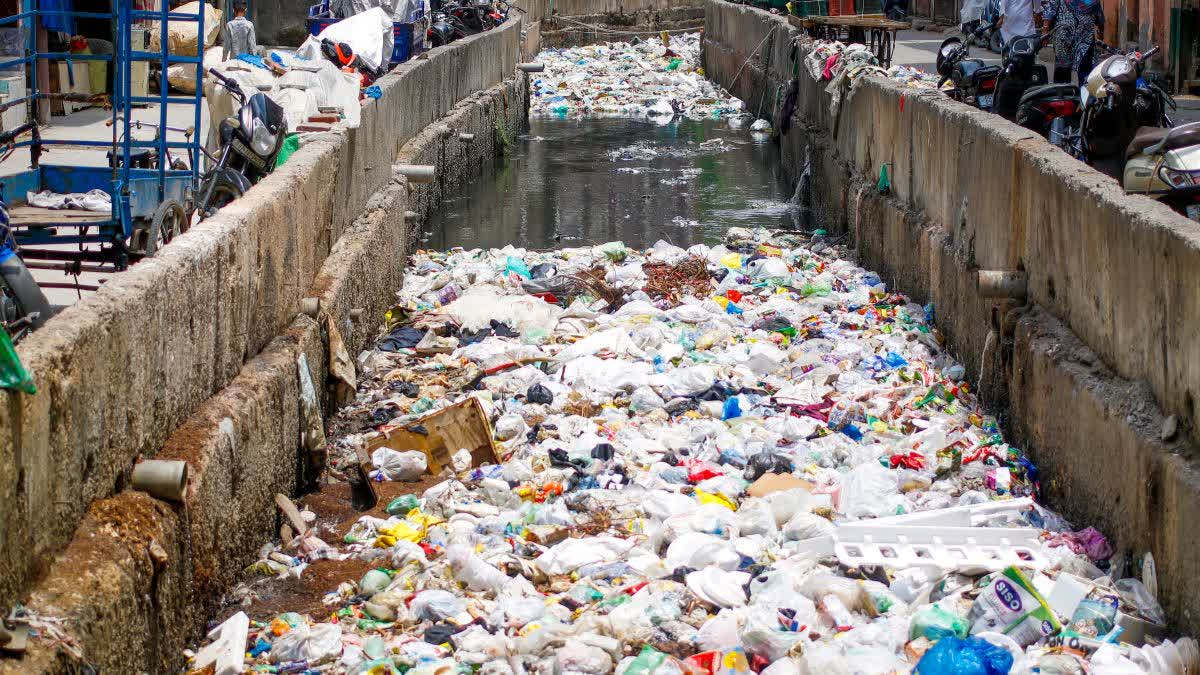
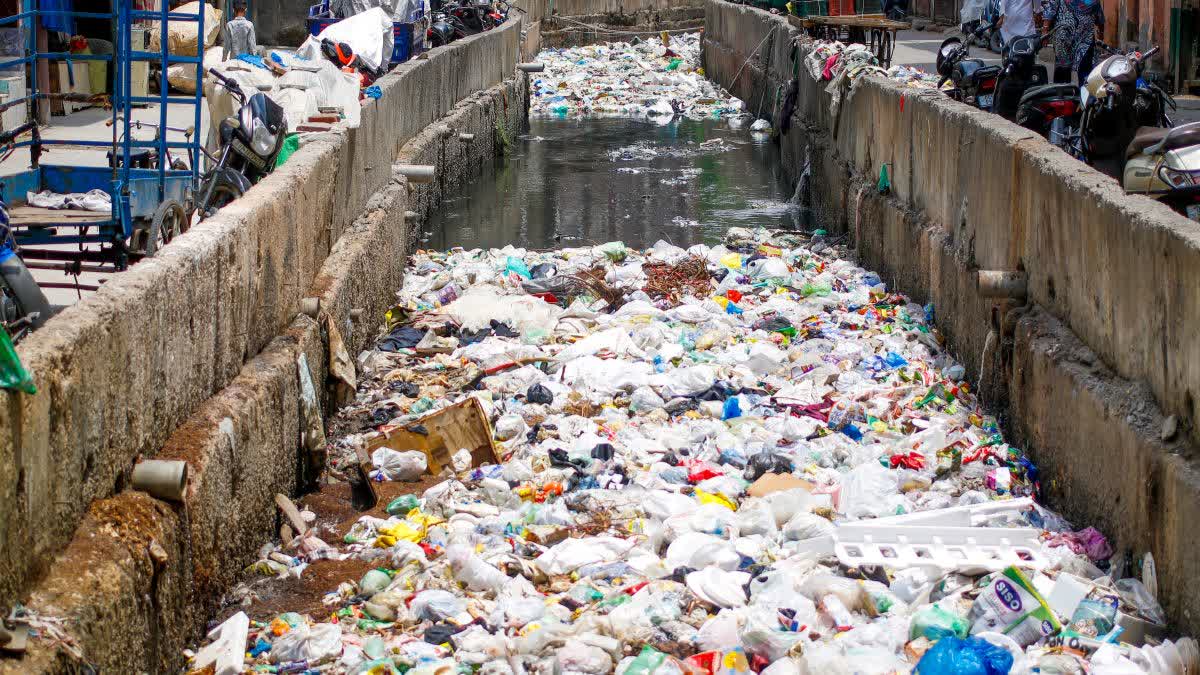
A sewage canal strewn with garbage in Delhi. (IANS)
Hyderabad: India stands at the 176th position, according to the Environmental Performance Index (EPI) 2026 report.
The EPI evaluated 177 countries based on 47 parameters, such as environmental health and climate change, and compiled a ranking. India’s 176th position means it is the second-worst and second-most polluted country in the world. According to the index, air quality in Pakistan, Bangladesh, and Sri Lanka is better than in India.
In the EPI 2026, India has got a score of 22.46. Although India’s EPI score has improved by 7.47 points over the last decade, its performance remains weak due to persistent challenges regarding environmental health, ecosystem protection, and combating climate change.
The primary factor affecting India’s ranking is its poor environmental health performance; it ranks 174th in this category with a score of 15.13. Air pollution is a major concern.
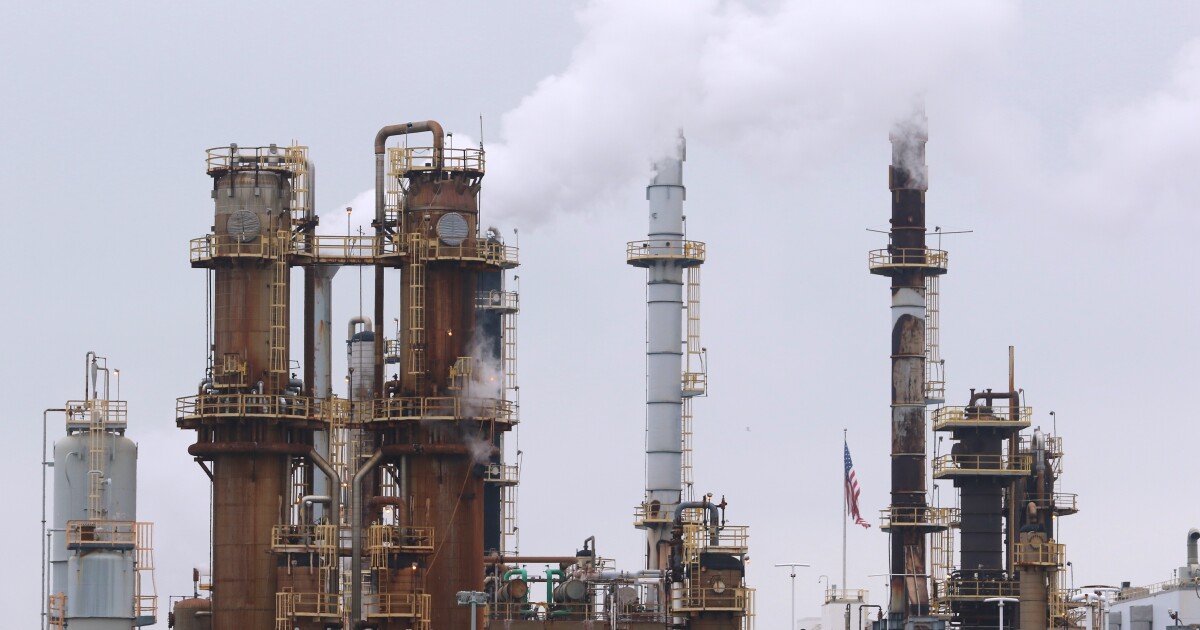
India ranks 175th in air quality (AQI), with a score of only 7.89. Indicators such as the ambient PM2.5 DALY rate (0.49; -6.20 over 10 years), carbon monoxide exposure (0.00; -2.88), and sulfur dioxide exposure (8.94; -2.20) reflect this poor performance. This indicates that industrial emissions, vehicular pollution, coal-based energy generation, and biomass burning continue to pose persistent problems.
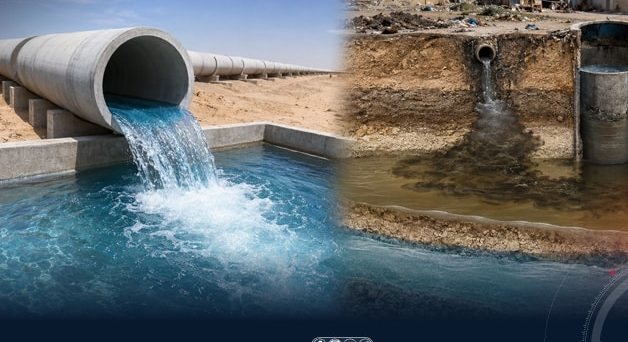
Poor waste management and unsafe drinking water have impacted the ranking: India has shown improvement in sanitation and drinking water facilities. While its score has risen by 8.33 points over 10 years to reach 26.35, performance remains below global standards.
Unsafe sanitation (27.05, +9.25) and unsafe drinking water (25.88, +7.72) continue to affect public health. Additionally, the poor state of waste management is a cause for concern; the score for sustainably managed solid waste stands at just 18.40 (ranked 141st).
India’s score for Ecosystem Vitality is also very low. It ranks 171st with a score of 22.82. Biodiversity and habitat conservation is one of the weakest areas, where it ranks 174th with a score of 9.09.
Low scores in terrestrial biome protection (1.13), protected area representation (3.58), and protected area connectivity (0.60) reflect inadequate ecosystem conservation. The index score is 31.62, marking a decline of 9.05 points, which indicates mounting pressure on endangered species.
Forest conservation poses another challenge for India. India’s forest score stands at 17.97, a decline of 3.96 points over 10 years. The ‘tree cover loss’ indicator scored 16.71, showing a change of -3.96. This reflects the deterioration of forests due to land-use changes, infrastructure expansion, and developmental pressures.
The agricultural picture presents a mixed scenario. India ranks first in ‘Relative Crop Yield’ with a score of 100, indicating high agricultural productivity. However, environmental impact remains a concern, as evidenced by the metrics for ‘Pesticide Pollution Risk’ (45.75, -17.16) and ‘Phosphorus Surplus’ (38.89, -0.28). These figures highlight concerns regarding chemical usage and nutrient-related pollution.
What Does The Topper, Estonia, Have That India Lacks?
Located in the Baltic region of Northern Europe with a population of approximately 1.4 million, Estonia holds the top spot in the EPI 2026 with a score of 74.79. Estonia’s high ranking reflects robust environmental governance, clean technologies, effective waste management systems, and sound climate policies.
India’s low ranking is primarily attributed to air pollution, poor waste management, biodiversity loss, inadequate wastewater treatment, and a high risk of future emissions, despite improvements in sectors like agriculture and sanitation. While India has made strides in areas such as sanitation, renewable energy, and agricultural productivity, these improvements are insufficient to tackle its major environmental challenges.
In terms of environmental health, Estonia’s performance is much better than India (15.13). His score is 75.88. Estonia’s score in air quality is 80.76 while India’s score is only 7.89. India’s very low PM2.5 score (0.49) reflects severe air pollution from emissions from transportation, industries, coal use, and biomass burning.
Estonia ranks first in sustainable solid waste management (score 100), which reflects effective systems of waste collection, recycling and disposal. India’s score is only 18.40 (rank 141). Similarly, Estonia’s score in waste water treatment is 91.69 while India’s score is 28.83, indicating challenges in sewage treatment and water pollution control.
In terms of ecosystem liveliness (63.66), Estonia is ranked eighth while India is ranked 171st (22.82). Biodiversity protection is stronger in Estonia (67.06) than in India (9.09). India’s low score on terrestrial biome security (1.13) and protected area indicators reflects pressure on forests, wildlife habitats and ecosystems.
Due to strong policies to reduce emissions, Estonia ranks first in mitigating climate change with a score of 90.58, whereas India is at 130th position with a score of 28.01. Estonia performs well in emissions trends while India faces challenges such as dependence on fossil fuels and increasing greenhouse gas emissions.
India’s forest score is 17.97 while Estonia’s score is 6.90. However, India is facing greater pressures from deforestation and land-use change. The score for ‘tree cover loss’ is 16.71 (-3.98, over 10 years). Habitat fragmentation and development activities remain major concerns.
India performs well in agricultural productivity and ranks first (score 100) in ‘Relative Crop Yield’. However, the environmental impact is high, especially the risk of pesticide pollution (45.75, -17.16) and nutrient pollution. Estonia is in a better position to control the environmental impact of agriculture.
Estonia performs well in the conservation of marine ecosystems and scores 82.49 in ‘Marine Habitat Protection’. India’s maritime performance is weak due to pressure on marine resources. Fisheries score is 32.69 and a decline is seen in the ‘regional marine trophic index’ (38.70, -10.27).
Estonia’s ‘Projected Emissions 2050’ score is 100, indicating a strong path towards reducing emissions. India’s score in this case is 0.00, indicating challenges in reducing emissions in the future due to rising energy demand and dependence on carbon-intensive fuels.
Goa’s Air Is The Best
Goa has been the topper in the environment category of the ‘State of India’s Environment 2026’ report released on June 4 by the Center for Science and Environment (CSE). That means the environment of Goa is better than other states of the country.
Goa is number one in rank. After this comes Andhra Pradesh, Tripura and Odisha. At the same time, West Bengal is at the lowest position. Apart from this, Rajasthan, Tamil Nadu, Bihar, Punjab also remained at the bottom of the list. Among Union Territories, Chandigarh remained on top and Puducherry remained in the worst position.
What is the basis of EPI: According to the EPI methodology, a scientifically reliable and internationally comparable environmental dataset is prepared for the Environmental Performance Index. These datasets are based on criteria such as relevance, validation, completeness, novelty and open access. The data is checked as per the standards and requirements. Each indicator is then scored on a scale of 0 to 100 using ‘distance-to-target’.
The EPI 2026 comprises 47 indicators, grouped into 12 categories (climate change mitigation, air quality, forests, grasslands, fisheries, air pollution, agriculture, water resources, sanitation and drinking water, heavy metals, waste management, biodiversity and habitat) under three policy objectives – environmental health, climate change and ecosystem viability. The final EPI score is calculated by taking the mean of these indicators. In this, 25 per cent weightage is given to environmental health, 30 per cent to climate change and 45 per cent to the viability of the ecosystem.
Also Read: