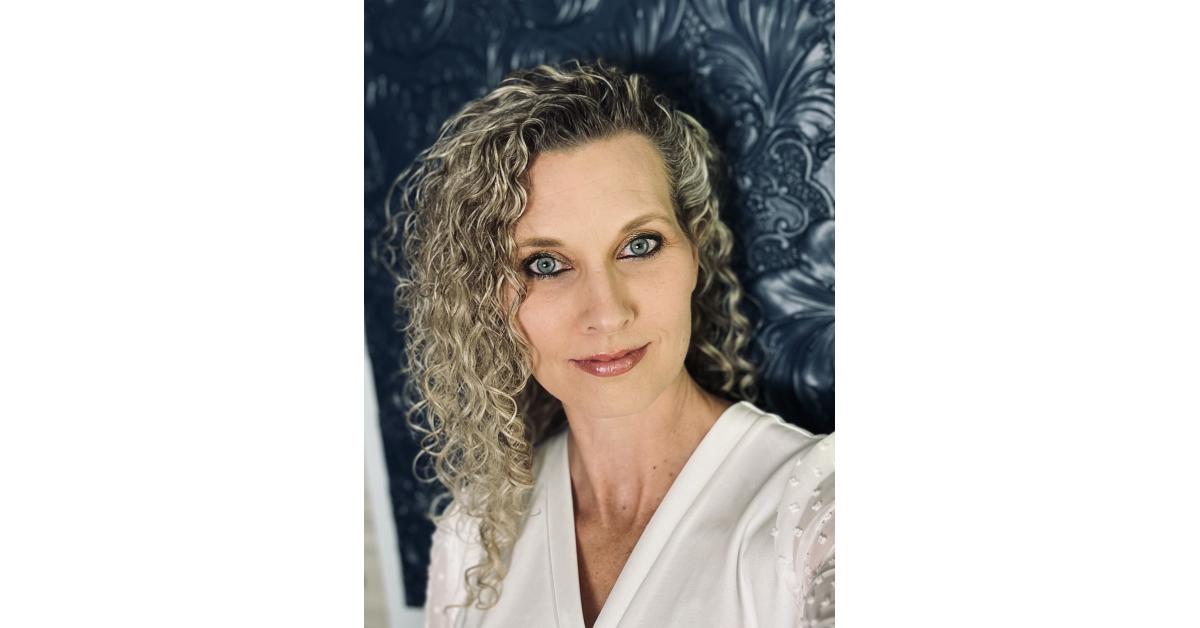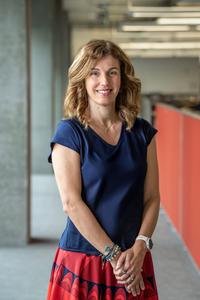
Anna Golden has spent the last few years asking a question most ambitious people eventually have to face, even if they’d rather not say it out loud: What happens when the version of success everyone celebrates starts to feel spiritually hollow?
For the Dallas-based worship artist, the answer came slowly, in the space between albums, as she began realizing how easily calling can get tangled up with comparison.
“I really do believe how you define success dictates the rest of your life,” she said.
Golden knows the tension well. As one of worship music’s most compelling young voices, she exists in a world where ministry and metrics collide constantly. A song can become a sacred moment for someone in a church service, then show up the same week in a spreadsheet measuring streams and reach. It’s not inherently wrong, but it can become disorienting fast.
“What have I deemed success, and has culture actually given me the definition of success in my life and not kingdom?” she said. “For me, it was so much having to do with culture.”
That realization became a spiritual pressure point for Golden while making her latest album, Just Us. The project follows a major season in her career, including her previous album, Church, which she calls her favorite body of work up to that point and one that “changed my life for sure.”
But the process also drained her. Making a live album came with pressure, complexity and enough behind-the-scenes weight to make her question what God was asking of her next.
“I had this moment with the Lord,” she said. “‘What do You want me to do next? I don’t know what this looks like to me.’”
The answer, she said, was surprisingly simple.
“The Lord was so kind in meeting me when I was being a brat and just being like, ‘You don’t have to worry about this next album. It’s going to be just us.’”
That phrase became the title, but more importantly, it became the posture of the whole project. Just Us isn’t built like a victory lap. It sounds more like an artist letting God peel back the parts of ambition that had started to masquerade as obedience.
“This really is like an audio scrapbook of just my life with the Lord,” she said. “This album was one that pulled a lot on our history.”
Golden describes the record as a kind of memoir between her and God, a marker of “all the battles that we fought together” and the history they’ve built along the way. But the album’s intimacy doesn’t come from nostalgia. It comes from honesty.
On “Daily Bread,” one of the album’s most piercing songs, Golden essentially writes a confession. She calls it a song about “telling on myself,” especially when it comes to wanting the emotional rush of faith without surrendering to the actual work of healing.
“Sometimes we kind of live off emotional highs with the Lord,” she said. “And now I’m just trying to feel something, and I’m not actually trying to let the Lord be the great surgeon and heal me. I just kind of want a painkiller because I want that feeling.”
The song also confronts the danger of spiritual memory that never becomes trust. Golden references Ebenezer stones, the markers of remembrance set up in Scripture after God brought His people through battle. But she flips the image into a question.
“What good’s remembering what You’ve done if I can’t trust what You’re going to do next?” she said.
Faithfulness can’t just be a scrapbook. The things God has done in the past are meant to shape how we trust Him in the present, especially when the next step feels less impressive than the last one.
Golden said she’s heard from pastors and leaders who were hit hard by the song because it names something uncomfortable: the subtle belief that after enough sacrifice, we’ve earned the right to coast.
“I think that’s the heart behind which I wrote it,” she said. “I kind of paid my dues. I served a lot when I was young. I was all in. I had no personal life. And I’m like, now I get to coast a little bit.”
She laughed at the thought, but the conviction is real.
“I don’t know where I got that from,” she said. “There’s nowhere in Scripture that it’s like, ‘And now you’ve sacrificed, and here now live in the promise.’”
For Golden, surrender has become less of a dramatic altar-call moment and more of a lifelong discipline. It’s not something she graduated from once she got older, wiser or more established.
“Surrender was not a one-time thing,” she said. “This is a constant placing things on the altar.”
That’s where the album’s message stretches beyond worship music. Most people aren’t checking streaming dashboards or planning album rollouts, but almost everyone knows what it feels like to measure their life against the wrong scoreboard. The job title. The relationship timeline. The version of life that looks cleaner online than it probably feels in real life.
Golden feels that pull too.
“We have the most access to everyone else’s success than we’ve ever had,” she said. “I’ve never seen inside more people’s homes than I do now.”
She loves interior design, which means her social feeds can quickly become a portal into other people’s seemingly perfect lives. Then comparison starts doing what comparison does.
“You can start thinking, ‘Man, I’m really behind,’” she said. “And the Lord’s like, ‘No, this is not how we’re measuring success.’”
The line lands because it’s painfully familiar. The scoreboard keeps changing, but the anxiety is the same. Someone else always seems further ahead, more secure or more certain. Golden said she’s had to build real boundaries around that pressure so she can keep running the race God actually gave her.
“I’m not going to strive out,” she said. “I’m going to follow Your path. Whoever You’ve called me to lead, that’s where You want me to be.”
That shift has affected the way she structures the people around her. Golden said she’s grateful to have a team now that’s deeply “kingdom minded,” because the people closest to you often reinforce whatever scoreboard you’re already tempted to trust.
“I need people at my table who don’t feed that little ambitious beast,” she said.
She isn’t pretending strategy doesn’t matter. There are still meetings, budgets and decisions that require wisdom. But before her team looks at analytics, they look at stories.
“When we go into analytic meetings, they’re first like, ‘Man, look at this story I found. Look at this comment that was left on this,’” she said. “That’s what we gather around first. That’s what we celebrate.”
After that, they can talk about stewardship. But Golden doesn’t want performance to become the center of the room.
“There’s people behind those streams,” she said.
That may be the clearest picture of where Golden is now. She’s not rejecting ambition. She’s trying to purify it. She still wants to make excellent work. But she’s learning to hold outcomes differently.
“I want to fill the earth with as many beautiful things as I can before Jesus gets back,” she said, quoting something Leeland once said that stuck with her. “That has to be enough.”
Just Us carries that spirit. The album has songs built for Sunday mornings, including “There’s Still Power in the Blood,” which draws from the old hymn “There Is Power in the Blood.” Golden loves that connection because it roots new music in something older than the industry around it.
“My grandma’s grandma sang that song,” she said.
There’s something quietly defiant about that in a culture obsessed with what’s next. Golden isn’t trying to outrun the past. She’s trying to remember rightly and make something faithful with what God has put in her hands.
“This album did so much of that, of checking my eyes,” she said. “Making sure I had the right perspective.”
For all the language around albums, songs and ministry, Golden’s real subject is something much more universal: the slow, humbling work of letting God redefine what counts as a win.
For anyone exhausted from chasing a scoreboard they didn’t even choose, that might be the better question to ask: Who taught you how to measure your life?