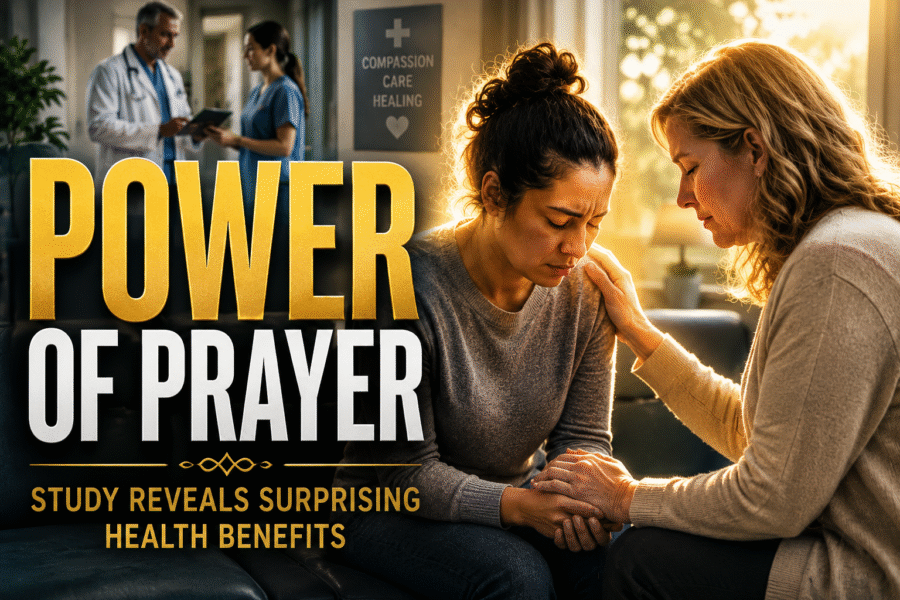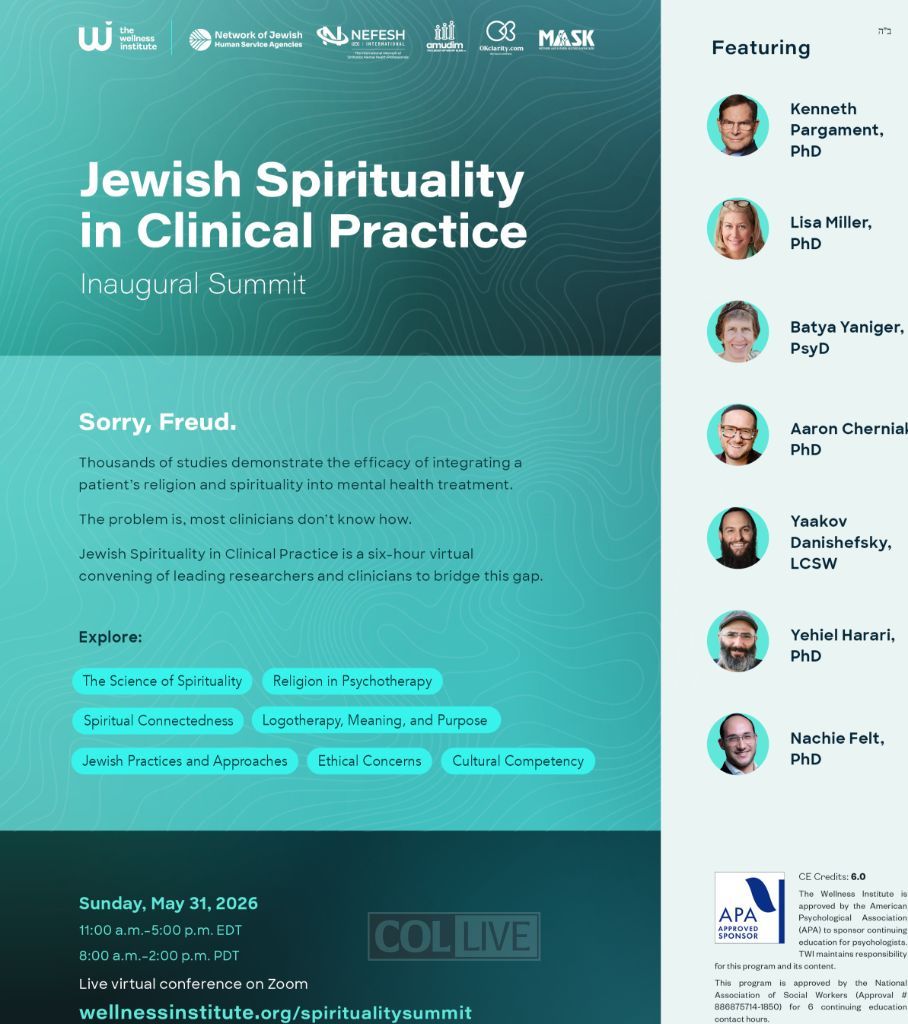
A new three-part report from an American
Christian think tank specializing in championing family, faith and
constitutional government communicates the flourishing impacts religion has on
physical, mental and social health.
Commissioned by the Wheatley Institute of
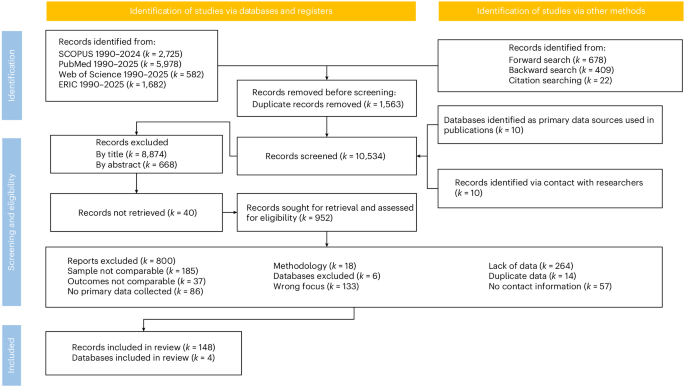
Brigham Young University (BYU) in Provo, Utah, a team of researchers scoured
thousands of quantitative studies contained within the Handbook of Religion and
Health’s third edition issued in 2024. This work by Harold G. Koenig, Tyler J.
VanderWeele and John R. Peteet has emerged as a seminal 21st-century text on
the connection between religion and health.
The Wheatley team ultimately found that
across “at least two dozen distinct mental, physical and social health
phenomena,” the evidence broadly “points in one direction: religious
involvement is far more often associated with beneficial outcomes than harmful
ones.”
Advertisement
Loren Marks, a professor for BYU’s School of
Family Life and co-author of this series, said that in a 30-year career
analyzing religion and health studies, he was aware “the balance favoured
positive health outcomes.” However, he was “very surprised to see when we
looked at the most rigorous studies, the highest quality studies, to see this
landslide ratio of positive health benefits versus negative.”
Marks and his collaborators found that, of
the handbook studies examining the linkage between religion and mental health,
961 reported that religious involvement led to better outcomes, compared to
just 101 negative and 80 mixed/complex. In other words, the
positive-to-negative ratio was about 10:1. Notably, studies associated religious
belief with lower suicidality, reduced substance abuse and addiction and
higher levels of hope, stress management, purposefulness and life satisfaction.
Across 15 physical health domains, the
Wheatley team found that positive studies trumped negative 876 to 124, a 7:1
ratio. Religious participation is linked to lower cigarette smoking, reduced
substance abuse, lower risk of cardiovascular disease or other chronic
illnesses and overall improved physical health and longevity.
Advertisement
The positive relationship between religion
and social — also known as behavioural — health is the most statistically
convincing. The positive-to-negative proportion was a whopping 33:1 — 489
positive studies compared to just 15 negative conclusions. Stronger marriages,
higher charitable giving, reduced domestic violence, bolstered family stability
and lower crime and delinquency are among the many constructive impacts
religion has on social health.
While a U.S.-based institute, Marks said the
report’s findings should be leveraged by governments around the world to
improve the quality of life for their citizens. He said much good can
be accomplished by lawmakers and faith-based groups collaborating.
“It seems that when we look at that elite
science, there are potent resources in faith communities that can be leveraged
to benefit all citizens, religious or not,” said Marks. “And that’s part of
what we’re trying to convey in this report. Whether we’re talking about the
domain of delinquency and criminality or marital and family stability or
substance abuse and addiction, where the ratios are 43 to one, there are
significant societal harms that can be prevented and others that can be
ameliorated.”
Along with the Religion & Human
Flourishing series delineating ways religion can help cure societal ills, Marks
suggested it advances a vision of a pro-fertility and pro-family culture worth
a serious appraisal at a time when the U.S. fertility rate is 1.6, and Canada’s
is even worse at 1.25.
Advertisement
“What that means in reality on the ground is
that the modal child, the typical child, will not have a sibling,” said Marks.
“What that means in the real world is that words like sister, brother, aunt,
uncle and cousin become obsolete. That is something to sit back and
contemplate. If family first and faith community second are where we learn
values of altruism and how to act in pro-social ways, it is quite literally
imperative and vital that we support institutions that provide those pro-social
and altruistic values.”
To learn more about the Religion & Human
Flourishing series, see wheatley.byu.edu/religion-and-social-health.
(Amundson is an associate editor and writer for The Catholic Register.)