
Image from pixabay.com
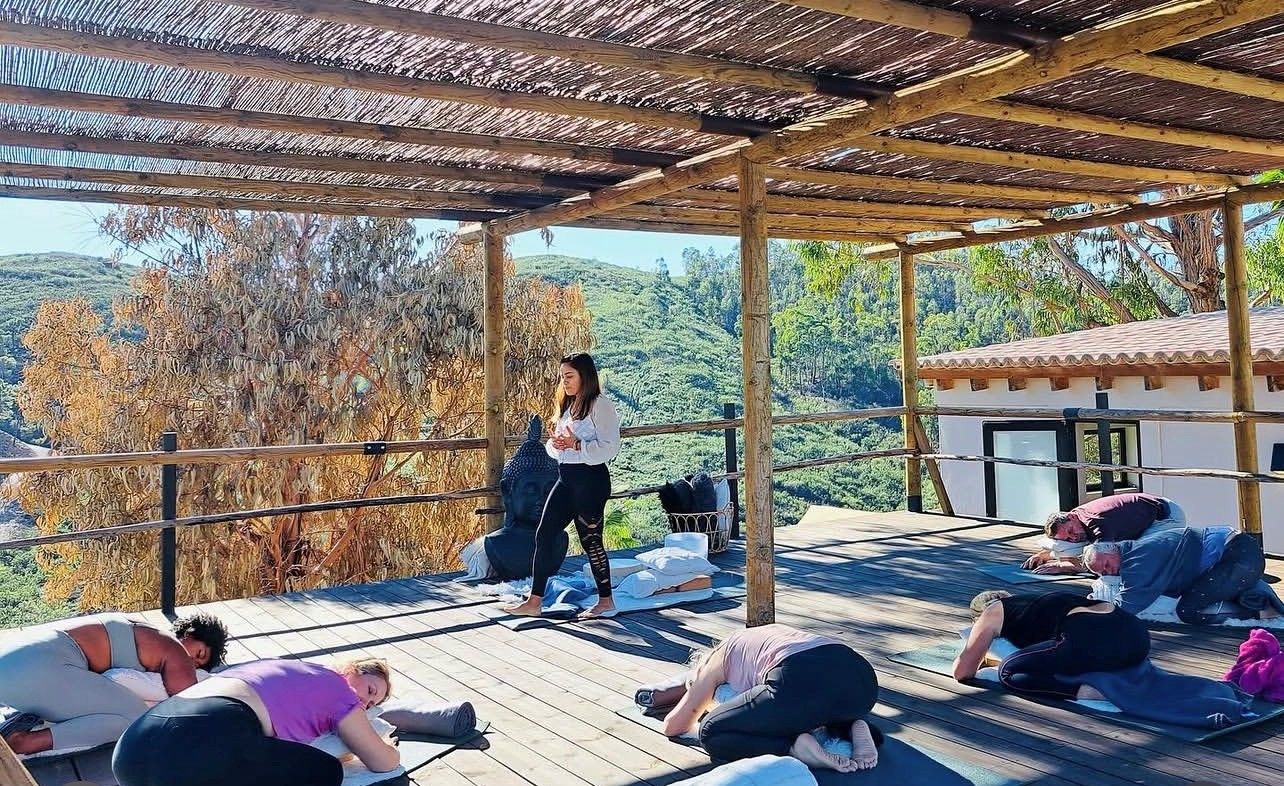
Bali is world-famous as a centre of cultural and spiritual tourism that offers visitors spiritual healing and inner/outer balance – the ‘Eat, Pray, Love’ phenomenon. But the mental health of the Balinese is rarely talked about, especially when women are afflicted.
It should be, as suicide rates are increasing on the island. One study analysing suicide rates in Indonesia from 2016 to 2021 even revealed that Bali had the highest rates nationally (1.821 per 100), followed by Riau Islands (1.175 per 100) and Yogyakarta (0.951 per 100).
A large number of Balinese women are now struggling to cope with mental health issues. Dealing with stress and psychosocial problems, while also bearing the burden of domestic work, financial difficulties and maintaining traditions, often goes beyond what they can handle.
Worse, our research has shown that Balinese women face major structural and cultural barriers that prevent them from accessing adequate mental health care. Failure to fix this only prolongs their suffering.
Mental illness as ‘ancestral karma’
Consider the story of Ibu Luh, who cares for two daughters, both suffering mental disorders. Bu Luh, aged 50, visited a Mental Health Post in at Abang Community Health Centre (Puskesmas) 1, in Karangasem, Bali. This was established as part of collaborative research between Udayana University and the University of Sydney, funded by the Australian aid facility, KONESKSI.
When we met Bu Luh in November 2025. She looked haggard, with a gloomy expression, confused and lacking in confidence, as she told of us her experience of caring for her two daughters, who both suffer from mental disorders.
Her elder daughter, Putu (30), has suffered from schizophrenia since she was 18. Meanwhile, her second daughter, Kadek (27), has an intellectual disability. Bu Luh has been caring for them for the past 12 years. Now Bu Luh says she often has trouble sleeping, suffers from headaches and anxiety attacks, and cannot stop thinking about why this has happened to her.
She feels it might be due to karma from her ancestors, and not her own fault, because she has never failed to perform yadnya (religious rituals). She also feels she has done a good job of managing the household and earning a living by selling canang (palm-leaf baskets for daily offerings).
She knows that in Balinese tradition it is the husband who is responsible for financing the household, but her husband is a casual labourer and often unemployed.
As a Balinese woman who lives amidst her community, Bu Luh actively gathers with her neighbours at the temple for various traditional rituals. However, she admits she is reluctant to share her burden. She feels all women have similar experiences, and not everyone understands her situation. In fact, she worries that people will gossip about her if she talks about it.
As a result, she chooses to keep quiet and internalise her problems as ‘ancestral karma’.
Cultural barriers to mental health care
A study has shown that women have a higher risk of suffering from mental disorders. However, for Balinese women like Bu Luh little space is available to relieve their mental pressure medically. Instead, they often release stress in religious rituals in which the participants enter a collective trance attributed to kerauhan.
In the beliefs of the Hindu Bali community, kerauhan occurs when someone is possessed by the power of a god, an ancestral spirit, or a supernatural spirit. It serves as a way for anyone to vent their emotions within an acceptable, customary framework – including women of any social class.
Early handling of mild mental disorders is possible if mental health services are accessible in primary care settings, such as the Puskesmas (Community Health Centres). But delays in seeking help due to neglect of mental health make treatment and care significantly more challenging, as exemplified by Bu Luh’s experience.
Research by Cristea et al. also shows that delay in treatment of mental disorders often occurs because the patient’s family starts treatment by going to a balian (traditional healer) before seeking help through medical channels.
And sometimes help is never sought at all. The Balinese community typically sees mental disorders as conditions characterised by abnormal behaviour or loss of self-control. This is called buduh, the term for insanity, which is commonly used for schizophrenia and psychoses. But mild mental disorders, such as depression, anxiety, etc., are rarely recognised at all in the Balinese community. This prevents sufferers from seeking help or treatment.
Overcoming stigma
For women, mental health can be more complicated, as the element of gender makes it harder to recognise symptoms of mental illness due to bias against them.
Taking gender into account in the treatment of mental disorders in women creates an opportunity to boost the capacity of mental health services in primary care, with family doctors as the driving force.
Indonesia’s healthcare system has improved primary care by recognising the role of doctors who specialise in family medicine and primary. Service by family doctors now needs to become the basic standard of care for BPJS Kesehatan in the future, especially in Puskesmas and other primary care settings.
Ultimately, managing mental health in women will ease families’ suffering. This aligns with the principle of holistic treatment of mental health, which starts from the recognition that women must have the right to be heard and have their complaints addressed. This needs to happen for the Balinese, not just tourists.
This article is part of the research project, Breaking Barriers: Advancing FemTech Design for Mental Health Support for Women in Rural Regions, led by the University of Sydney Business School in collaboration with the Centre for Interdisciplinary Research on the Humanities and Social Sciences (CIRHSS) at Udayana University. The project is funded by the Department of Foreign Affairs and Trade (DFAT) and the Indonesian Government through the KONEKSI Knowledge Partnership.