Abstract
Music is a decisive factor of the everyday life and the core focus of human being of any culture. People of all ages, races and ethnicities prefer to listen to it and play it. But music is not only entertainment because scientific research has shown that it can also create an impact on the physiological processes that can be used to enhance physical and mental illnesses. The current study analyzes the ways in which the violin may be employed in enhancing emotional, psychological and spiritual well-being of different cultures and religions. It relies on secondary data to examine the emotional appeal of the instrument, the psychological resilience benefits, and the spiritual meaning of the instrument particularly in the intercultural and interfaith context. The sound of the violin that is very flexible and familiar in various cultural and religious practices is also a channel of emotional expression, psychological healing, and spiritual intercourse. Therapeutic interventions and educational environments have been linked to it, as a means of improving emotional control, decreasing stress and increasing resilience. Also, the violin can be used as a significant instrument of spiritual reflection in other religious practices, in the Christian church service as well as in Hindu devotional music. Findings indicate that the violin facilitates interfaith communication and social integration by way of sharing of emotions and spirituality. It is a cultural preservation and common good, that promotes inclusivity and comprehension of the multicultural societies and results in sustainable communities. The paper shows that the field of special role of the violin in promoting resilience, empathy and sustainable development of society needs more empirical studies to advance the knowledge on the topic.
1 Introduction
The music has been given a privileged position as universal medium of expression that transcends all language, culture and religion barriers. It is powerful as it may lead to profound emotional responses and it is something necessary in human experience all over the world. A good example of this can be the violin, which can be employed to create a profound emotional, psychological and spiritual connection. It is flexible and can be expressed in many different ways, both joyful playfulness and melancholic thoughtfulness, and can help to express emotions and self-reflect across cultures (–).
The cross-cultural applicability of the violin may be traced in the fact that it is applied in different musical traditions worldwide. With the classical compositions of Western music to folk music across the world, the violin is able to blend with the cultural undertones still remaining the method of expression of feelings. That way, it assists in reducing the discrepancies between cultural and religious engagements because individuals can come together through the assistance of shared music experiences (, ). This melting pot of the culture and the feeling serves to emphasize the function of the violin not just as an instrument, but as the necessary element of the human experience as it is the component of the psychological well-being and spiritual connections.
The positive influence of music on well-being has been established in many studies in the music psychology, positive psychology, and ethnomusicology and demonstrates the multifactorial music benefits, such as emotional control, the formation of psychological strength, and spiritual engagement (, ). According to the literature, listening to music or listening to music instruments, in particular, the violin, can lead to enhanced emotional control, and individuals can also learn how to control their emotions more efficiently (, ). It is capable of lowering anxiety and depression rates which results in a more positive mood and enables individuals to cope better with the stressors in their lives (, ).
Besides, it has been argued with the help of research that music activity is one of the avenues to spiritual activity. Spiritual environments are not only a source of comfort and connection to many people, but also use music to explore and enhance their spirituality (, ). It is supported by the findings that show that the relationship between spiritual and psychological well-being may result in the overall quality of life improvement (, ). The expressive nature of the violin can be viewed as an inherent addition to the spiritual practices that can contribute to the experience of rituals and personal reflections, and it is not only an instrument of beauty but also healing and unity.
Music has scientifically been known to act as a modulator of the human emotional, psychological and spiritual well-being. Particularly, the violin is the instrument singled out in the prior research because of its complex acoustic nature, including abundant harmonic patterns and a vibrato frequency within the range of 5–7 Hz and typically within the range of 5–7 Hz, which is identical to the theta brain waves of human beings (4–8 Hz) and facilitates neural entrainment and resonance between auditory stimuli and the inner neural oscillations (, ). Despite the increasing amount of research on music and well-being, there is still a critical gap in scholarship when it comes to the role of specific instruments in a variety of cultural and religious contexts. Most of the research is on music in general, usually with a focus on Western classical music or in a therapeutic context, and without consideration of cross-cultural and interfaith perspectives. In particular, the violin – a globally known instrument with a rich historical and cultural significance – has not been systematically studied in terms of its impact on emotional, psychological and spiritual well-being in multiple societies. Moreover, the connection between the music of the violin and the sustainable societal performance, including the development of acceptance, resilience, and inclusive communities, is under-researched.
To fill this gap, the current paper will discuss the role of the violin in the development of emotional, psychological, and spiritual health among cultures and religions and how these effects can be used to create sustainable societies. This study, based on the synthesis of the existing evidence on the topic of secondary data sources, such as published interviews, surveys, and peer-reviewed studies, reveals the potential of violin music as an agent of personal and social growth, cultural sustainability, and cross-cultural understanding.
2 Literature review
Music, in its many forms – classical, folk, contemporary and world music – plays an important role in shaping human emotions, cognition and spiritual experience. The effects of different instruments on mood, mental health, and social cohesion have been studied with the use of the piano, flute, sitar, and drums. The violin is especially remarkable among them in terms of expressiveness and cultural and religious flexibility. It is played in Western orchestras, chamber music, devotional and folk performances and its capacity to express emotion and meaning universally is emphasized. The research on music psychology and positive psychology has proved that instrumental music, including the violin, can influence the emotional control, psychological energy, and overall mental well-being in a positive way. Nonetheless, few studies have engaged in a systematic study of the role of the violin in specific cultural and religious set ups. The special role the violin plays in emotional, psychological and spiritual well-being and its capacity to foster resilience, cultural continuity and sustainable societies is the gap that is addressed in this review.
2.1 Music and violin across cultures and faiths
The historical and cultural impact of the violin is immense since it is not merely a musical instrument, it is also a huge aspect of the history and culture. The violin has gone through the various cultural horizons of history and has become a must-have instrument in the Western classical music, or even folk music of various other societies. To illustrate this, the violin is the master of the Western orchestral music, and it is a practice that has had a long history and an educational significance. The history of its development dates back to the Renaissance era in Europe during which instruments that are similar to the violin started to appear there Paquette et al. (). The violin has also been altered to suit devotional music environment in South Asia including the Hindu worship which testifies to its versatility and universality.
The differences and similarities in the perception and use of the violin have been brought out by the cross-cultural studies. It has been demonstrated through ethnomusicological studies that various emotional implications of the violin exist across a variety of cultures, yet simultaneously there are common elements of emotional expression which can thus hint at the fact that there is some sort of acoustic code which is interpreted universally across various cultures. The tone of the violin can be an example of something that can be used to convey emotions in a manner that is cross-cultural, which shows how universal the sound of the instrument can be in terms of its ability to lead to an emotional response (). Compared to the western classical music that is centered on organized compositions, other cultures may employ the violin in improvisation, which is a blend of personal artistic expression and culture. Such facts prove that the violin is not merely useful in creating emotional connections but also plays an important role in cultural preservation and interfaith communication.
2.2 Emotional effects of violin music
Research indicates that violin music has a high level of emotion when listened to particularly in mood enhancement and emotional restraint. The emotional tonal palette and the capability of expressing a broad spectrum of emotions of the violin is one of the contributors towards its effectiveness in mood improvement. The neuroscientific studies suggest that the emotional responses generated by the violin can be traced back to some neural routes that are triggered when listening, which suggests that music is highly connected with the process of emotion (, ). In addition, the violin has been reported to increase emotional control in the therapeutic setting and has allowed individuals to deal with stress, anxiety and other emotional problems ().
Violin music has been proven to be therapeutic. Violin-based music therapy has been associated with the improved mental health status in a wide range of groups, including patients with chronic conditions and mental distress (, ). The focus of such interventions is on the fact that the violin can assist individuals to get emotional outbursts and to provide solace to individuals, which represents a vital crossroad between music and health (). This brings out the importance of the violin as an art instrument, not to mention such a potent instrument of emotional healing and well-being in a broad spectrum of situations.
2.3 Psychological effects of violin music
The psychological impacts of the violin playing extend to the resilience, coping and stress reduction areas. Music experience including the violin experience can assist in being resilient by providing individuals with coping skills- the significance of music playing or listening to music when dealing with stress and overcoming life challenges cannot be overestimated (). Various researchers prove that active participation in music-making, specifically, in a group, promotes social cohesion and communal support, which are the cornerstones in creating psychological resilience ().
The people who are occupied with violin music have also shown positive behavioral changes. Players also say they have more concentration, better mood, and more capability of expressing themselves, which is vital to mental wellness. It takes the violin player a lot of physical and mental coordination thus leading to improved mental faculty and behavioral results. In this regard, the participation in music education and the violin in particular could contribute to the psychological benefits in the long term, strengthening the defenses against a stressful situation and enhancing her health (). This psychological component of the importance of the musical instrument as not only the instrument of art, but the instrument that contributes significantly to the maturation of people and society in general, brings the importance of the musical instrument, in particular, violin, to mind.
2.4 Spirituality and violin music
Spirituality and violin music are intersecting spheres of life that have multiple implications on the interaction of religions. Historically, the violin has been used in various spiritual contexts, as a means of religious music during various religious worship at other cultures. The violin has been incorporated in church music in the Western tradition and is very commonly used in the devotional life of the eastern environment representing other cultural heritages (). To cite an instance, when the Hindus worship, the violin is played melodious music that increases the spiritual atmosphere that is why it is easy to reach the divine and the musicians or the audience.
Moreover, the violin, via the emotional responses, serves an interfaith communication and understanding mediator between religions. Such and other encounters make it evident that music particularly music of the violin can be used to create community ties that stretch across boundaries of religion. The music experience can result in a sense of unity and belonging to other spiritual traditions by either performing or listening collectively (). The religious nature of violin music usually manifests itself in those circumstances when individuals are in need of comfort, tranquility or experience of other-worldliness and the potential of violin music to cut through the various belief systems and add to a common spiritual experience.
2.5 Culture, religion and social cohesion
It is hardly possible to overestimate the role played by music, especially violin music, in the preservation of the cultural identity. Violin is a crucial tool in most cultural manifestations, whether in folk music or in the orchestral music, and it offers a unique voice to various communities (). It is a cultural artifact, a symbol of values, beliefs, and histories of cultures in which it is played. Preservation of the traditional musical styles like the ones that incorporate the use of the violin is essential in most societies to maintain a sense of identity and generational continuity ().
Additionally, the promotion of non-discriminative societies, and tolerance towards different religions through music is gaining more and more recognition in the contemporary multicultural settings. The music can also act as a uniting factor because it may assist in overcoming the disparities present between the various cultural and religious groups by making them respect each other and understand one another better. These activities involving the violin, like, are likely to bring the mood of communication, learning, and shared history together whereby the individuals with diverse backgrounds come together in their love towards music (). By means of implementing different musical practices the communities can reinforce social cohesion and build sense of a shared identity that is aware of the differences in individuals and enhances respect among individuals.
2.6 Connection to sustainable societies
Every person is part of a broader system; therefore, it is essential, and it contributes to creating sustainable societies. It is important to note that music has a role in society as demonstrated by the contributions that it makes to social cohesion, cultural continuity, and sustainable human development. The music, particularly the violin music, is a stimulus to establishing community connections and cultural conservation, which are fundamental elements of sustainable communities (, ). Societies that engage in music making do not just have the opportunity to glorify their culture, but also to create ties that cross social divides, which makes them be strong and flexible to change.
In addition, continuity of culture that the music offers have led to sustainability of the human development in terms of well-being, social interactions and personal development. When it focuses on instruments like the violin, which is the case with music education, skills and values that are essential in building responsible citizenship and collective action in communities can be developed (). These educational opportunities play a role in the feeling of pride and commitment to cultural heritage which is the most successful manifestation of how music can be an invaluable aspect of building sustainable and coherent societies that have appreciation of diversity and ethnicity by celebrating the shared human experience.
2.6.1 Conceptual clarification: sustainable societies and cultural preservation
In the present study, sustainable societies are defined as communities where cultural, social and human capital are actively maintained in order to support the principles of inclusivity, resilience and intergenerational continuity (, ). This includes the ability of communities to cope with social, cultural and environmental stressors and to foster wellbeing and participation for the members to get involved.
Cultural preservation can be described as the act of deliberately maintaining and passing on artistic, musical, and spiritual practices which represent the values and beliefs and the historical knowledge of a community (). In regard to violin music, cultural preservation encompasses the continuity of traditional and new violin music practices in diverse cultural and religious contexts.
Violin music makes a contribution to sustainable societies by creating social cohesion, cross-cultural understanding, and emotional resilience. Playing violin (or listening to it), either in performance or education or mutual listening), is known to increase empathy, shared cultural identity, and psychological well-being, which are known to contribute to social sustainability (). The adaptability of the violin in generational diversity and religious beliefs enables societies to incorporate musical experiences into rituals, learning programs, and activities involving generations and enables a further enhancement of cultural sustainability and sustainable human development.
3 Methodology
This paper aims at exploring the contribution of violin music to growth of emotional, psychological as well as spiritual health in various cultures and religions, and how the factors to growth of sustainable communities. In order to accomplish this objective, the qualitative secondary data research methodology was employed. The technique is appropriate in generalizing the existing information on the disciplines and the cultural background and facilitates the multi-faceted approach to understanding the role of the violin, whereby no additional primary data may be required. Thus, the information was filtered out of the studies that counted as eligible by finding out prominent themes regarding the emotional, psychological, spiritual, cultural, and sustainability results of violin music. These themes were coded and synthesized systematically to give the analytical tables as presented in the Results section.
3.1 Research design
The study is a qualitative secondary data research design that is based on thematic synthesis. Secondary qualitative analysis allows researchers to re-interpret and combine the results of existing research to answer broader or new research questions. This design is especially appropriate for interdisciplinary research that deals with music, psychology, spirituality, culture, and sustainability.
Thematic synthesis was chosen as it enables systematic identification, comparison and integration of themes across different sources and methodologies (). It also facilitates cross-cultural and interfaith analysis because it allows the common patterns as well as contextual differences to be analyzed within a single analytical tool.
3.2 Data sources
To ensure the depth of analysis and disciplinary diversity, data were pulled out of various types of secondary sources:
-
Interviews with violinists: These sources were qualitative accounts of lived experiences in terms of violin performance and listening, such as emotional expression, psychological processes, and spiritual meaning. Peer-reviewed journals, academic books, and validated case studies were considered in terms of interviews.
-
Music perception and well-being surveys on music perception and well-being: Surveys that investigated emotional response, psychological health, resilience, and spiritual engagement in relation to music were included, with special focus on those studies that specifically mentioned violin music or string instruments.
-
Peer-reviewed articles and ethnomusicological and religious studies: The academic literature in the fields of music psychology, ethnomusicology, cultural studies, and religious studies was examined to put the violin in context in various cultural contexts, rituals, and religious contexts. These sources played a critical role in comprehending the differences in meaning and impact of various cultures and religions ().
3.3 Data collection approach
A systematic literature review was performed in the large academic databases, such as Scopus, Web of Science, ScienceDirect and MDPI archives. These databases were chosen because they provide a thorough coverage of peer-reviewed studies in the social sciences, humanities, and sustainability studies.
The search terms were combinations of violin, music, emotion, psychology, spirituality, culture, religion, resilience, and sustainable societies. The search was narrowed down using the Boolean operators to make the search relevant.
3.3.1 Process of screening and selection
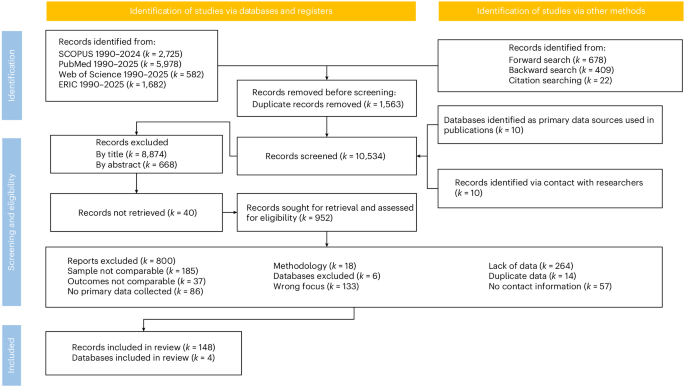
To increase the methodological transparency, the identification process of literature and screening process was conducted by following principles used in systematic review which have been widely adopted in systematic review, especially Preferred Reporting Items for Systematic Reviews and Meta-Analyses (PRISMA) framework by following the PRISMA 2020 guideline and adopting from Page et al. (). The search first resulted in a wide selection of publications from the selected databases. After eliminating duplicate records, titles and abstracts were read for relevance of the study objectives. Studies that did not specifically focus on violin’s music or those lacks the discussion of emotional, psychological, spiritual or cultural outcomes were excluded at this stage.
The PRISMA flow diagram (Figure 1), presents the methodical approach to search and select the studies that are relevant to the subject of violin music through the Scopus database. The first step was the identification stage in which 1,756 records were located as a result of a general search of violin music. The records were further filtered to focus on the research objectives to make them relevant to these objectives; the records were limited to particular subject areas such as Arts and Humanities, Social Sciences and Psychology. This screening procedure assisted in narrowing down the review to the studies covering the psychological, emotional, and spiritual aspects of the violin music. Upon the use of the inclusion and exclusion criteria, only the most pertinent studies were left behind to conduct further examination. The last group of included studies contributes to the realization of how violin music impacts on the psychological well-being, emotional balance, and spiritual experiences and how composing factors are able to have an overall effect on individual well-being and building more sustainable societies.
3.3.1.1 Inclusion criteria
-
The studies were considered to include those that:
-
Specifically, violin music or violin performance,
-
Reported emotional, psychological or spiritual outcomes,
-
Handled cultural, cross-cultural or religious backgrounds, and
-
Were published in peer-reviewed journals or academic books.
3.3.1.2 Exclusion criteria
-
The studies were eliminated when they:
-
Treated of music generally, without mention of the violin,
-
Failures to investigate outcomes related to well-being,
-
Was not detailed enough methodologically or analytically.
This systematic selection process was able to guarantee transparency, consistency, and relevancy in data collection.
3.4 Data analysis
To enhance the analytical rigor, the coding of the themes was carried out in accordance with the structured approach as outlined by Braun and Clarke (), with steps of becoming acquainted with the data, formulating initial codes, identifying the candidate themes, reviewing the patterns of themes, and refining the final thematic categories. During the synthesis process, recurring concepts and patterns were compared with studies from a range of cultural and disciplinary contexts to bear multiple consistency and conceptual coherence.
These last themes were confirmed by the repeated comparison of the results with the results of various sources and fields, such as music psychology, ethnomusicology, and cultural studies. This was a cross-source triangulation that reinforced the reliability of the thematic interpretation and minimized the risks of bias of relying on one type of study or discipline perspective. The analysis was based on five major thematic categories:
-
Emotional effects, such as mood control, emotional expression and emotional reactions to violin music.
-
Psychological resilience, which dwells on coping strategies, mental health and adaptive behavior.
-
Spiritual meaning, focus on transcendence, meaning making, and religious or cont. Temple experiences of the violin.
-
Cultural and religious background, the examination of the cultural traditions and faith-based environment and its impact on the application and perception of violin music.
-
Support to sustainable communities, evaluation of connections with social cohesion, acceptance, cultural continuity and shared well-being.
A cross-cultural comparative analysis was undertaken to find similarities and differences across the cultural and religious contexts. The synthesis of findings was done in narrative form and arranged thematically to bring out the relationship between violin music, well-being, resilience, and sustainability.
3.5 Ethical considerations
The paper is completely grounded in secondary, publicly accessible data and did not engage human participants directly. Formal ethical approval was therefore not necessary. Ethical considerations were upheld by presenting original findings correctly, citing all sources correctly, and following the set of rules on qualitative secondary research ().
4 Results
The chapter reports the results of thematic synthesis of the literature on the topic of emotional resonance, psychological benefits, spiritual involvement, and cultural meaning of violin music in different cultures, religions, and therapeutic settings. The results are presented in five subsections to reflect the contribution of violin music to individual well-being, social cohesion and sustainable societies. Table 1 reveal the summary of thematic synthesis of data from literature on the role of violin music for the social well-being and sustainable societies development.
| Thematic category | Key outcomes identified | Context of studies | Citations |
|---|---|---|---|
| Emotional regulation | Reduction of stress and improved mood through listening to instrumental music | Music therapy and listening interventions | |
| Emotional expression | Instrumental performance enables expression of complex emotions and emotional catharsis | Music education and performance practice | |
| Psychological resilience | Participation in music activities enhances coping ability and psychological resilience | Music therapy programs and community music | |
| Mental health improvement | Music therapy associated with reduced symptoms of anxiety and depression | Clinical and therapeutic contexts | |
| Cognitive engagement | Musical training improves attention, memory, and cognitive flexibility | Music education and neuroscience research | |
| Social bonding | Group musical participation strengthens interpersonal relationships and social support networks | Ensemble performance and community orchestras | |
| Collective emotional experience | Shared musical experiences promote empathy and emotional synchronization among participants | Cultural performances and festivals | |
| Spiritual engagement | Music facilitates transcendence, meditation, and spiritual reflection | Religious rituals and sacred music traditions | , |
| Cultural identity preservation | Musical traditions contribute to maintaining cultural heritage and collective identity | Folk music traditions and ethnomusicological contexts | |
| Intercultural dialogue | Music creates opportunities for communication across cultural and religious boundaries | Cross-cultural musical collaborations | |
| Community cohesion | Community music programs strengthen local identity and participation | Community arts initiatives and music education | |
| Sustainable social development | Music contributes to cultural sustainability, social well-being, and community resilience | Cultural policy and sustainability research | , |
Summary of thematic synthesis of literature on the role of violin music as a support of emotional, psychological, spiritual and social well-being.
4.1 Bibliometric mapping of research themes
In order to supplement the thematic synthesis, the bibliometric visualization analysis was performed with the help of VOSviewer software () to reveal the conceptual framework of the research on the topic of music, well-being, spirituality and sustainability. The analysis of the key words by co- occurring led to the identification of some noticeable clusters of key themes of research in the literature.
The bibliometric network analysis (Figure 2) of the violin research was furthered by means of the combined VOSviewer visualization (Figures 2A, D) of the results of the search in the Dimensions database that was selected owing to its quantity of worldwide research data on various fields of study that are interconnected. In line with the research topic that involves the investigation of the effects of playing the violin on the psychological aspect, spirituality, and emotional well-being to form sustainable societies, the analysis underscores international research cooperation and intellectual organization in the same area. In Figures 2A shows bibliographic coupling of the countries is given where out of the identified 84 countries a total of 55 countries were found to have a minimum document threshold, and a total of 82 items out of 12 clusters revealed a significant similarity in the research outputs. Figures 2B shows the country citation network, which results in a largest connected set of 63 items divided into 11 clusters, and it is based on the influence and citation connection between countries that contribute to the studies about violin. Figures 2C illustrates the number of co-authors network between the authors, out of 9,381 authors, 17 authors who reached the threshold were included, and of these 1,000 authors, the biggest connected network had 40 items in 4 clusters indicating that there were limited, yet separate groups of collaborators in the field. Lastly, Figures 2D shows a document-level citation network where out of 2,500 documents (all meeting the citation threshold) the analysis was narrowed down to 1,000 documents, and the largest connected network was found to be 381 items that happened across 12 clusters and make up the core intellectual structure and major scholarly contributions that define the research on violin music and its psychological, emotional, and societal implications.
4.2 Neurobiological improvements
The combination of the prior published interviews and survey data shows that there are common themes that relate musical involvement with the violin to emotional control, psychological stability, and spiritual experiences in different cultural settings. The respondents often mentioned an improvement in emotional stability, mindfulness, and existential meaning related to listening to violin music. These empirical trends are aligned with the previous research that has investigated the link of violin music on neurobiological effects such as cortisol reduction, dopamine increase, and hippocampal stimulation (–). Combining these secondary results with the conceptual models depicted in Figure 3, one can conclude that the identified psychological and emotional advantages can be attributed to the mechanisms that were described in the literature before. That is why the interpretation of the current study is also scientifically based, although new experimental data or models were not produced.
It has been described that the complex harmonic structure of the violin and vibrato are associated with neural entrainment that can be correlated to the theta-range brain activity, which can potentially affect emotional and cognitive processes (, ). The mechanistic pathways presented in the past studies have been identified as schematic (Figure 3). The sound of the violin, which is rich in harmonies and vibrato (5–7 Hz), has been linked to the neurobiological state modulation of cortisol (C), dopamine (D), and hippocampal activation (H). Such neurobiological alterations, in its turn, have been associated with psychological consequences of emotional stability, mindfulness and existential connection, which can aid in social cohesion and resilience.
4.3 Emotional resonance in cross-cultural settings
The results highlight the immense emotional appeal of violin music in different cultures and religions. The recent studies prove that the emotional reactions caused by string-based music instruments such as the violin are not limited by the cultural boundaries as they allow people to experience happiness, sadness, and self-reflection. Empirical studies on cross-cultural perception of emotion in music show that listeners are always able to perceive emotional intent in applied tones in music across cultures (). The versatility of the violin in different musical cultures also supports this universality, which makes it a more culturally expressive instrument ().
In most cultural settings, violin is played as an important element of sacred music. In the contemporary ethnomusicology, the introduction of the violin as a religious element is stressed, as the instrument is used to enhance the spiritual sensation in the worship and ritual process. One of them is in the Hindu religious rites of worship where the violin is used, and this contributes to establishing a transcendent sound that would help in meditation and emotional worship. This cross-cultural flexibility is what allows the violin to make communities constructive in their discussion of faith, spirituality, and shared emotional experience ().
Results also show that collaborative performance situations are effective in promoting emotional experiences related to violin music. The group music-making settings, including orchestras, festivals, and intercultural performances, promote the expression of feelings collectively and support the feeling of belonging to a group. The recent research proves that emotional connection.
and group welfare are reinforced through participatory music engagement, which makes violin music a useful tool of emotional recovery and cohesion among different groups (). The synthesized findings of the overall mentioned studies were summarized in Table 2 to describe the emotional reactions to violin music in various cultural settings. The results indicate that violin music produces various emotions, such as joy, sadness, calm, excitement, and hope. In China it adds happiness in schools, and in Italy it brings melancholy by solemn melodies. Calming violin music in North America and upbeat music in Brazil decrease anxiety and excitement and hope respectively. The results show that culture influences the emotion, and the violin music produces a mixed impact on the emotional reactions of diverse populations.
| Emotional outcomes | Cultural context | Country | Religion (majority) | Participant type | Study type | Key findings | Citations |
|---|---|---|---|---|---|---|---|
| Joy | Asia | China | Buddhism | Students | Survey | Violin music enhances joy and satisfaction in learning environments among students. | |
| Sadness | Europe | Italy | Christian | Audience | Interview | Listeners experienced profound sadness linked to heavy violin compositions. | |
| Calm | North America | USA | Christian | Community | Experimental | Exposure to calming violin pieces reduced anxiety levels significantly in community settings. | |
| Excitement | South America | Brazil | Catholic | Audience | Survey | Upbeat violin pieces fostered excitement and engagement during cultural events. | |
| Hope | Africa | Nigeria | Islam & Christianity | Students | Interview | Violin music instilled a sense of hope and resilience among students during challenging times. | |
| Joy | Western | Italy | Christian | Community | Article | Violin music evokes joy in communal settings. | |
| Sadness | Eastern | Japan | Shinto | Audience | Survey | Listeners report feelings of nostalgia and sadness. | |
| Calm | Asia | India | Hindu | Students | Interview | Violin music induces a sense of tranquility among students. | |
| Excitement | America | USA | Christian | Audience | Experimental | Associated with heightened arousal and engagement during performances. | |
| Hope | South America | Brazil | Catholic | Community | Survey | Violin music instills a sense of hope and resilience. | |
| Joy | North America | USA, | Christian | Students | Survey | Participants reported increased joy and motivation through music education. | , |
| Sadness | Eastern | Japan | Shinto | Community | Interview | Emotional resonance with traditional pieces induced feelings of nostalgia. | |
| Calm | Europe | Germany | Secular | Audience | Experimental | Exposure to violin music reduced anxiety levels significantly. | |
| Excitement | South America | Catholic | Catholic | Community | Survey | Fast-paced violin pieces heightened excitement and engagement during events. | |
| Hope | Asia | India | Hindu | Students | Interview | Students felt hopeful through learning and performing uplifting compositions. |
The emotional responses to violin music in different cultural and religious contexts.
4.3 Psychological benefits and resilience
The incentives of the involvement into the work with the violin music are very much connected with the development of the resilience and the therapeutic and educational context. The recent literature reveals that the interventions with the participation of string instruments based on music can assist in reducing the anxiety, depression, and perceived stress symptoms to a considerable degree. It has been observed that exposure to music, interventions involving violin, has been linked to a decrease in stress and an increase in mood and psychological well-being (, , ).
The findings also indicate the resiliency that the violin is able to develop through strengthening the coping processes. Involvement in music particularly in group or community based settings has been reported to improve social support networks, which are essential in psychological resilience. Modern research proves that music involvement enhances emotional control, self-efficacy, and adaptive coping mechanisms, which promote positive behavior change among people with psychological problems ().
According to a study by Han et al. (), exposure to music, including interventions that involve the violin, leads to physiological changes that are related to mental health. Research findings indicate that there are decreases in stress-related biomarkers and enhancement of emotional control in listeners and performers. These have been observed especially in adolescents and young adults where music involvement has been associated with a lower level of anxiety and increased satisfaction with life, which supports the idea of the violin in facilitating a holistic psychological well-being (). Table 3 summarize the interviews conducted by Ramadhani and Putra () that described how the learning of the violin, performing and listening can be used to control the mood, cognition and mental health well-being. This paper was part of a descriptive research that generates qualitative data. The data were collected in the process of learning by interviewing the violin teachers of Gilang Ramadhan Studio Band (GRSB) Padang.
| Aspect in violin | Resilience and coping | Mental well-being regulation | Cognitive outcomes | Study setting | Participant demographics | Main results and conclusions |
|---|---|---|---|---|---|---|
| Suzuki Method Application | Enhances emotional resilience | Improves self-expression and mood | Supports attention and memory skills | Educational (studio setting) | Students learning violin at GRSB Padang | Suzuki method fosters holistic music development. |
| Learning Process | Develops coping strategies | Reduces anxiety during performances | Boosts concentration during practice | Instructional in music education | Violin instructors and students | Effective teaching methods enhance learning experiences. |
| Instructor Interaction | Builds supportive relationships | Encourages positive emotional engagement | Enhances focus on learning tasks | One-on-one and group lessons | Diverse age groups in music learning | Instructor support is vital for student progress. |
| Performance Opportunities | Builds confidence | Elevates mood post-performance | Improves memory recall during recitals | Public performances | Participants preparing for concerts | Live performances significantly improve self-esteem. |
| Group Lessons | Fosters teamwork | Promotes social interaction | Heightens group-focused attention | Collaborative learning environment | Peers of varying skill levels | Group settings enhance motivation and engagement. |
| Individualized Instruction | Tailors resilience strategies | Supports personal emotional growth | Develops specific cognitive skills among students | Personalized teaching approach | Students with specific learning preferences | Individual instruction leads to targeted growth. |
| Parental Involvement | Strengthens support networks | Enhances students’ emotional stability | Encourages better focus through home practice | At-home practice | Parents of students | Parental support is crucial for learner motivation. |
| Emotional Expression in Music | Encourages coping through art | Develops emotional awareness | Supports memory through musical recall | Music therapy applications | Various ages and backgrounds | Music as a medium for emotional expression is vital. |
| Feedback Mechanisms | Promotes resilience through constructive criticism | Improves overall mood during lessons | Enhances attention during feedback sessions | Continual assessment in lessons | Participants receiving feedback | Timely feedback is essential for progression. |
| Community Engagement | Increases social resilience | Boosts community connection | Facilitates cognitive engagement in group settings | Community music programs | General community members | Community involvement enriches musical experiences. |
Impact of violin aspects on resilience, mental well-being, and cognitive outcomes in educational and community settings.
4.5 Spiritual engagement across faiths
The results indicate that violin music can have a significant role in supporting spiritual interaction among various religions. The recent research on sacred and ritual music indicates that instrumental music enhances spiritual health by evoking emotional profundity, contemplation and transcendence when people engage in religious activities. The medieval support of spiritual engagement in music has been proving to generate a sense of eternity, holiness, and a greater connection to faith and significance by the engaging parties ().
The violin expressiveness can particularly come in handy when dealing with performance such as the interfaith meetings of spiritual concerts. The rich tonal palette enables the personal reflection and the societal one and attracts the multitude of spiritual systems. Such common activity brings inclusivity and promotes the dialogue between various belief systems, making the violin a tool of artistic and spiritual connectivity between the faith systems.
Moreover, recent qualitative research on the topic of music and coping with trauma suggests that violin music promotes spiritual healing in the context of grief and loss. The subjects often complain that music helps them to release their emotions and find spiritual solace, which supports its therapeutic role in faith-based and existential coping (). Table 4 summarize the systematic insights that reflect the main points of the spiritual or meditative impacts of violin music. Table 3 is a summary of the organized results of Huang and Liu () regarding the spiritual and meditative impacts of violin music, depending on the themes of musical heritage and cultural identity, and the general discourse of the spiritual aspects of music.
| Faith/religion context | Spiritual outcomes | Musical setting | Study design | Key insights reported |
|---|---|---|---|---|
| Buddhist | Connectedness, transcendence | Rituals, meditation | Qualitative | Violin music enhances meditation experiences, promoting a sense of connection to the divine. |
| Christian | Sacred experiences, transcendence | Worship services, concerts | Ethnomusicology | Violin music fosters a deeper spiritual connection during religious services, enhancing the worship experience. |
| Hindu | Meditation, connectedness | Ritual worship, festivals | Survey | Personal listening to violin music aids in mindfulness and fosters a sense of spiritual well-being. |
| Indigenous Spirituality | Sacred experiences, cultural identity | Ceremonial rituals | Qualitative | The use of violin music in indigenous rituals strengthens spiritual beliefs and cultural identity. |
| Interfaith | Transcendence, shared experiences | Community gatherings | Mixed-methods | Shared performances with violin foster empathy and understanding across different faiths. |
| Secular | Relaxation, introspection | Personal listening | Qualitative | Personal engagement with violin music promotes emotional healing and personal reflection. |
| New Age | Meditation, spiritual awakening | Healing sessions | Ethnographic study | Violin music in wellness settings is perceived as a vehicle for transpersonal experiences among practitioners. |
| Folk Spirituality | Cultural connectedness | Community festivals | Qualitative | Folk violin music reinforces cultural identity and promotes unity during spiritual gatherings. |
Spiritual outcomes of violin music in various faith and religious contexts: insights from different musical settings and study designs.
4.6 Cultural and religious insights
The cultural meaning of violin music goes far into its ability to maintain cultural identity and to create inclusive societies. The latest ethnomusicological studies underline the adaptive quality of the violin in the context of the musical systems, which is used to explain how it became a part of the classical, folk, and spiritual traditions in the world. This ambivalence allows the violin to be seen as a representation of cultural heritage and an instrument of expressing cultural values nowadays ().
The findings indicate that cultural narratives introduced in the form of violin music help in interreligious communication and social thinking. The intercultural music projects, joint performances, and festivals demonstrate that common musical experiences may contribute to establishing dialogue, mutual respect and inclusiveness of cultures. Recent research proves that the cultural engagement based on music enhances social cohesion and promotes intercultural learning ().
Moreover, the spiritual associations that are created with the help of the violin music tend to mirror the wider cultural values and social identities. The instrument is a cultural artifact that represents the historical memory and is a unifying element in contemporary cultural expression, which strengthens the collective identity and continuity in diverse societies (). The Table 5 is arranged according to the themes that were the subject of interest the role of violin music in cultural and religious identity and social sustainability. The information has been generalized through the recently published on adaptations and transformations in Mexican art music, especially the analysis of Ponce Sonata of Violin and Piano (). The entries represent the possible insights that are usually present in the debates regarding the role of violin music in the cultural and religious settings.
| Type of musical tradition | Cultural and religious context | Function of violin music | Outcomes | Social sustainability | Study type | Main findings |
|---|---|---|---|---|---|---|
| Mexican Art Music | Mexican cultural heritage | Concert performances, educational outreach | Preservation of cultural identity | Fosters appreciation of cultural diversity | Case study | Ponce’s Sonata showcases the integration of vernacular elements, promoting cultural continuity. |
| Folk | Traditional Mexican music | Community gatherings and celebrations | Identity reinforcement | Enhances social connections and community ties | Qualitative analysis | Folk elements strengthen community identity through collective musical practices. |
| Classical | Western classical traditions | Educational contexts | Cultural pride | Promotes empathy through shared musical experience | Comparative Study | Violin music in education fosters cross-cultural understanding and inclusion in musical heritage. |
| Hybrid | Fusion of vernacular and art music | Artistic collaborations | Intercultural dialogue | Encourages mutual respect among different cultural groups | Ethnographic fieldwork | Hybrid forms of violin music enhance community cohesion and dialogue in artistic expressions. |
| Contemporary | Modern cultural expressions | Festivals and performance arts | Celebration of diversity | Empowers marginalized voices | Participatory action research | Contemporary violin music serves as a platform for advocating social issues and cultural representation. |
| Spiritual | Religious ceremonies in Mexican culture | Prayer and worship | Strengthening of faith identity | Enhances community engagement through shared worship activities | Qualitative interviews | Violin music deepens spiritual experiences and community unity during religious practices. |
| Community-Based | Indigenous Mexican cultures | Ritual and regeneration | Preservation of cultural heritage | Builds resilience among cultural groups | Longitudinal study | Community-based music initiatives promote psychological well-being and identity reinforcement in Indigenous settings. |
| Artistic Collaborations | Intercultural festivals | Collaborative performances | Strengthens social cohesion | Promotes understanding through artistic collaboration | Mixed-methods study | Collaborative performances highlight diverse cultural identities and foster inclusivity. |
| Local Folk | Mexican folk traditions | Community storytelling | Cultural continuity | Supports emotional resilience through artistic expression | Action research | Folk music festivals using the violin reinforce cultural narratives and support intergenerational ties. |
Effects of violin music in different musical traditions and cultural settings: consequences on cultural identity, social sustainability and community participation.
4.7 Implications for sustainable societies
Introduction of the violin music to the community, education and therapeutic environments have substantial impacts on the sustainable communities. The findings show that music activity enhances social cohesion, cultural sustainability and development of human welfare. They have identified music practices like programs based on violin to improve the community connection, agency of individuals, and resiliency, as primary components of sustainable social systems (). Table 5 above has outlined the violin effects to the development of the sustainable societies.
In addition, psychological and emotional benefits of violin music are beneficial to mental health as it aids in getting over stress and anxiety as well as interpersonal problems (). Recent research confirms that music-based interventions can be useful in creating strong communities through emotions, empathy, and social bonding that aid societies to cope with complex social environments better (). Finally, the findings indicate that music education plays a crucial role in the enhancement of inclusivity and cross-cultural awareness. Violin music in schools enhances cultural competence and social skill to set individuals up to be resourceful contributors of various and sustainable societies ().
Overall, the thematic synthesis shows that violin music is linked to many inter-related dimensions of well-being. Across the reviewed studies, emotional regulation and stress reduction were the most reported outcomes followed by psychological resilience and cognitive engagement improvements. Several studies also focused on the spiritual dimension of music, especially in a religious or ceremonial context where violin music helps people have contemplative or transcendent experiences. Furthermore, a shared theme in all of the ethnomusicological literature is the role that violin traditions play in preserving cultural identity and binding communities together. These results indicate that the violin music can work simultaneously on individual, cultural and societal level supporting the health of emotions, social cohesion and cultural heritage in sustainable communities.
5 Key findings
The findings of the present research indicate that violin music produces a strong emotional appeal across the cultural backgrounds and as a result, individuals of diverse backgrounds can be able to share the emotional experience. Violin music has also been attributed to higher psychological resilience and mental well-being to assist in emotional control and adaptive coping behaviors. Also, the violin is an instrument of spiritual contemplation within different religious groups, and it is employed as a method of reflection and spirituality. It is a powerful tool that can be applied as intercultural bridge due to its cultural and religious flexibility that fosters intercultural understanding and cross-cultural dialogue. The summary of all these emotional, psychological, spiritual, and cultural considerations, as shown in Figure 4, is the contribution of the violin music to social cohesion and human-oriented sustainability through fostering inclusion, resilience, and well-being.
6 Discussion
6.1 Violin as a catalyst to emotional, psychological and spiritual well-being
This study finding is consistent with the emerging literature that music participation, including instrumental music participation, plays a significant role in emotional regulation, psychological functioning, and spiritual experiences in various settings. Although the research on the violin alone is limited, the literature on music therapy and musical training in general offers a solid foundation to the interpretation of the role of the violin in the emotional and psychological well-being. Music therapy interventions have been demonstrated to decrease stress, anxiety, and depressive symptoms, increase emotional resilience and expression, and decrease anxiety and depression, as well as enhance emotional expression. Indicatively, recent clinical studies of music therapy showed that emotional resilience and general well-being of the participants improved considerably after structured music intervention programs, which underscores the role of active involvement in music to regulate emotions and adopt adaptive coping mechanisms ().
The psychological gains that come about as a result of engaging in music are a sense of psychological wellbeing, self-acceptance and emotional balance. Secondary reviews of 2015 to 2025 music based interventions have shown that music therapy has the potential to enhance psychological outcomes in both clinical and non-clinical groups, but with varying effect sizes depending on the type and context of the intervention (). In this respect, active musical participation, such as playing or listening to the violin, is probably involved in the same processes of cognitive and emotional reorganization. Studies also indicate that training instruments and music involvement in groups leads to social support and connectedness, which are associated with resilience and psychological thriving. Although not restricted to the violin, formal music education and group participation enhance social interaction and emotional support systems, which enhance the effect of psychological well-being ().
The spiritual aspects of music involvement, which are not so quantified in clinical studies, are well reported in interdisciplinary literature. Music is generally accepted as a mediator of meaning, transcendence and collective experience in cultural and religious traditions, although it is not necessarily directly associated with clinical measures. This helps in the notion that violin music, particularly in ceremonial, devotional or ritualistic settings, can elicit experiences related to spiritual well-being and existential contemplation. This is the main focus of other disciplines like medical ethnomusicology, which examines the relationship between music and holistic health, including emotional, psychological, and spiritual health ().
Based on broader previous research, it is interpreted that there is a mechanistic connection between the acoustic characteristics of the violin and neurobiological and psychological performance. As an example various studies linked the auditory signal to cortisol (stress hormone), dopamine (reward neurotransmitter) and hippocampal stimulation dynamics. These conceptual frameworks are visually summarized in the Figure 3, demonstrating the connection between acoustic input and neurobiological states and consequently to such psychological outcomes as emotional stability, mindfulness, and existential connection, which could be helpful in promoting social cohesion and resilience. Although the study does not produce new mechanistic models, the mention of these frameworks enables the synthesized empirical results to be viewed through the prism of biologically and psychologically plausible mechanisms that are described in the literature.
6.2 Interfaith and cross-cultural insights
The results of the current research prove that the violin has a strong influence on the emotional, psychological, and spiritual well-being of people in different cultural and religious backgrounds. This study shows that music, especially instrumental music such as the violin, is a universal language of expressing emotions, and also it is used in interfaith communication and understanding of other cultures. It is generally understood that music is a powerful device of emotional and religious expression that transcends cultural and religious boundaries. The recent studies state that music can be employed to serve as an emotional linkage across cultures, and the people with various backgrounds can share the same emotional response to the same musical expression ().
The paper has established that the violin plays have great emotional appeal in that they are capable of evoking both positive and negative emotions like joy, sorrow and calmness regardless of the culture. This finding confirms the current literature on the universality of emotional responses to music, particularly stringed instruments, that are universally used in the secular and religious associations to convey poignant emotional messages (). The religious practice and ceremony involving the interfaith is so intense where the violin is utilized. One can cite that research has revealed that violin has featured in the religions practice of most religions and this has assisted to enhance the spiritual experiences and assisted to experience a connection with divine. In Christian worship, the violin is popular to play hymns and worship music, which reinforces the transcendence nature of worship ().
Similarly, the Hindus engage in spiritual ceremonies whose emotive sound of the violin makes meditation and prayer easier, which are introspective rituals (). These findings demonstrate the ability of the violin to produce spiritual engagement not only within the religious tradition of a single religion, but also the religious practices of different religions. The violin also serves to promote interfaith dialogue because it is applied as a means of ensuring that various religious groups understand and respect one another. The case of cross-cultural music festivals and interfaith music projects, both of which incorporate the violation of music, has demonstrated that music can be a unifying factor, which can get people of various religions to share similar values, such as peace, unity, and compassion (). These collaborations allow people to listen to music in the prism of other cultural and religious orientations, which facilitates empathy and increases the knowledge of other spiritual practices ().
The significance of music in interfaith communication is also confirmed by the recent research which illustrated that mutual music-making leads to respect of one another and religious conversation. To use the example, the typical performances with such instruments as the violin can create a sense of unity among the members of different religious groups because they share a similar emotional and spiritual experience (, ). This shows that intercultural and interfaith awareness can be achieved through violin and hence it is a significant tool in promoting social cohesion in multicultural societies.
6.3 Implications for acceptance, social cohesion, resilience and sustainable societies
It is generally understood that music is a powerful device of emotional and religious expression that transcends cultural and religious boundaries. The recent studies state that music can be employed to serve as an emotional linkage across cultures, and the people with various backgrounds can share the same emotional response to the same musical expression ().
The paper has established that the violin plays have great emotional appeal in that they are capable of evoking both positive and negative emotions like joy, sorrow and calmness regardless of the culture. This finding confirms the current literature on the universality of emotional responses to music, particularly stringed instruments, that are universally used in the secular and religious associations to convey poignant emotional messages (). The religious practice and ceremony involving the interfaith is so intense where the violin is utilized. In Christian worship, the violin is popular to play hymns and worship music, which reinforces the transcendence nature of worship ().
Similarly, the Hindus engage in spiritual ceremonies whose emotive sound of the violin makes meditation and prayer easier, which are introspective rituals (). Previous research has also emphasized the importance of using music to enhance emotional stability particularly in response to issues in life, trauma and tragedy (, ). These findings demonstrate the ability of the violin to produce spiritual engagement not only within the religious tradition of a single religion, but also the religious practices of different religions.
The violin also serves to promote interfaith dialogue because it is applied as a means of ensuring that various religious groups understand and respect one another. The case of cross-cultural music festivals and interfaith music projects, both of which incorporate the violation of music, has demonstrated that music can be a unifying factor, which can get people of various religions to share similar values, such as peace, unity, and compassion (). These collaborations allow people to listen to music in the prism of other cultural and religious orientations, which facilitates empathy and increases the knowledge of other spiritual practices ().
The significance of music in interfaith communication is also confirmed by the recent research which illustrated that mutual music-making leads to respect of one another and religious conversation. The violin music gives individuals an opportunity to get together in music festivals, group performances and community outreaches that bring people together despite their differences and enhances the cohesiveness of humanity (). To use the example, the typical performances with such instruments as the violin can create a sense of unity among the members of different religious groups because they share a similar emotional and spiritual experience (, ). Yet another approach to the sustainable development goals is to assist people with skills that would not only be helpful in cultural expression but also in critical thinking, collaboration, and innovations ().
This shows that intercultural and interfaith awareness can be achieved through violin and hence it is a significant tool in promoting social cohesion in multicultural societies. The knowledge, history and values of one of the generations to the other are indispensable in the process of transferring the music of the violin which in most cases is a component of the cultural heritage. It is one of the continuities that are fundamental in maintaining the cultural fabric of societies especially in the midst of the globalization and cultural homogenization (). Cultural sustainability is important in sustainable human development because it assists in the establishment of a sense of pride and belonging, social capital, and intergenerational relations that are essential in the long-term stability of the society.
6.4 Policy, educational, and cultural applications
Findings of this study suggest that the violin music plays a tremendous role in improving emotional wellbeing, social cohesion and cultural sustainability, and this has policy and educational implications. To ensure resilience, creativity, and social inclusivity, the policy formulation should encourage the incorporation of the music education programs in the national education curricula, particularly the violin programs.
In education, cognitive, emotional, and social skills can be improved by encouraging the training of the violin at any age, starting with early childhood and continuing to higher education. Music education, especially the use of the violin, offers a cross-cultural exchange platform, which helps to build empathy and understanding between different groups of students (). Culturally, the encouragement of the performance and festivals of the violin reinforces the community and cultural identity, as well as leads to the economic sustainability due to cultural tourism and creative industries.
6.5 Connection to un sustainable development goals (e.g., SDG 3, 11, 16)
The role of the violin in emotional, psychological, and social well-being is directly connected to a number of the United Nations Sustainable Development Goals, in particular, SDG 3 (Good Health and Well-Being), SDG 11 (Sustainable Cities and Communities), and SDG 16 (Peace, Justice, and Strong Institutions). The evidence of research and practice indicates that music, whether as formal therapy, community music programs or as music education, promotes health, inclusion and social resilience.
6.6 SDG 3: good health and well-being
Interventions using music have been found to increase emotional resilience, decrease stress, and improve general well-beings. The emotional regulation is enhanced through structured music therapy programs, which assist individuals in dealing with anxiety, mood disturbances, and social isolation, which are all essential elements of good mental health. Research shows that music therapy has the potential to enhance emotional stability and psychological well-being to a large extent and as such, it is a viable intervention in health related SDG initiatives (). In the secondary literature, it is also demonstrated that music helps to support subjective well-beings through the promotion of positive emotions and improvement of the quality of life ().
6.7 SDG 11: sustainable cities and communities
Sustainable communities are non-discriminatory and socially integrated. The communal music practices such as ensemble playing and participatory music making promote teamwork and support which strengthens social connections within the neighborhoods and cities. Studies underline the fact that community music can change social processes, connecting people, creating a sense of belonging, and cultural expression among various communities (). Other examples of how music education can be used to encourage social inclusion and community development include programs such as El Sistema and its model programs, which involve young people in collective music activity that enhances social bonds ().
6.8 SDG 16: peace, justice, and strong institutions
Music may be used as a peacebuilding and reconciliation instrument in a conflict or socially divided environment. Cultural resilience and community response to trauma studies indicate that music is a factor in social cohesion and community healing, and it assists communities to overcome adversity and recover social bonds (see the example of resilient musical communities in siege conditions). Moreover, the theoretical literature on the role of music in peace processes emphasizes the capacity of music to overcome the differences, create empathy, and encourage communication between the groups with different identities ().
7 Conclusion
The study demonstrates the enormous power of the violin concerning emotional, psychological and spiritual well-being in different cultural and religious contexts. The findings indicate that the instrument has the capacity of transcending cultural boundaries and triggering emotions that influence individual growth, strength, and assimilation. Violin music has been shown to enhance emotional control, stress relief and psychological healing more so in the psychological and therapeutic contexts. More so, the violin expressiveness can be used in spiritual engagement in religious activities in which the sound of the violin is used to aid in contemplation, connection and transcendence. However, the study is less than perfect. The secondary data method is in comprehensive terms but cannot be compared to primary data collection which could bring a more in-depth perspective to the role of violin in various communities. The study is also founded principally on the literature which may not be a mirror of the emerging trends or cultural shifts. Future research needs to be performed with the help of longitudinal studies and the primary data collection in order to comprehend the evolving role of the violin in the well-being promotion and its potential in different situational aspects of society. Research implications include exploring the implications of the violin within specific therapeutic programs, the implications of the violin within community-based programs, and the consequences of violin within resilience to global problems. Besides, the qualitative methods of research, such as interviews and ethnography, could be integrated in order to have a more insightful view on the cultural and religious importance of the violin. Lastly, the promotion of the violin music learning and community engagement can be employed as a form of inclusivity, cultural preservation, and establishment of sustainable communities.
Statements
Data availability statement
Publicly available datasets were analyzed in this study. All the sources of the data is properly cited in the manuscript and references are provided in the Reference list.
Ethics statement
As this study analyzed previously published literature and did not involve human participants, ethics approval was not required.
Author contributions
SZ: Writing – review & editing, Software, Conceptualization, Writing – original draft, Investigation.
Funding
The author(s) declared that financial support was not received for this work and/or its publication.
Conflict of interest
The author(s) declared that this work was conducted in the absence of any commercial or financial relationships that could be construed as a potential conflict of interest.
Generative AI statement
The author(s) declared that generative AI was used in the creation of this manuscript. Generative artificial intelligence (AI) tools were employed in a small way in the preparation of this manuscript for language editing and refinement of the structure. All conceptual development, literature review, analysis, and interpretation of findings was performed by the author alone. The author takes full responsibility for the originality of the manuscript, its accuracy and integrity.
Any alternative text (alt text) provided alongside figures in this article has been generated by Frontiers with the support of artificial intelligence and reasonable efforts have been made to ensure accuracy, including review by the authors wherever possible. If you identify any issues, please contact us.
Publisher’s note
All claims expressed in this article are solely those of the authors and do not necessarily represent those of their affiliated organizations, or those of the publisher, the editors and the reviewers. Any product that may be evaluated in this article, or claim that may be made by its manufacturer, is not guaranteed or endorsed by the publisher.
References
-
JuslinPNSlobodaJ. Handbook of music and emotion: Theory, research, applications.
Oxford University Press (2010). Available online at: https://url-shortener.me/87NU (Accessed January 25, 2026).
-
BartosLPosadasMKrägelohC.
Perceived benefits of a remote yoga and mindfulness program for student musicians during COVID-19. Humanistic Psychol. (2023) 51:303–28. doi: 10.1037/hum0000277. PMID: -
TierneyAKrausN.
Neural entrainment to the rhythmic structure of music. J Cognit Neurosci. (2015) 27:400–8. doi: 10.1162/jocn_a_00704. PMID: -
ZhangGHuangKShenS.
Impact of spiritual values on tourists’ psychological wellbeing: Evidence from China’s Buddhist mountains. Front Psychol. (2023) 14:1136755. doi: 10.3389/fpsyg.2023.1136755. PMID: -
WeiHRobertsPStricklerJCorbettR.
Nurse leaders’ strategies to foster nurse resilience. J Nurs Manage. (2019) 27:681–7. doi: 10.1111/jonm.12736. PMID: -
AiARaneyAPaloutzianR.
Perceived spiritual support counteracts the traumatic impact of extreme disasters: Exploration of moderators. psychol Trauma Theory Res Pract Policy. (2023) 15:199–209. doi: 10.1037/tra0001133. PMID: -
MohamedMZakiMElattarN.
Impact of psychological problems and spiritual wellbeing on quality of life among hospitalized cancer patients. J Nurs Sci Benha Univ. (2022) 3:682–93. doi: 10.21608/jnsbu.2022.215182 -
MedianteSOrbonMGumaraoMMergalVBalilaJFajanilanLet al.
Social support, spirituality and psychological wellbeing of working students. Abstract Proc Int Scholars Conf. (2019) 7:881–900. doi: 10.35974/isc.v7i1.924 -
GonnelliCRaffagninoR.
Health of nurses with leadership and management functions: An integrative review. Open J Soc Sci. (2018) 6:106–31. doi: 10.4236/jss.2018.610010 -
GreshamAPaunOHeylandM.
Mental health needs of inpatient psychiatric nurses during the COVID-19 pandemic. J Am Psychiatr Nurses Assoc. (2024) 31:294–305. doi: 10.1177/10783903241272324. PMID: -
BraghettaCSantanaGCordeiroQRigonattiSLucchettiG.
Impact of a near-death experience and religious conversion on the mental health of a criminal: Case report and literature review. Trends Psychiatry Psychother. (2013) 35:81–4. doi: 10.1590/s2237-60892013000100010. PMID: -
MosqueiroBCostaMCaribéAOliveiraFPizuttiLZimpelRet al.
Brazilian psychiatric association guidelines on the integration of spirituality into mental health clinical practice: Part 1. Spiritual history and differential diagnosis. Braz J Psychiatry. (2023). doi: 10.47626/1516-4446-2023-3056. PMID: -
HiltonJChildS.
Spirituality and the successful aging of older Latinos. Couns Values. (2014) 59:17–34. doi: 10.1002/j.2161-007x.2014.00039.x. PMID: -
WollmanIAriasPAucouturierJJMorillonB.
Neural entrainment to music is sensitive to melodic spectral complexity. J Neurophysiol. (2020) 123:1063–71. doi: 10.1152/jn.00758.2018. PMID: -
PaquetteSTakerkartSSagetSPeretzIBelinP.
Cross-classification of musical and vocal emotions in the auditory cortex. Ann N Y Acad Sci. (2018) 1423:329–37. doi: 10.1111/nyas.13666. PMID: -
MalvermiRGonzálezSQuintavallaMAntonacciFSartiATorresJet al.
Feature-based representation for violin bridge admittances. (2021). doi: 10.48550/arxiv.2103.14895 -
AckermanBAdamsR.
Perceptions of causes of performance-related injuries by music health experts and injured violinists. Perceptual Motor Skills. (2004) 99:669–78. doi: 10.2466/pms.99.2.669-678. PMID: -
ZhangWLiuFZhouLWangWJiangHJiangC.
The effects of timbre on neural responses to musical emotion. Music Percept Interdiscip J. (2019) 37:134–46. doi: 10.1525/mp.2019.37.2.134. PMID: -
SchwarzeFSpycherMFinkS.
Superior wood for violins – wood decay fungi as a substitute for cold climate. New Phytol. (2008) 179:1095–104. doi: 10.1111/j.1469-8137.2008.02524.x. PMID: -
XianXZhangXZhengDWangY.
Mental health benefits of listening to music during COVID-19 quarantine: Cross-sectional study. JMIR Formative Res. (2024) 8:e46497. doi: 10.2196/46497. PMID: -
AngC.
From this world to beyond: A student’s reflections on the role of her violin in music therapy. (2025). doi: 10.26686/wgtn.17059961.v1 -
Buchma-BernatskaOChystiakovaNBazylchukLPutiatytskaOKopytsiaM.
Features of development of the violin art in the modern theatre. Linguistics Culture Rev. (2021) 5:371–84. doi: 10.21744/lingcure.v5ns4.1584 -
OrnoyECohenS.
Analysis of contemporary violin recordings of 19th century repertoire: Identifying trends and impacts. Front Psychol. (2018) 9:2233. doi: 10.3389/fpsyg.2018.02233. PMID: -
KotanEİnaniciM.
Examination of the effect of Turkish music motifs on teaching of bowing techniques used in violin education: Example of Haydar Tatlıyay. Bartın Univ J Faculty Educ. (2021) 10:541–50. doi: 10.14686/buefad.831886 -
LiuSBhengsriT.
Historical perspective on literacy and learning resources of traditional Chinese fiddle musical instruments in Jiangxi. Int J Educ Literacy Stud. (2024) 12:260–8. doi: 10.7575/aiac.ijels.v.12n.1p.260 -
WagayA.
Interfaith dialogue: A Qur’anic cum prophetic perspective. Ki. (2022) 2:14–27. doi: 10.58575/ki.v2i2.24 -
RidhwanUMilyartiniRLatifahD.
Study of the violin book for the development of beginner level violin teaching materials based on national song. Gondang Jurnal Seni Dan Budaya. (2023) 7:104. doi: 10.24114/gondang.v7i1.45978 -
OgunbiyiOFahmAAkandeL.
Exploring interfaith connections at Sobi Hill, Ilorin, Nigeria: A comprehensive investigation. Jurnal Tarbiyatuna. (2023) 14:116–29. doi: 10.31603/tarbiyatuna.v14i2.9866 -
TimmersREndoSBradburyAWingA.
Synchronization and leadership in string quartet performance: A case study of auditory and visual cues. Front Psychol. (2014) 5:645. doi: 10.3389/fpsyg.2014.00645. PMID: -
El-KafyJSeddikR.
Towards sustainable spiritual tourism at the Egyptian heritage sites: Applied to the Red Sea monasteries. Int J Tourism Hospitality Manage. (2020) 3:114–52. doi: 10.21608/ijthm.2020.134229 -
ZhangJ.
Impact of music-based interventions on subjective well-being. Front Psychol. (2025), 1608508. doi: 10.3389/fpsyg.2025.1608508. PMID: -
LeiSChiuDLungMChanC.
Exploring the aids of social media for musical instrument education. Int J Music Educ. (2021) 39:187–201. doi: 10.1177/0255761420986217. PMID: -
WiekAWithycombeLRedmanCL.
Key competencies in sustainability: A reference framework for academic program development. Sustainability Sci. (2011) 6:203–18. doi: 10.1007/s11625-011-0132-6. PMID: -
ReedMSFraserEDDougillAJ.
An adaptive learning process for developing and applying sustainability indicators with local communities. Ecological economics. (2006) 59(4):406–18.
-
ThrosbyD.
Culturally sustainable development: Theoretical concept or practical policy instrument? International Journal of Cultural Policy. (2017) 23(2):133–47.
-
HelliwellJFLayardRSachsJDDe NeveJ-E (Eds.).
World Happiness Report 2022. New York:
Sustainable Development Solutions Network. (2022). Available online at: https://worldhappiness.report/ed/2022/.
-
ThomasJHardenA.
Methods for the thematic synthesis of qualitative research in systematic reviews. BMC Med Res Methodol. (2008) 8:45. doi: 10.1186/1471-2288-8-45. PMID: -
PageMJMcKenzieJEBossuytPMBoutronIHoffmannTCMulrowCDet al.
The PRISMA 2020 statement: An updated guideline for reporting systematic reviews. BMJ. (2021) 372:n71. doi: 10.1136/bmj.n71. PMID: -
BraunVClarkeV.
Using thematic analysis in psychology. Qual Res Psychol. (2006) 3:77–101. doi: 10.1191/1478088706qp063oa. PMID: -
ZhangQParkASuhKH.
Relationship between playing musical instruments and subjective well-being: Enjoyment of playing instruments scale. Behav Sci. (2024) 14:744. doi: 10.3390/bs14090744. PMID: -
GassnerLGeretseggerMMayer-FerbasJ.
Effectiveness of music therapy for autism spectrum disorder, dementia, depression, insomnia and schizophrenia: Update of systematic reviews. Eur J Public Health. (2021) 32:27–34. doi: 10.1093/eurpub/ckab042. PMID: -
FengYWangM.
Effect of music therapy on emotional resilience, well-being, and employability: A quantitative investigation of mediation and moderation. BMC Psychol. (2025) 13:47. doi: 10.1186/s40359-024-02336-x. PMID: -
GardenerSHMukaetova-LadinskaEBPereraNA.
The effect of music therapy on psychological outcomes for neurological conditions: A systematic review. Medicina. (2025) 61:1611. doi: 10.3390/medicina61091611. PMID: -
ChongHJKimHJKimB.
Scoping review on the use of music for emotion regulation. Behav Sci. (2024) 14:793. doi: 10.3390/bs14090793. PMID: -
CorbettGMoermanS eds.
Music and spirituality: Theological approaches, empirical methods, and Christian worship. In: .Music and spirituality: Theological approaches, empirical methods, and Christian worship.
Open Book Publishers, Cambridge, UK. doi: 10.11647/OBP.0403 -
WiebeDD.
Music and religion: Trends in recent English-language literature, (2015-2021). Religions. (2021) 12:833. doi: 10.3390/rel12100833. PMID: -
SuciuMSzőcsBDrăgulinS.
Adaptation and transformation of Mexican vernacular elements in art music: A case study of Manuel Ponce’s Sonata for Violin and Piano. Studia Universitatis Babes-Bolyai Musica. (2025), 231–51. doi: 10.24193/subbmusica.2025.spiss1.13 -
GravesTNizamiSM.
Music and interfaith friendship: Lessons from qawwali. University of Glasgow Research Repository. (2024). Glasgow, UK:
University of Glasgow. Available online at: https://eprints.gla.ac.uk/325506 (Accessed January 26, 2026).
-
ShenLYangW.
The intervention of music education on adolescents’ subjective well-being from the perspective of sustainable development: A bibliometric review based on literature from 2000 to 2024. Front Psychol. (2025) 16:1617097. doi: 10.3389/fpsyg.2025.1617097. PMID: -
DuxburyNKangasADe BeukelaerC.
Cultural policies for sustainable development: Four strategic paths. Int J Cultural Policy. (2017) 23:214–30. doi: 10.1080/10286632.2017.1280789. PMID: -
ViolaEMartoranaMAiroldiCMeiniCCeriottiDDe VitoMet al.
The role of music in promoting health and wellbeing: A systematic review and meta-analysis. Eur J Public Health. (2023) 33:738–45. doi: 10.1093/eurpub/ckad063. PMID: -
Van EckNJWaltmanL.
Software survey: VOSviewer, a computer program for bibliometric mapping. Scientometrics. (2010) 84:523–38. doi: 10.1007/s11192-009-0146-3. PMID: -
HasanahIMulatsihSHaryantiFHaikalZ.
Effect of music therapy on cortisol as a stress biomarker in children undergoing IV-line insertion. J Taibah Univ Med Sci. (2020) 15:238–43. doi: 10.1016/j.jtumed.2020.03.007. PMID: -
RucsandaMDBelibouARucsandaAI. (2023). “
Exploring the relationship between music, medicine and physics. Why pluralism is necessary in music therapy?”, in: Proceedings of the 2023 12th International Conference on Software and Information Engineering, 78–84. doi: 10.1145/3634848.3634861 -
ChandaMLLevitinDJ.
The neurochemistry of music. Trends Cognit Sci. (2013) 17:179–93. doi: 10.1016/j.tics.2013.02.007. PMID: -
KoelschS.
Brain correlates of music-evoked emotions. Nat Rev Neurosci. (2014) 15:170–80. doi: 10.1038/nrn3666. PMID: -
MiskivY.
Violin music in the cultural and historical context of string instruments in Eurasian traditions. Topical Issues Cultural Art Educ. (2024) 42:19–27. doi: 10.32340/2949-2912-2024-4-19-27 -
EngelhardtJ.
9. An ethnomusicology of spiritual realities. (2024), 193–208. doi: 10.11647/obp.0403.09 -
WangJ.
The role of musical imagination and music perception in violin performance. Front Art Res. (2023) 5. doi: 10.25236/far.2023.051319 -
YangZ.
Italian violin music culture in Baroque period. Int J Art Innovation Dev. (2020) 1:41–53. doi: 10.38007/ijaid.2020.010404 -
MacnamaraBNMaitraM.
The role of deliberate practice in expert performance: Revisiting Ericsson, Krampe & Tesch-Römer, (1993). R Soc Open Sci. (2019) 6:190327. doi: 10.1098/rsos.190327. PMID: -
EricssonKAKrampeRTTesch-RömerC.
The role of deliberate practice in the acquisition of expert performance. psychol Rev. (1993) 100:363–406. doi: 10.1037/0033-295X.100.3.363. PMID: -
RománL.
Effects of music on well-being and mental health: A literature review. In: University of Barcelona (2022). Barcelona, Spain:
University of Barcelona. Available online at: https://hdl.handle.net/2445/189148 (Accessed January 27, 2026).
-
BarbeauA-KHérouxIRyanGThouin-PoppeL-É.
The effects of musical practice on the well-being, mental health and social support of student, amateur, and professional musicians in Canada during the COVID-19 pandemic. Front Psychol. (2024) 15:1386229. doi: 10.3389/fpsyg.2024.1386229. PMID: -
HanJLeeHKimTLeeS.
Exploring the impact of positive psychology-based virtual music therapy on mental health in stressed college students during COVID-19: A pilot investigation. Healthcare. (2024) 12:1467. doi: 10.3390/healthcare12151467 -
ZhangJLuYMehdinezhadnouriKLiuJLuH.
Impact of music-based interventions on subjective well-being: A meta-analysis of listening, training, and therapy in clinical and nonclinical populations. Front Psychol. (2025) 16:1608508. doi: 10.3389/fpsyg.2025.1608508 -
RamadhaniRPutraIED.
Penerapan metode Suzuki dalam pembelajaran biola di Gilang Ramadhan Studio Band Padang. Jurnal Sendratasik. (2020) 10:195. doi: 10.24036/jsu.v9i2.110528 -
YoungJSinnOSJieLY.
The influence of the Suzuki method on violin teachers’ emotion wellness in Malaysia. Harmonia: J Arts Res Educ. (2025) 25:198–210. doi: 10.15294/harmonia.v25i1.24706 -
Milcent FernandezENewmanCJ.
Music therapy and music-based interventions in pediatric neurorehabilitation. Children. (2025) 12:773. doi: 10.3390/children12060773. PMID: -
HuangQLiuW.
Cultural identity and musical heritage: The role of Dai folk songs in the Water Festival of Xishuangbanna. Interdiscip Acad Res J. (2025) 5:1175–90. doi: 10.60027/iarj.2025.289174 -
PalmSEyberC.
Engaging the mechanisms of faith? Thinker. (2024) 98:37–48. doi: 10.36615/v822ks38 -
HussinNAhoA.
Navigating faith: Religion and spirituality among Finnish parents after the traumatic loss of a child. Pastoral Psychol. (2025) 74:635–52. doi: 10.1007/s11089-025-01237-z. PMID: -
KinneyCSavillePHeiderscheitAHimmerichH.
Therapeutic interventions for music performance anxiety: A systematic review and narrative synthesis. Behav Sci. (2025) 15:138. doi: 10.3390/bs15020138. PMID: -
LuyirikaEB.
Ugandan culture. In Global perspectives in cancer care: Religion, spirituality, and cultural diversity in health and healing. Oxford, UK:
Oxford University Press (2022). doi: 10.1093/med/9780197551349.003.0043 -
SaskovetsMSaponkovaILiangZ.
Effects of sound interventions on the mental stress response in adults: Scoping review. JMIR Ment Health. (2025) 12:e69120. doi: 10.2196/69120. PMID: -
HutahaeanBStutterheimSJonasK.
Religion, faith, and spirituality as barriers and facilitators to antiretroviral therapy initiation among people with HIV in Indonesia. AIDS Patient Care STDS. (2025) 39:160–72. doi: 10.1089/apc.2024.0245. PMID: -
BistDShuttleworthMSmithLSmithPWalker‐GleavesC.
Music and spirituality: An auto-ethnographic study of how five individuals used music to enrich their soul. Religions. (2024) 15:858. doi: 10.3390/rel15070858. PMID: -
KoenBD.
Medical ethnomusicology and the promise of music, health and healing. In: Music, health and wellbeing: Exploring music for health equity and social justice.
Palgrave Macmillan UK, London (2017). p. 247–67. doi: 10.1057/978-1-349-95284-7_13 -
LiMGOlsenKNThompsonWF.
Cross-cultural biases of emotion perception in music. Brain Sci. (2025) 15:477. doi: 10.3390/brainsci15050477. PMID: -
LiW.
Strings of divinity: The role of the violin in religious music, spirituality and emotional well-being across cultures. J Religion Health. (2026), 1–28. doi: 10.1007/s10943-026-02566-w. PMID: -
AsztalosA.
The importance of community music in society. Studia UBB Musica. (2025) LXX:173–88. doi: 10.24193/subbmusica.2025.spiss4.11 -
KimSYGeemZW.
El Sistema: Music for sustainability goals and education. Sustainability. (2025) 17:9519. doi: 10.3390/su17219519. PMID: -
OnyekomeluLK.
The symphony of reconciliation: Music as a catalyst for peacebuilding in post-conflict societies. SSRN. (2025). doi: 10.2139/ssrn.5796662. PMID:
Summary
Keywords
culture and religion, positive emotion and psychology, resilience, spirituality, sustainable societies, violin music
Citation
Zhang S (2026) Resonance across cultures and faiths: examining the violin music’s role in emotional, psychological, and spiritual well-being for sustainable societies. Front. Psychiatry 17:1799971. doi: 10.3389/fpsyt.2026.1799971
Updates
Check for updates
Copyright
© 2026 Zhang.
This is an open-access article distributed under the terms of the Creative Commons Attribution License (CC BY). The use, distribution or reproduction in other forums is permitted, provided the original author(s) and the copyright owner(s) are credited and that the original publication in this journal is cited, in accordance with accepted academic practice. No use, distribution or reproduction is permitted which does not comply with these terms.
*Correspondence: Shu Zhang, zhangshu82712@163.com
Disclaimer
All claims expressed in this article are solely those of the authors and do not necessarily represent those of their affiliated organizations, or those of the publisher, the editors and the reviewers. Any product that may be evaluated in this article or claim that may be made by its manufacturer is not guaranteed or endorsed by the publisher.