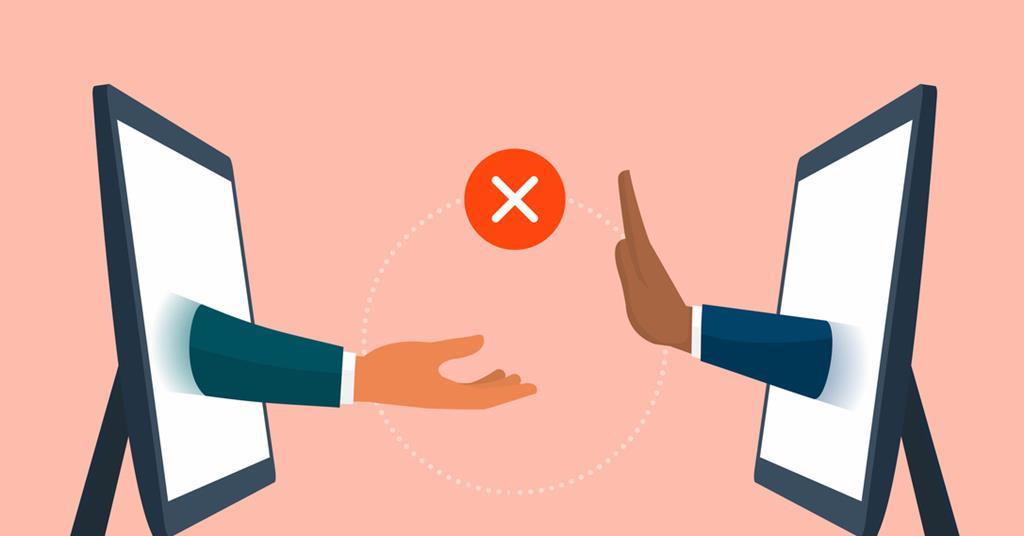

Divulging that you are using generative AI as your personal mental health advisor.
getty
In today’s column, I examine the tradeoffs of telling your friends and family that you are making use of generative AI and large language models (LLMs) for mental health guidance.
Here’s the deal. There are millions upon millions of users who are regularly tapping into modern-era AI to get mental health advice. By and large, nobody knows that someone is doing so. It is between them and the AI. The question arises whether to go ahead and inform others, such as family and friends, that you are doing so. Why mention it? What might be the reaction of those loved ones? This form of divulgement is a new phenomenon because of the advent of fluent AI and the ready access to AI-generated psychological guidance.
Let’s talk about it.
This analysis of AI breakthroughs is part of my ongoing Forbes column coverage on the latest in AI, including identifying and explaining various impactful AI complexities (see the link here).
AI And Mental Health
As a brief background, I’ve been extensively covering and analyzing various facets of the modern-era AI that produces mental health advice and performs AI-driven therapy. This rising use of AI has principally been spurred by the evolving advances and widespread adoption of generative AI. For an extensive listing of my well over one hundred analyses and postings, see the link here and the link here.
There is little doubt that this is a rapidly developing field and that there are tremendous upsides to be had, but at the same time, regrettably, hidden risks and outright gotchas come into these endeavors, too. I frequently speak up about these pressing matters, including in an appearance on an episode of CBS’s 60 Minutes, see the link here.
Background On AI For Mental Health
I’d like to set the stage on how generative AI and large language models (LLMs) are typically used in an ad hoc way for mental health guidance. Millions upon millions of people are using generative AI as their ongoing advisor on mental health considerations (note that ChatGPT alone has over 900 million weekly active users, a notable proportion of which dip into mental health aspects, see my analysis at the link here). The top-ranked use of contemporary generative AI and LLMs is to consult with the AI on mental health facets; see my coverage at the link here.
This popular usage makes abundant sense. You can access most of the major generative AI systems for nearly free or at a super low cost, doing so anywhere and at any time. Thus, if you have any mental health qualms that you want to chat about, all you need to do is log in to AI and proceed forthwith on a 24/7 basis.
There are significant worries that AI can readily go off the rails or otherwise dispense unsuitable or even egregiously inappropriate mental health advice. Banner headlines in August of this year accompanied the lawsuit filed against OpenAI for their lack of AI safeguards when it came to providing cognitive advisement.
Despite claims by AI makers that they are gradually instituting AI safeguards, there are still a lot of downside risks of the AI doing untoward acts, such as insidiously helping users in co-creating delusions that can lead to self-harm. For my follow-on analysis of details about the OpenAI lawsuit and how AI can foster delusional thinking in humans, see my analysis at the link here. As noted, I have been earnestly predicting that eventually all of the major AI makers will be taken to the woodshed for their paucity of robust AI safeguards.
Today’s generic LLMs, such as ChatGPT, Claude, Gemini, Grok, and others, are not at all akin to the robust capabilities of human therapists. Meanwhile, specialized LLMs are being built to presumably attain similar qualities, but they are still primarily in the development and testing stages. See my coverage at the link here.
Societal Perception Of Traditional Therapy
Shifting gears, the use of therapists and getting therapy has been a changing societal aspect, ranging from downbeat to upbeat perceptions. There had been a long history of stigma associated with going to see a “shrink” and getting “your head examined”. People were ostracized for seeking out mental health assistance. What’s wrong with you? That’s the old-time way of expressing disdain for seeing a psychologist or psychiatrist.
The pursuit and perception of therapy have gradually been changing.
Some amount of social legitimacy finally began to reach population-level acceptability. Seeing a therapist was okay. It meant that you were taking care of yourself. Those around you might even avidly encourage someone to seek out mental health counseling. It was nearly thought of as a brave act and a positive sign of self-realization that going to get psychological guidance was a sensible thing to do.
Not everyone perceives this to be an upbeat case. There is still eyebrow-raising when people discover that someone they know is getting professional mental health care. On the one hand, this is said to be a good sign. At the same time, it raises worries in the back of the mind. What does this mean for that person’s day-to-day operations? Are they on the edge? As a friend or family member, what should I be watching out for?
The point being that there is an ongoing up-and-down public relationship with the use of therapy. A range of responses is the prevailing norm. Some say great, glad to know that a loved one is doing the right thing. Others carry a tad of trepidation. And then there are those who see this as an unknown and aren’t sure what to make of it. Generally, surveys suggest that the up-and-coming generations are more receptive to the use of therapy. If that trend continues, the population overall will gradually turn in that direction over time.
AI Usage For Mental Health Guidance
How does the use of AI for mental health guidance impact the societal perception of undergoing this latest form of therapy?
It is quite a mixed bag right now.
First, assuming that someone is using generic generative AI and not a specialized mental health app, the viewpoint in general is that they aren’t really tapping into AI for therapeutic purposes. It is just something that happens to be there and that they just so happen to make use of. One minute, a person asks questions about how to fix their car, and the next moment, they ask AI some highly personal questions about their mental status.
Second, no one would readily know that a person is using generative AI as a mental health advisor. It is a secret of sorts. The person logs into AI and engages in a mental health conversation. The AI and the person interact. No one else needs to know. No one else is likely to readily discover the activity. In that sense, it is private with respect to what family and friends might be aware of.
On this aspect of privacy, few people seem to realize that the AI maker can know that someone is using the AI for mental health purposes. The online licensing agreements for using AI are typically worded to indicate that the user has no semblance of privacy associated with the prompts and interactions they have with the AI. The AI maker reserves the right to inspect the prompts and interactions. Furthermore, the AI maker stipulates that they can use that content to perform additional training of their AI.
The bottom line is that you don’t truly have privacy when using AI, despite assuming that you do.
Third, even if friends and family were to be aware of the usage, it is often perceived as a shrug-off. The belief is that AI-based mental health discussions are unlike those of seeing a human therapist. A human therapist is the real thing. AI is a kind of fake thing. You are toying with mental health guidance. You aren’t serious about it. You are dipping your toe into the waters, which is fine, and you are welcome to continue tinkering. No big deal.
More Reactions And Growing Concerns
As the use of generative AI for mental health aspects continues to expand, the action is moving from a novelty to something more pronounced.
Here are six of the typical reactions by family and friends upon telling them about such AI usage:
- (1) Curiosity. People around you might be curious about whether the AI is useful, and perhaps wonder whether they should consider doing the same. They might ask, “That’s interesting – does it help?” and be reserving judgement about the AI usage.
- (2) Triggering. People that you know might be alarmed and assume that you are not taking strong enough steps to seek mental health help. They might implore you, “You ought to go see a real therapist,” and believe that you aren’t taking seriously a matter that needs genuine focus.
- (3) Safety Concerns. Family or friends might be concerned that the AI is going to take you down the route into delusions and AI psychosis. Questions they might ask you include “Is it safe?” and “How far down the rabbit hole have you already gone?”
- (4) Skepticism. Loved ones might be highly skeptical that AI is going to do you any good. Expect questions and comments that encompass “You are getting therapy from a robot?” and “That sounds unhealthy” as responses to being informed about the AI usage.
- (5) Relief. Some reactions might exhibit relief. This could include “I’m glad you decided to take action” and “That’s good of you to try it,” expressing mild support for using AI as a mental health tool.
- (6) Dismissal. A less likely reaction, but one that nonetheless can arise, consists of a sense of dismay in a personally hurtful way. For example, the reaction might be “Why aren’t you talking to me instead?” and “So you trust AI more than you trust me?” – which is bound to create a secondary dynamic associated with using AI as a mental health advisor.
The reaction is going to be dependent upon the circumstances at hand. How well does the other person know you? How freely do they speak to you? What was the manner in which you divulged the AI usage to the person? And so on.
Also, you can expect both immediate and delayed reactions. Some people will have an instantaneous reaction. They might later reflect on the matter and change their tune. In addition, it could be that if you tell one person, that person “confides” in others, and gets further feedback, looping back to you with augmented commentary accordingly.
Why Proceed To Divulge
One question is why someone would tell others that they are using AI in this way. Might as well just keep it a secret. No need to blab. No need to deal with reactions. Keep things quiet instead.
Here are five major reasons that the AI usage is divulged:
- Enthusiasm. Some people who use AI for mental health purposes are excited that they can get advice whenever they want and without the usual hassles of seeing a human therapist. They are enthused about this new use of AI. They want to let others know. Perhaps using AI in this manner might be beneficial to them, too.
- Status Marker. To some extent, telling others that you are using AI for psychological help can be seen as a bit of bragging. The person is proud of finding and successfully utilizing state-of-the-art AI. They are an innovator.
- Need Help. Another angle is that the person is trying to hint that they need further assistance with their mental health concerns. Rather than directly admitting that they have any notable issues, they drop a heavy hint by emphasizing they are using AI as their helper to get through the day. The other people are supposed to read between the lines.
- Prefer To Reveal. Some might feel that being secretive about the AI usage is problematic. They are keeping something from loved ones. What if they find out on their own? The thinking is that it would be better to reveal what is taking place. Keeping the secret bottled up is worse.
- Be Informative. A person might have painstakingly realized that there are strengths and weaknesses of using AI for mental health uses. They have found this by lengthy trial-and-error. Loved ones may be considering using AI or are already doing so, but haven’t seen the big picture as they have. They want to bear witness to the pros and cons.
Those are key reasons that someone might divulge that their AI usage is taking place. There might be a particular intention to undertake the divulgence. On the other hand, sometimes people say the darnedest things and do not necessarily have a clear-cut motive in mind. I suppose we can add that there is a possibility of just randomly blurting it out or maybe bringing it up when some tangential topic arises.
Mental Health Versus Well-Being
There is a mighty big difference between seeing a human therapist and merely accessing generic generative AI for psychological insights:
- Therapy disclosure says: “I am working with another human to understand myself.”
- AI disclosure says: “I am working with a system to understand myself.”
The factors are a magnitude of difference, such as the seriousness of the act. For example, going to a human therapist means you are quite serious. You are paying to do so. You must logistically arrange to do so. It is a ratcheting up that suggests a semblance of personal commitment. The appearance is that something must be of sufficient personal concern that going the route of a human therapist warrants such overt action.
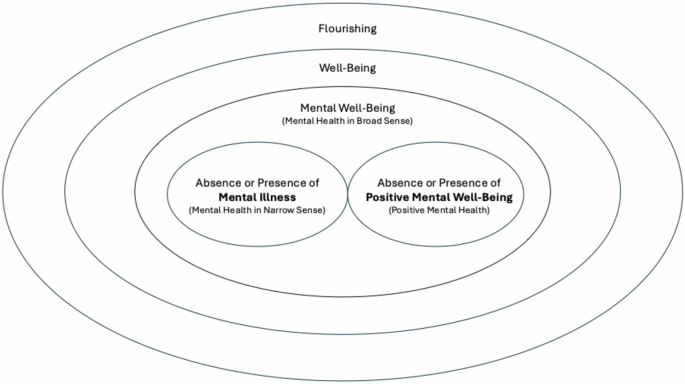
People generally tend to perceive AI as a well-being advisor rather than a purely mental health advisor. You use AI to get snappy ideas. You take it half-seriously. You come and go in terms of using AI for a well-being motivator. It isn’t the same as going to see a mental health professional.
Divulging that you are using generic generative AI as a well-being advisor is currently a relatively low-key revelation. The public doesn’t construe this as on par with seeing a human therapist. Thus, the response or reaction is likely to be less pronounced and can be undertaken with a more casual consideration.
The Direction Ahead
The terrain of AI is the human psyche.
It is incontrovertible that we are now amid a grandiose worldwide experiment when it comes to societal mental health. The experiment is that AI is being made available nationally and globally, which is either overtly or insidiously acting to provide mental health guidance of one kind or another. Doing so either at no cost or at a minimal cost. It is available anywhere and at any time, 24/7. We are all the guinea pigs in this wanton experiment.
The reason this is especially tough to consider is that AI has a dual-use effect. Just as AI can be detrimental to mental health, it can also be a huge bolstering force for mental health. A delicate tradeoff must be mindfully managed. Prevent or mitigate the downsides, and meanwhile make the upsides as widely and readily available as possible.
A final thought for now.
The famous poet Khalil Gibran made this pointed remark: “If you reveal your secrets to the wind, you should not blame the wind for revealing them to the trees.” The same applies to keeping a secret about your use of AI for mental health guidance. Once you’ve leaked the secret, be prepared for wherever it might flow. If you are fine with the world knowing, go for it.