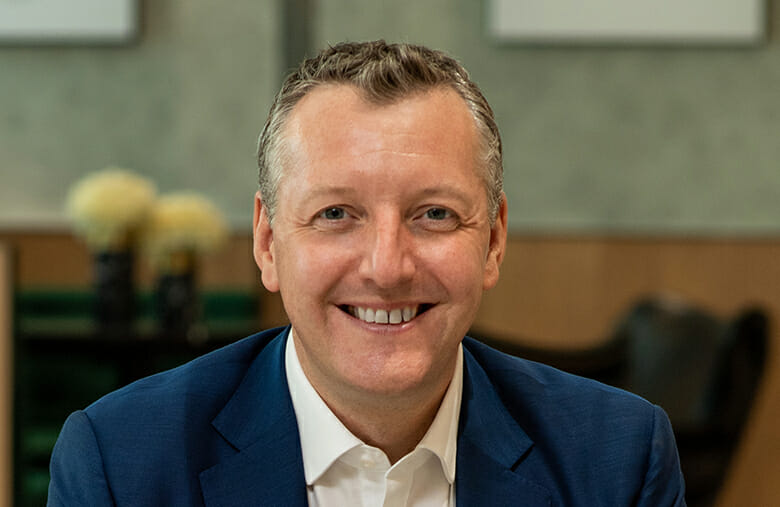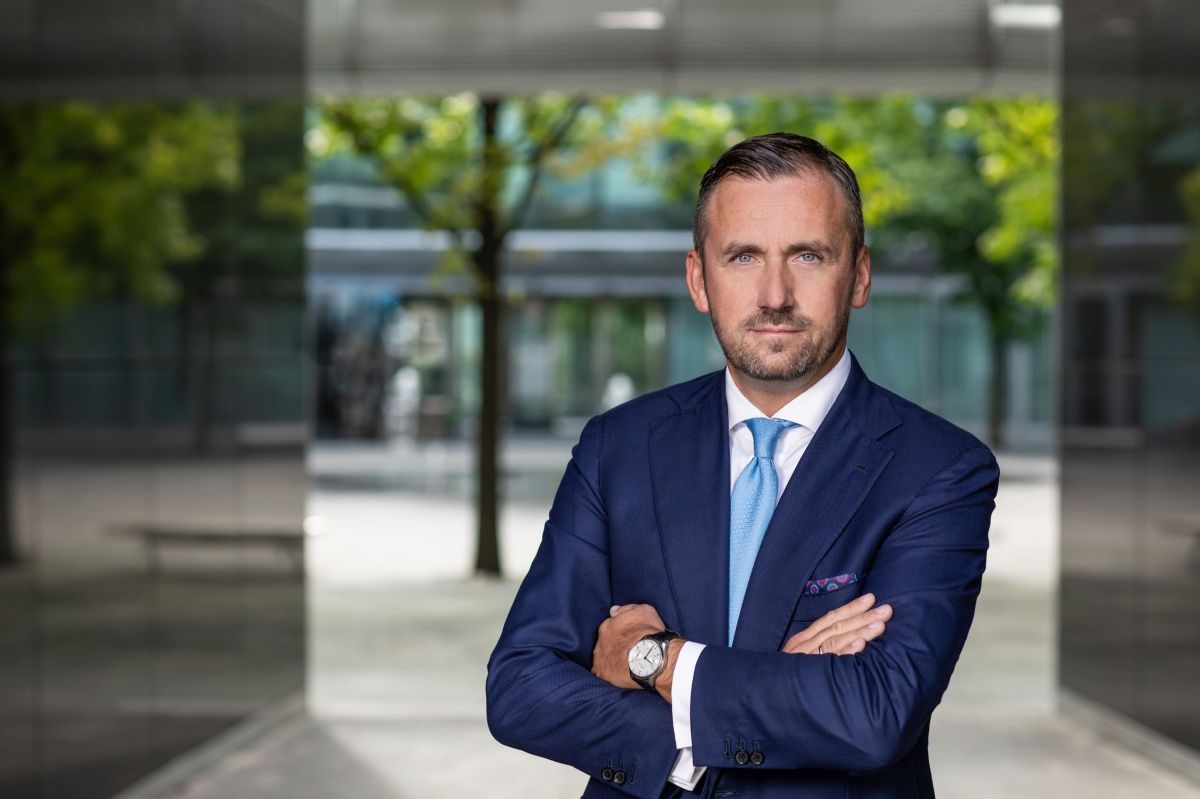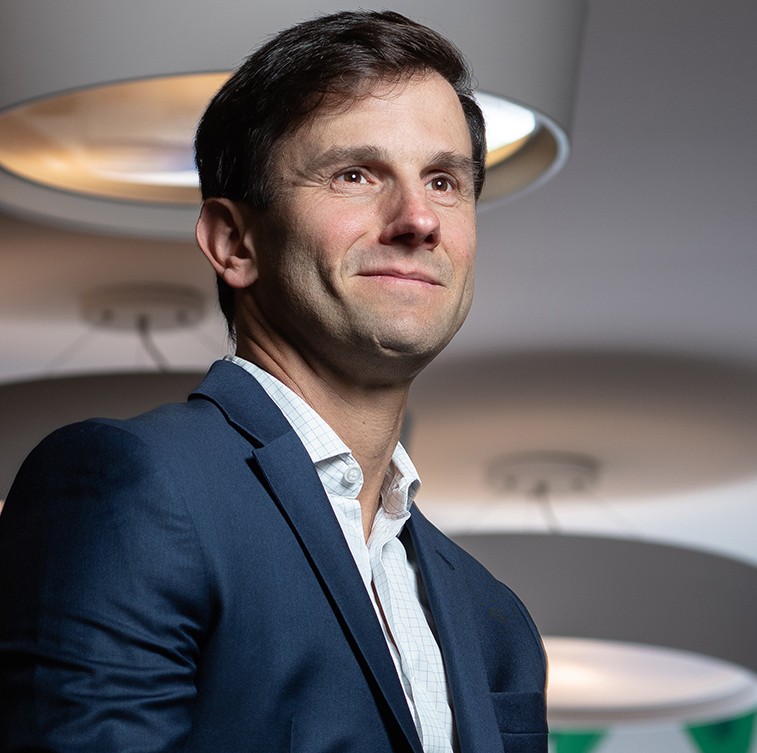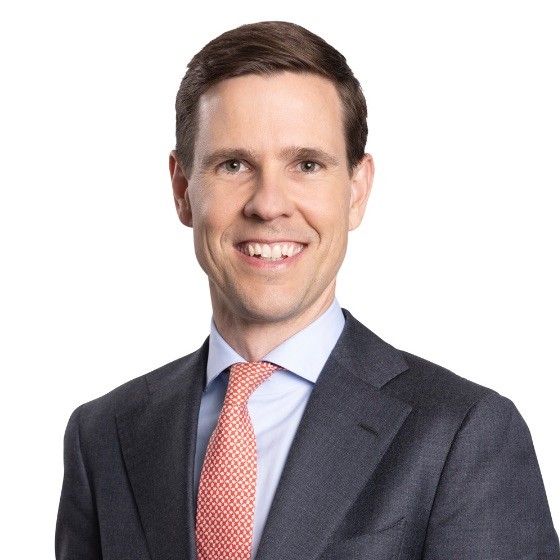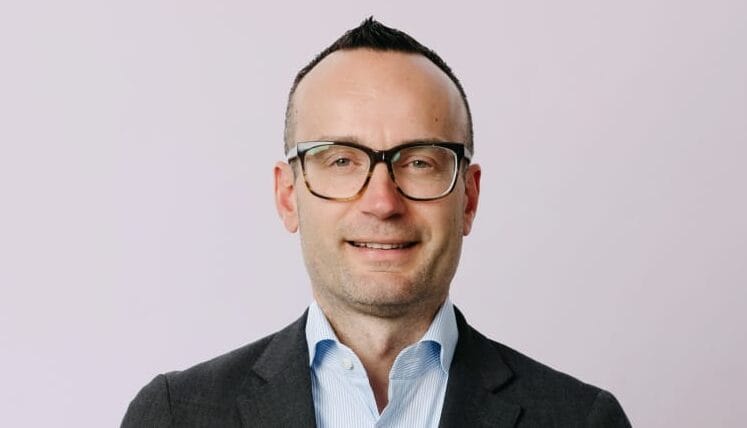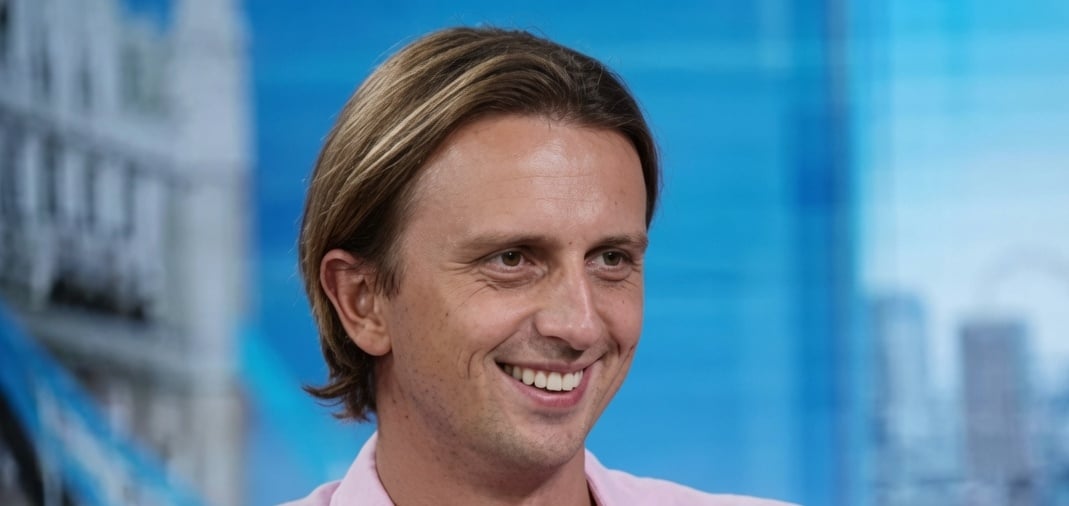
Nik Storonsky is a fintech entrepreneur, former derivatives trader, and billionaire. He is the co-founder and CEO of Revolut and is widely regarded as the most consequential figure in European fintech.
The former derivatives trader who founded Revolut in 2015 has built it, in a decade, into the most valuable private technology company in Europe. Valued at $75 billion in an October 2025 fundraising round and holding a full UK banking licence since March 2026, Revolut under Storonsky’s leadership serves more than 50 million customers across more than 40 countries, employs over 10,000 people, and generates profits before tax exceeding £1 billion. In the 2026 Forbes Billionaires List, Storonsky was ranked 149th globally with an estimated net worth of $18.8 billion — a figure that traces the extraordinary arc from a personal investment of £300,000 of savings in 2015 to the creation of a global financial institution of historic scale and ambition.
Revolut began with a simple, personal observation: that international banking fees were arbitrary, opaque, and unjustifiably expensive — that the cost of spending money across borders bore no relationship to the actual cost of the transaction, representing instead a systematic extraction of value from consumers and businesses by incumbent financial institutions operating with insufficient competition. Storonsky’s response was characteristically direct: to build a better alternative from scratch, using technology to eliminate the structural costs and intermediary layers that made traditional banking so expensive. The result has been a company that has not merely improved on existing banking services but has reimagined what a global financial institution can be — a mobile-first, data-driven, borderless financial platform that has attracted tens of millions of customers who chose it because it genuinely serves their interests better than any alternative.
Born on 21 July 1984 in Dolgoprudny, a town approximately 20 kilometres north of central Moscow, Storonsky grew up in a family shaped by the technical rigour of Soviet scientific culture and the commercial upheaval of Russia’s transition from communism to capitalism. His father held a senior management position at Gazprom Promgaz, one of Russia’s largest state-owned energy companies. As a child, he was a state champion swimmer and a two-time winner of the International Economics Olympiad — winning the global competition in the ninth and eleventh grades, in each case against the field of the world’s best young economists, driving himself without parental coaching through sheer competitive determination. These early demonstrations of exceptional intellectual ability and competitive drive foreshadowed the qualities that would define his entrepreneurial career.
Early Life and Education of Nik Storonsky

Nikolay Storonsky was born on 21 July 1984 in Dolgoprudny, Russia — a satellite town north of Moscow that is home to the Moscow Institute of Physics and Technology, one of the Soviet Union’s most prestigious scientific and research institutions. Growing up in proximity to one of Russia’s greatest scientific universities, in a family with deep roots in the technical professions, gave Storonsky an early immersion in the culture of rigorous quantitative thinking that would prove foundational to his subsequent career. Dolgoprudny was a town defined by the intellectual traditions of Soviet scientific education — high standards, fierce competition, and a conviction that mathematical and physical rigour were the most reliable tools for understanding and transforming the world.
His competitive career as a swimmer — reaching state championship level — gave him the physical discipline and competitive mentality of a serious athlete, qualities that translate directly into the high-pressure, high-stakes environment of trading floors and startup building. His consecutive victories in the International Economics Olympiad, in ninth and eleventh grades, were more than academic achievements: they demonstrated an ability to perform under pressure, against the best competitors in the world, in a domain that would prove directly relevant to his subsequent career in financial markets and fintech entrepreneurship.
He began his higher education at the Moscow Institute of Physics and Technology — known as Phystech or MIPT — the institution that had given shape to Dolgoprudny’s intellectual identity for decades. Founded in 1946 on the model of the great American research universities, MIPT was designed from the outset to train the Soviet Union’s most gifted physicists, mathematicians, and engineers, and its entry requirements and academic standards have remained among the most demanding of any university in the world. Storonsky earned a Master of Science in General and Applied Physics from MIPT — a degree that gave him the most rigorous quantitative and analytical formation available anywhere in the scientific education system.
He subsequently earned a Master of Arts in Applied Economics and Finance from the New Economic School in Moscow — an institution founded in 1992, at the dawn of Russia’s market economy, specifically to train economists in the Western academic tradition of rigorous quantitative economics. The New Economic School brought together faculty trained at the world’s leading economics departments with students drawn from Russia’s brightest graduates, creating an environment of exceptional intellectual intensity focused on the economic transformation of a country moving from central planning to market capitalism. The combination of a Phystech physics degree and a New Economic School economics degree represents one of the most formidable dual academic foundations in quantitative finance — precisely the combination that would make Storonsky an exceptionally capable derivatives trader and, subsequently, a systems-level thinker about how global financial markets could be redesigned.
Also Read: Kevin Plank: Visionary Founder, College Athlete, and CEO of Under Armour
Nik Storonsky’s Career at Lehman Brothers and Credit Suisse
In 2004, Storonsky relocated to the United Kingdom — a move that placed him in the global financial capital at a moment of extraordinary activity in the derivatives and structured products markets. He subsequently acquired British citizenship, establishing the legal and personal connection to the United Kingdom that would later shape Revolut’s regulatory home and strategic base. He began his career in finance as an equity derivatives trader, joining Lehman Brothers in 2006.
Lehman Brothers, at the time of Storonsky’s arrival, was one of the dominant forces in global fixed income and derivatives markets — a firm at the cutting edge of financial product innovation and quantitative trading. Working as an equity derivatives trader in this environment gave him direct exposure to the mechanics of complex financial instruments, the risk management frameworks that underpin derivatives trading, and the quantitative models that price and hedge complex exposures. More fundamentally, it gave him an insider’s view of the gap between the sophistication of institutional financial services and the primitive, expensive, and customer-hostile experience of retail banking — a gap that would later motivate the founding of Revolut.
Lehman Brothers’ collapse in September 2008 — the largest bankruptcy in American history and the event that triggered the global financial crisis — was a defining moment in the careers of everyone who worked there. Storonsky subsequently moved to Credit Suisse, where he worked as an equity derivatives trader until 2013. His five years at Credit Suisse gave him continuity in the derivatives trading world while exposing him to a different institutional culture — the Swiss banking tradition of discretion, risk management, and client service — and deepening his understanding of global financial markets across multiple economic cycles, including the extraordinary volatility and regulatory upheaval of the post-2008 period.
Also Read: David Solomon: Investment Banking Icon, Cultural Innovator, and Goldman Sachs Chairman and CEO
The Founding of Revolut

By 2013, Storonsky had accumulated seven years of experience at the highest level of equity derivatives trading and had developed a clear and urgent critique of the traditional banking industry — not as an abstract intellectual position but as a lived personal experience. He was a frequent international traveller whose own banking experience was consistently frustrating: hidden fees on currency exchange, arbitrary charges for international card transactions, slow and expensive international transfers, and the general opacity of a system that extracted value from customers at every point of friction.
He founded Revolut Ltd in December 2013 and was the company’s first investor, contributing approximately £300,000 of his own savings to launch the project. The founding idea was focused and concrete: a multi-currency card with fair exchange rates, using interbank rates rather than the marked-up rates offered by traditional banks and currency exchange services. Several months after beginning the project, he invited Vlad Yatsenko — a software engineer he knew from Deutsche Bank — to join as Chief Technology Officer and co-founder. Yatsenko’s engineering capability, combined with Storonsky’s financial markets knowledge and product vision, created the founding team combination that would build one of the world’s most significant fintech companies.
Revolut officially launched in July 2015 with a prepaid debit card and mobile app allowing users to hold and exchange multiple currencies at interbank rates without fees. The product immediately addressed a genuine and widely shared consumer pain point, and its growth was rapid and organic. By 2018, the company had become a unicorn following a $250 million funding round, and its expansion into cryptocurrency trading, stock investing, budgeting tools, insurance products, and business banking was accelerating. The company secured a Challenger bank licence from the European Central Bank, facilitated by the Bank of Lithuania, in 2018, enabling it to offer deposit-taking and lending services across the European Union.
Also Read: Georges Elhedery: Global Markets Architect, Multilingual Banker, and Group Chief Executive of HSBC
Nik Storonsky’s Growth Strategy at Revolut
Storonsky’s approach to building Revolut has been characterised by aggressive product expansion, geographic velocity, and a data-driven culture that prizes speed and measurable outcomes over process and convention. From the initial multi-currency card, Revolut expanded its product range to encompass a comprehensive financial services platform: cryptocurrency trading, launched in 2017; stock trading; insurance products; business accounts; Revolut Junior for children; premium subscription tiers offering enhanced benefits; and a growing suite of financial planning and wealth management tools. Each product expansion was driven by a clear logic: to make Revolut the single financial institution that could meet all of a customer’s needs, eliminating the need for relationships with multiple banks and financial service providers.
Geographic expansion has been equally aggressive. From its UK and EU base, Revolut has expanded into the United States, Australia, Japan, Singapore, Mexico, and dozens of other markets, each requiring different regulatory engagement, product adaptation, and commercial strategy. The January 2026 launch of full banking operations in Mexico — capitalised at over $100 million, more than double the regulatory minimum — exemplified the ambition and financial commitment of the expansion programme. The US market, where Revolut has built a significant user base but has faced regulatory complexity in obtaining banking authorisation, remains one of the most strategically important frontiers for the company’s long-term growth aspirations.
The long-sought UK banking licence, finally obtained in March 2026 after a multi-year application process, was a landmark moment for both Revolut and the UK fintech industry. The licence enables Revolut to protect customer deposits under the Financial Services Compensation Scheme, to provide consumer credit services, and to compete directly with traditional UK banks for the full range of retail banking relationships. Its attainment, after years of regulatory engagement and internal investment in compliance and risk management infrastructure, validated the maturity of Revolut’s governance and control framework and opened the path to a much more significant share of UK consumers’ primary banking relationships.
Nik Storonsky’s Leadership at Revolut
Storonsky leads with the intensity and data-orientation of a former derivatives trader — someone for whom the quality and speed of information processing are the primary competitive variables, and for whom inefficiency and imprecision are fundamental failures. He has built Revolut’s culture around these values: high performance expectations, rapid iteration, measurement of everything, and an intolerance for the bureaucratic patterns that make large organisations slow and unresponsive. Former employees and media reports have described a demanding, high-pressure work environment characterised by long hours, ambitious targets, and high staff turnover — a culture Storonsky himself acknowledged had at times made mistakes, and which the company has worked to improve as it has scaled.
His geopolitical positioning has been shaped by a principled response to the Russian invasion of Ukraine in February 2022. He publicly condemned the invasion, renounced his Russian citizenship — noting that the impossibility of navigating global banking regulations with a Russian passport was itself a reason for the decision — and pledged to match donations made to the Red Cross in support of humanitarian efforts in Ukraine. The decision to renounce Russian citizenship was both a personal statement and a commercial one, removing a potential regulatory complexity from a business seeking banking licences in multiple Western jurisdictions.
Nik Storonsky’s Other Ventures
In 2022, Storonsky founded QuantumLight — an AI-powered venture capital firm that applies a proprietary AI platform called Aleph to analyse startups and identify high-potential investment opportunities, typically targeting later-stage companies with proven traction. By 2025, QuantumLight had raised approximately $250 million, deploying capital into fast-growing AI-focused businesses including Sipay and Robin AI. The fund represents Storonsky’s conviction that the same data-driven, quantitative approach that has powered Revolut’s product development can be applied systematically to the identification of exceptional investment opportunities in the global technology ecosystem.
Since 2023, his family office has been developing a network of luxury villas and resort properties under the name Utopia — focusing on high-end holiday destinations for kite-surfers and surfers in Spain, Brazil, and the Dominican Republic. This venture reflects both his personal passion for water sports and a commercial instinct for the luxury experiential hospitality market that is growing rapidly among the global ultra-high-net-worth consumer segment that Revolut’s premium products serve.
Leadership Style of Nik Storonsky

Storonsky leads with the analytical rigour of a quantitative scientist and the competitive intensity of a state champion swimmer and economics olympiad winner. He is known for directness, speed of decision-making, and a genuine conviction that most of the problems in traditional financial services arise from structural inefficiency and incumbent inertia rather than fundamental complexity — and that technology, applied with sufficient ambition and speed, can eliminate those inefficiencies at global scale. His physicist’s instinct for first-principles thinking — asking what a financial service fundamentally is, what it should cost, and what it should do — rather than accepting inherited industry structures has been the intellectual engine of Revolut’s product innovation.
Business Success of Nik Storonsky
Storonsky’s business record at Revolut is among the most impressive in European entrepreneurial history. From a £300,000 personal investment in 2013 to a $75 billion valuation in 2025 — the most valuable private company in Europe and the eighth most valuable private company in the world. From a single multi-currency prepaid card to a comprehensive global financial super-app serving over 50 million customers. From a London startup to a company operating in more than 40 countries with a full UK banking licence and ambitions for further global expansion. Revolut became profitable in 2020 and has grown its profits rapidly since, with pre-tax profit exceeding £1 billion and revenues growing at exceptional rates. These results, achieved in a decade, represent one of the most extraordinary value-creation records in the history of European technology entrepreneurship.
Also Read: Jensen Huang’s Net Worth, Ethnicity, Career with Nvidia, and Leadership Style
Net Worth of Nik Storonsky

In the 2026 Forbes Billionaires List, Nik Storonsky was ranked 149th globally with an estimated net worth of $18.8 billion — up from $13.1 billion the prior year. His wealth is derived primarily from his approximately 29% ownership stake in Revolut, valued at the company’s $75 billion October 2025 valuation. A long-term incentive package could award him up to an additional 10% of the company’s shares should Revolut reach a valuation of $200 billion — a target that, if achieved through an IPO or further private funding, would make him one of the wealthiest individuals in the United Kingdom. He was first included on the Forbes Billionaires List in 2020 with an estimated net worth of $1.1 billion, and his journey to nearly $19 billion in six years reflects the extraordinary pace of Revolut’s value creation under his leadership.
Awards and Recognition of Nik Storonsky
Storonsky was included in Fortune magazine’s 40 Under 40 list in the finance category in 2020 and in The Telegraph’s Tech Hot 100. In 2024, he was named to the TIME100 Next list — Time magazine’s annual recognition of emerging leaders poised to shape the future across every domain. He was included in The Sunday Times Rich List in 2024, ranking among the 50 wealthiest people in the United Kingdom with an estimated fortune of £6.98 billion. He was ranked eighth in FinTech Magazine’s FinTech Top 100 Leaders for 2025. He has been profiled extensively in the Financial Times, The Economist, Forbes, and Bloomberg as the defining figure in European fintech and one of the most consequential technology entrepreneurs of his generation.
Personal Background of Nik Storonsky
Nikolay Storonsky was born on 21 July 1984 in Dolgoprudny, Russia. He holds British citizenship, having relocated to the United Kingdom in 2004, and renounced his Russian citizenship in 2022 following his condemnation of the Russian invasion of Ukraine. He has four children. His father held a senior management position at Gazprom Promgaz; his mother’s background is not publicly documented. He grew up as a competitive swimmer at state champion level and won the International Economics Olympiad twice in secondary school — early demonstrations of the combination of physical discipline and intellectual intensity that have characterised his entrepreneurial career. He is based in London, though a Companies House filing in 2025 briefly listed his residence as the UAE amid the broader exodus of wealthy UK residents following the abolition of non-domiciled tax status — a filing subsequently described as an administrative error. His personal interests include water sports, reflected in the Utopia resort venture focused on kitesurfing and surfing destinations.
Influence and Legacy of Nik Storonsky

Nik Storonsky’s legacy is the transformation of European fintech from a theoretical challenge to incumbents into a proven commercial force capable of competing with the world’s largest financial institutions. Revolut — the company he founded with £300,000 of personal savings in a London basement — is now valued at $75 billion, holds a UK banking licence, serves over 50 million customers, and generates more than £1 billion in pre-tax profit. It has demonstrated, definitively, that technology-first financial services can compete across every product category with incumbent banks that have centuries of history, government support, and established customer relationships.
His influence extends beyond Revolut’s own results to the broader European fintech ecosystem, which he has helped establish as a globally significant centre of financial technology innovation. His founding of QuantumLight reflects a commitment to continuing that ecosystem’s development through venture capital investment. As Revolut approaches its anticipated public offering — the most eagerly awaited IPO in European technology history — Storonsky’s legacy as the founder who built Europe’s most valuable private company from first principles is already secured. The full measure of that legacy will be written over the coming years as Revolut continues its ambition to become the global financial super-app for the twenty-first century.