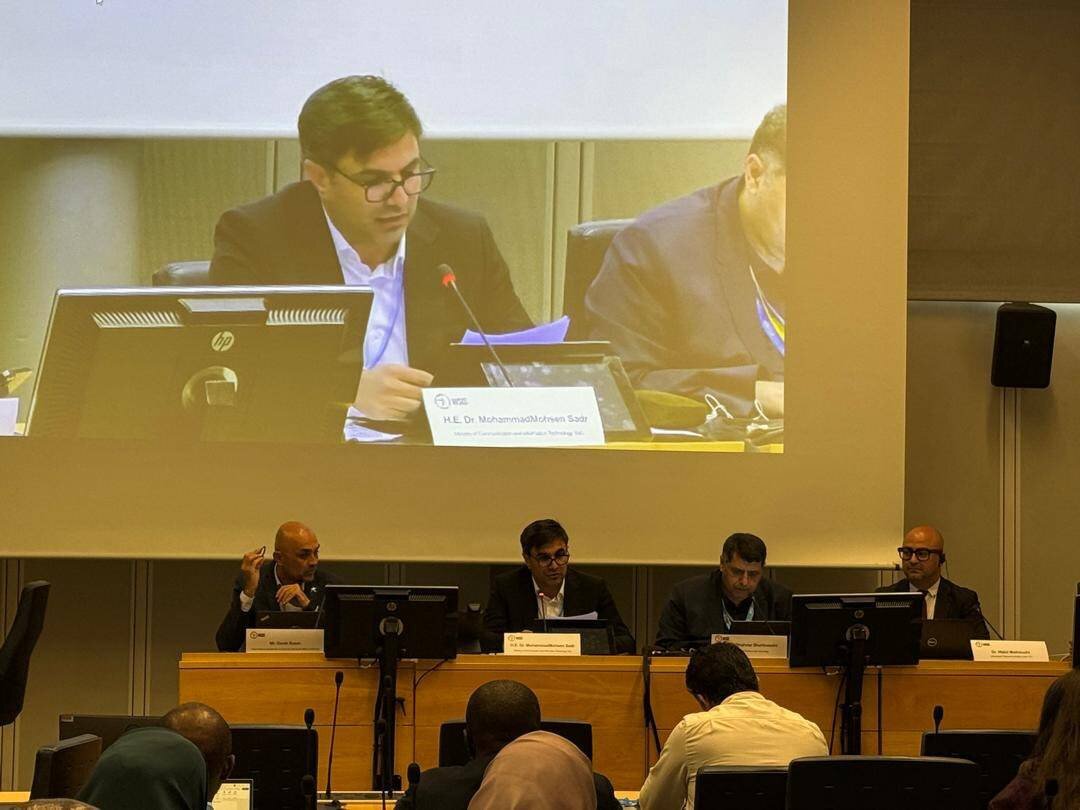
Anyone sceptical of the pace of progress in ocean energy tech would have been well-advised to attend a day-two session of the ICOE and OEE Ocean Energy Conference and Exhibition 2026 entitled Innovative technologies: from design to prototype.
This meeting of ocean tech minds saw pioneers from the coal face of the industry present a short summary of their latest innovations, along with a focus on lessons that other similarly minded innovators could benefit from.
In a rapid-fire format, 10 speakers, ably managed by chair Elva Bannon, research and engineering manager at Wave Energy Scotland, highlighted an array of innovations and expertise that spanned everything from design advice to methods to enable lower-cost deployment.
First to present was Tim Warren, operations director at British company Blackfish Engineering. Rather than highlighting a specific project, Warren set out to tackle what he described as “the reality of the design” process in general. His years of experience in this area led him to one key message he wanted to share with any early-stage ocean energy tech innovators in the audience: that engineering is iterative rather than linear.
“Embrace the iteration and learn to control it,” advised Warren.
Instead of taking a negative opinion of the fact that design work can often be frustrating and regularly features faltering progress, Warren explained how it’s far better to conduct any necessary problem-solving at the design stage than rushing something to market that isn’t up to scratch.
“Fundamentally, for every pound that you spend on design and solving the problem, there is 10 pounds that you save in manufacture and about 100 that you’ll save in deployment and operation. So, learn to love that iteration!”
Have you read?
Can IP help unlock investment in tidal stream power?
Marine energy will be the UK’s next great green frontier
Sticking somewhat with the iterative theme, the next speaker was Borja de Miguel, head of marine technologies/project manager at independent engineering firm IDOM, who detailed the offshore testing of the Marmok-A-5, a wave energy prototype with a novel air turbine and advanced controls, following extensive onshore testing.
De Miguel explained: “Our main goal has been to advance towards the commercial viability of our wave energy converter (WEC) technology while being focused on improving its power performance and at the same time trying to maintain its high reliability and survivability – qualities that we have already demonstrated both onshore and offshore as part of a detailed testing programme.”
He noted: “Our main innovation focus has been on the power-takeoff systems. We have developed a novel power-takeoff system comprised of a novel air-turbine and a set of advanced control strategies that we’ve been developing throughout the programme.
De Miguel detailed months of extensive installation and testing work for the upgraded wave energy converter – including the installation of a second turbine – at the Biscay Marine Energy Platform (BiMEP), located in the Bay of Biscay off the coast of Armintza and Bizkaia near Bilbao, Spain. “We’ve been working on the commissioning of the device this summer and we have recently started testing the turbines offshore,” he stated.
He added: “Within two years, we’re going to be able to demonstrate the results of this new design.”
Read more about the Port of Bilbao: How the Port of Bilbao is redefining ports’ role as energy hubs in Europe
Making a splash
Another presenter sharing a lengthy journey of developing ocean energy tech was Sergej Antonello Sirigu, assistant professor at the Politecnico di Torino’s MOREnergy Lab, within the Department of Mechanical and Aerospace Engineering (DIMEAS).
Sirigu showcased the 50kW PEnDULUM prototype planned for deployment near the Italian island of Pantelleria in 2028 as an open-access test platform. In his words, he wanted to detail “its journey from numerical modelling [which began back in 2012] towards the deployment at sea”.
According to Sirigu, the working principle of the prototype is “pretty simple”.
He explained: “We have a sealed floating hull and inside we have a pendulum, and its shaft is connected to an electrical power-takeoff.”
Although the principle may be simple, the scale of the prototype gives some idea of the challenges involved with development and installation work.
“The hull alone is a steel structure of around 86 tonnes, and inside is the 10-tonne pendulum that is connected to a permanent magnet generator with a total power of 50KW, and on the deck we have also solar panels for a total of 3KW.”
Energy Transitions podcast: Unlocking the power of AI and ocean energy systems
The fact this work began 13 years ago aptly illustrates the endurance required to get ocean tech systems to the commercial scale. And for this particular one?
“Where we are today is that in 2026 we finalised the digital 50KW prototype design and we are planning to construct it in 2027, then install it off the coast of Pantelleria in 2028,” Sirigu confirmed.
Sea change
A running theme of lessons learned from these pioneers was the need for adaptability. And this was exemplified by the presentation from Sander Poppes, CEO of Symphony Wave Power.
Poppes explained how 30 years of learning have gone into his novel technology that converts the internal pressure variation in a water wave into electrical, renewable energy. Despite that long path, he happily conducted a “market-driven redesign” that he predicts will now see his tech go from prototype to scalable offshore energy solution in the next few years.
“The product was redesigned around maintainability,” Poppes revealed. And he detailed how this didn’t mean adding more complexity or fancy new tech. “One of our key findings is to have the electronics in a separate box. So, it’s not about a sophisticated system, it’s about creating an easy-to-maintain one with a limited number of components in it.”
Symphony has now built a full-scale prototype of a 100KW system that has been installed near to Amsterdam. “We have tested it over the past year and concluded that the model we built works really well – and as expected,” confirms Poppes. “And now we’re preparing for sea trials next year.”
Finish line
In a session filled with novel technologies, John Kennedy from Caudal Energy still managed to stand out when he introduced a passive floating tidal fin designed for shallow water and lower mooring requirements.
Kennedy explained: “The concept is based on the caudal fin – the tail fin of a fish.”
But for him, the technology isn’t the most exciting thing about Caudal Energy’s mission. “I came into this industry around three years ago and what stood out as being key to me is resource potential,” Kennedy recalled.
He cited a desire to increase the scale of the potential resource to make the tidal energy industry “hugely impactful at a system level, at grid level – and also to bring down the costs”.
So, how exactly does a fin-inspired solution help achieve these goals? “Fins open up our tidal energy because they work in shallow water,” Kennedy explained.
“With the sort of fin we’re using, it goes through from about 2m to 10m. It’s got a different efficiency profile to a turbine. Obviously, we think that’s good if it has lower mooring costs, but it’s to be decided whether it opens up lower water – which we think is essential to increase the scale on the grid.”
Kennedy made the point that similar fin-type solutions have already been developed before. “But we can get 50% more energy than some other players got out of their fins,” he stated.
His own solution is at the testing stage and Kennedy revealed that it’s also attracting considerable interest from investors – a critically important factor in getting such novel tech out of the lab and into the real world – and the funding of ocean energy tech is worthy of a presentation of its own. But the Caudal Energy man’s call to action wasn’t about technology, or indeed funding; rather, he focused on the need for collaboration across the entire value chain.
“Now that our tech is being successfully proven, I’m hoping that we can collaborate with other players to ensure that costs such as the cabling and the mooring side of things can be driven down. And I’m very clear that we all need to succeed to create this industry.”