By Adeola Adenikinju
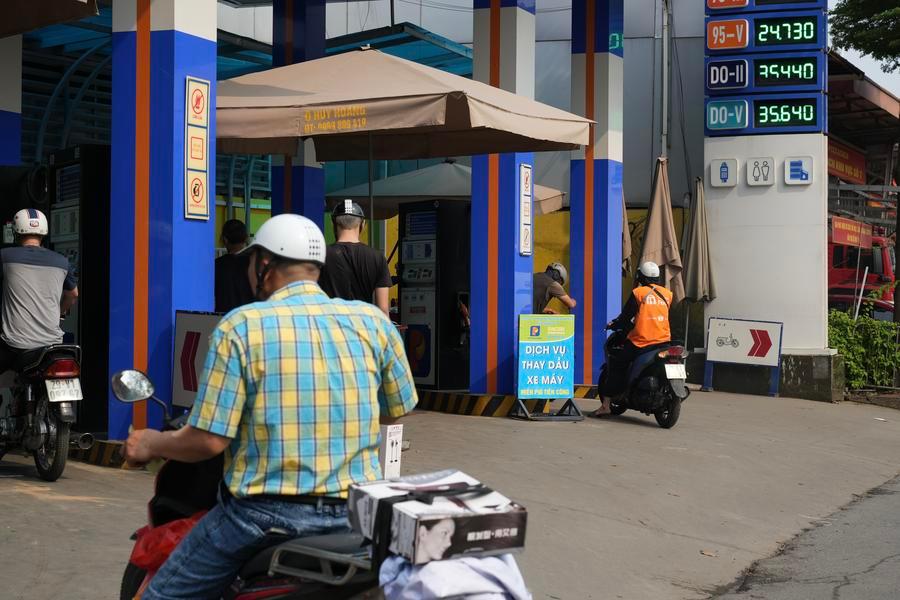
Nigeria is in the midst of a bold and consequential economic reform programme. Since 2023, the present administration has moved decisively to dismantle long-entrenched economic distortions — most notably the removal of the fuel subsidy, the unification and liberalisation of the foreign exchange market, and a broader commitment to fiscal consolidation. The results, at the macroeconomic level, have been notable. Government revenues at the federal and subnational levels have risen sharply.
The exchange rate, though painful in its adjustment, has stabilised after years of artificial management and its attendant distortions. International rating agencies and multilateral development partners have applauded the direction of travel, and there is cautious optimism in financial markets.
These are not trivial achievements. They deserve to be acknowledged honestly, especially given the political courage required to confront subsidies that were deeply embedded in the public consciousness, however economically irrational and riddled with corruption they had become. Yet acknowledgment is not the same as uncritical endorsement.
As economists, our responsibility extends beyond celebrating macroeconomic stabilisation; it requires us to interrogate the distributional consequences of reform, the adequacy of the policy framework, and the risks of an ideology that places excessive faith in markets as self-correcting and socially optimal mechanisms. A market economy, left entirely to its own devices, optimises for efficiency — not for equity, not for inclusion, and certainly not for the dignity of the poor.
The welfare economic foundations of current reforms
The intellectual architecture of the current reforms rests, consciously or otherwise, on a classical insight from welfare economics: the First Fundamental Theorem of Welfare Economics. This theorem establishes that, under conditions of perfect competition, complete markets, and rational agents, a competitive equilibrium will achieve a Pareto optimal allocation of resources. In plain terms, no one can be made better off without making someone else worse off.
The market, it is argued, allocates resources more efficiently than central planning, administrative controls, or state intervention. Subsidies distort prices and create dead-weight losses. Exchange rate controls breed parallel markets and encourage rent-seeking. Removal of these distortions, so the argument runs, allows the economy to converge toward a more efficient equilibrium.
This is sound economics, up to a point. The fuel subsidy, at its peak, consumed over N5 million yearly, was neither economically efficient nor socially just. It disproportionately benefited wealthier Nigerians who consumed more petroleum products, while creating a fertile environment for corruption, fuel diversion, and phantom imports. The foreign exchange management regime, similarly, bred a multi-tiered system that enriched currency arbitrageurs while starving manufacturers and small businesses of the competitively priced foreign exchange they needed. In these respects, the reformers are not wrong.
But the First Welfare Theorem is not a policy prescription. It is a theorem about an idealised world — one with perfect information, complete contracts, no externalities, no public goods, and no market power. Nigeria’s economy, like all real economies, departs fundamentally from these idealisations. To treat the theorem as an operational guide without simultaneously invoking the Second Fundamental Theorem of Welfare Economics — which recognises that distributional concerns require active policy intervention, including income transfers and social protection — is to apply half a
framework and pretend it is whole.
The second welfare theorem and the obligation to the poor
The Second Fundamental Theorem of Welfare Economics tells us something important and often inconvenient: any Pareto optimal allocation can, in principle, be achieved through a competitive equilibrium if we first redistribute endowments appropriately. The theorem legitimises the pursuit of efficiency through markets while insisting that the starting distribution of income and assets — and therefore the outcomes markets produce — is a matter of social choice, not natural law. Markets are instruments; equity is a political and moral commitment that must complement them.
For Nigeria’s reforms to be economically coherent and socially sustainable, they must be accompanied by deliberate redistributive mechanisms. Compressed purchasing power among low- and middle-income Nigerians — the consequence of subsidy removal and exchange rate adjustment — requires compensatory action: targeted social transfers, expanded social protection systems, and relief for the most vulnerable households.
The Federal Government‘s announced palliatives and conditional cash transfers are steps in the right direction, but the scale, coverage, and delivery efficiency of these programmes remain deeply inadequate relative to the size of the shock that ordinary Nigerians have absorbed.
Efficiency without equity is not development. It is growth that leaves the majority behind — and history has shown us, repeatedly, that such growth is neither durable nor just.
The SAP parallel: What history teaches
Nigeria has been here before. Between 1986 and 1992, the Structural Adjustment Programme (SAP) under General Ibrahim Babangida’s military administration pursued a remarkably similar policy agenda: exchange rate devaluation, subsidy removal, privatisation of state enterprises, and trade liberalisation. The macroeconomic outcomes, at the headline level, were not entirely without merit. Foreign exchange revenues were rationalised, and some structural inefficiencies were addressed.
But history’s verdict on SAP is largely unfavourable — and instructively so. The programme deepened poverty rather than reducing it. Real wages collapsed. Inflation eroded household purchasing power. Public investment in health, education, and infrastructure fell sharply as fiscal austerity tightened.
Deindustrialisation accelerated, as domestic manufacturers — unable to access foreign exchange at competitive rates and facing imported competition — closed factories and shed jobs. The number of Nigerians living in absolute poverty increased substantially during the SAP period. Corruption, rather than being tamed, found new expressions in the privatisation process and the management of market liberalisation.
The gains of SAP, such as they were, proved fragile. They were not institutionalised into a coherent industrial or development strategy. They were not anchored in a sustainable expansion of productive capacity. And they were not accompanied by a serious social contract with the Nigerian people. The result was a reform programme that generated macroeconomic adjustments without producing structural transformation — and that ultimately lost political legitimacy precisely because it was perceived, correctly, as imposing the costs of adjustment on the poor while the benefits flowed disproportionately to the already privileged.
The current administration must study this history seriously. The parallels are uncomfortable but instructive. Macroeconomic stabilisation is necessary; it is not sufficient. A rising tide does not lift all boats when many Nigerians do not own boats.
The debt paradox: Revenue without relief
Among the more paradoxical features of the current reform environment is the coexistence of rising government revenues with an escalating national debt burden. Federal government revenue has grown substantially since the commencement of reforms, reflecting higher oil receipts at market-reflective exchange rates and improved non-oil tax performance. This is welcome. But Nigeria’s debt service obligations have grown commensurately — in some quarters, consuming over 71.8 per cent of federal government retained revenue. The country is, in a structural sense, running faster simply to remain in place.
This is not a sustainable fiscal trajectory. The aggregate debt stock — domestic and external — continues to expand at a rate that raises legitimate questions about inter-generational equity and the long-term fiscal space available for development expenditure. What is the point of stabilising macroeconomic fundamentals if the fruit of that stabilisation is consumed entirely by debt service rather than invested in the productive capacity and human capital of the Nigerian people? Fiscal consolidation must not become a euphemism for austerity that perpetually defers the public investment that development requires.
The government must pursue a coherent debt management strategy that links debt sustainability analysis to a credible medium-term fiscal framework — one that explicitly programmes the fiscal space needed for capital expenditure in infrastructure, education, and healthcare, rather than allowing debt service to crowd out development spending indefinitely.
The structural deficits: Poverty, youth unemployment, and affordability
No macroeconomic account of Nigeria’s reform programme is complete without an honest reckoning with the structural conditions in which most Nigerians live. Nigeria has one of the largest concentrations of extreme poverty in the world. Youth unemployment — combining open unemployment with underemployment — affects a substantial and growing proportion of the country’s young population, many of whom are educated, ambitious, and deeply frustrated.
Food inflation, driven partly by exchange rate adjustment and supply-side constraints, has reduced real food affordability for tens of millions of households. The naira equivalent cost of necessities — food, energy, medicine, transportation — has risen sharply, eroding the living standards of the working poor, the informal sector, and fixed-income earners.
These are not peripheral concerns. They are central to any credible assessment of whether Nigeria’s reform programme is producing development, as opposed to merely adjusting macroeconomic aggregates. A government cannot declare reform successful when its citizens cannot feed their children, when graduates cannot find meaningful employment, and when the affordability of basic goods has deteriorated beyond the reach of ordinary households. The metrics of reform must include human welfare, not only exchange rate stability and fiscal ratios.
The ultimate test of economic policy is not whether it satisfies rating agencies in London and Washington. It is whether it improves the lives of Nigerians in Ajegunle, Beere, Sabon Gari, and Oje.
The long game: Human capital, infrastructure, and industrialisation
Perhaps the most important critique of reform programmes anchored primarily in market liberalisation is that they do not, by themselves, produce long-term economic development. Development is a structural process: it requires the accumulation of human capital through quality education and healthcare; the provision of public infrastructure — roads, power, water, digital connectivity — that enables productive activity; the deliberate development of industrial capacity that transforms raw materials into value-added goods; and the modernisation of agriculture to ensure food security and rural income growth.
These are fundamentally public investment challenges. They cannot be delegated to markets alone, because markets respond to price signals and profit expectations — not to social needs, long-term externalities, or the requirements of structural transformation in a late-industrialising economy. Nigeria’s persistent failure to industrialise, despite decades of oil wealth, reflects in part the absence of the patient, long-horizon state investment and institutional support that has characterised successful industrialisation elsewhere, from East Asia to the Gulf states.
Nigeria needs a credible, well-resourced, and consistently implemented National Development Plan — not a document that gathers dust in the Ministry of Budget and National Planning, but an operational framework that allocates capital, guides public investment, coordinates private sector activity, and is subject to rigorous monitoring and accountability.
The Medium-Term Expenditure Framework must become a genuine planning tool, not merely a budgetary ritual. Industrial policy, agricultural development financing, and technology-enabled value addition must be central rather than peripheral concerns of economic governance.
The legislature’s abdication: Approving without analysing
There is a dimension of Nigeria’s fiscal governance that has received insufficient public attention: the role — or more precisely, the failure — of the National Assembly in providing independent, rigorous scrutiny of the executive branch’s budgetary and borrowing proposals.
In a well-functioning democracy, the legislature is not a rubber stamp. It is the primary institutional check on executive fiscal discretion. Its constitutional mandate to appropriate public funds and authorise debt is not a ceremonial formality; it is a substantive obligation to evaluate whether proposed expenditures and borrowings are economically justified, fiscally prudent, and in the long-term interest of the Nigerian people.
The current posture of the National Assembly has fallen gravely short of this standard. Budget after budget, supplementary appropriation after supplementary appropriation, debt ceiling request after debt ceiling request, have passed through the legislature with a speed and unanimity that suggests political accommodation rather than analytical deliberation. The questions that ought to be asked — and answered, on the record — before any budget or debt request is approved are rarely asked with the rigour the situation demands: What are the medium-term growth implications of this spending profile? How will this borrowing affect the debt-to-GDP trajectory over a five- to ten-year horizon? What is the inflationary impact of the proposed expenditure, particularly in the context of already elevated consumer prices? What are the employment-generation effects of the capital expenditure lines? Does the budget reflect a coherent theory of inclusive economic development, or is it simply an aggregation of line items with no strategic coherence?
A legislature that approves every executive request without rigorous economic analysis is not serving the government — it is enabling it. And it is certainly not serving the Nigerian people.
The National Assembly should establish — and adequately resource — a dedicated Office of Budget and Economic Analysis, modelled on credible international examples such as the United States Congressional Budget Office or the United Kingdom’s Office for Budget Responsibility. Such an office, staffed by qualified economists, fiscal analysts, and sectoral specialists, would provide independent, non-partisan assessments of every major fiscal proposal before it reaches the floor for debate. Its reports should be public, its methodology transparent, and its conclusions binding as a precondition for legislative consideration of any budget or debt instrument.
Beyond institutional reform, the culture of legislative engagement with fiscal matters must change. Committee hearings on the budget should involve rigorous interrogation of ministry officials, independent expert testimony, and evidence-based deliberation — not political theatre followed by swift approval. Debt requests, in particular, must be subjected to detailed analysis of the terms, the use of proceeds, the repayment plan, and the cumulative impact on the debt service burden that is already crowding out development expenditure. Nigeria cannot afford a legislature that treats fiscal oversight as a burden to be minimised rather than a responsibility to be discharged with seriousness and competence.
This is not a partisan critique. It applies equally across administrations and across the chambers of the National Assembly. The failure of legislative fiscal scrutiny is structural and institutional, not merely the fault of individual lawmakers. Rectifying it requires deliberate institutional design, appropriate resourcing of legislative analytical capacity, and a political culture that rewards legislators for holding the executive accountable rather than for facilitating the passage of its proposals. Without this, even the most well-intentioned executive reforms will lack the independent verification and course-correction mechanism that responsible governance requires.
Conclusion: Reforms in service of the people
Nigeria’s economic reforms represent a serious and long-overdue effort to correct macroeconomic distortions that had become fiscally unsustainable and economically dysfunctional. The political will to pursue them deserves recognition. But the work of reform is not complete when the exchange rate stabilises or when international bond markets applaud. It is complete — if it is ever complete — when the conditions of life for ordinary Nigerians improve in measurable, sustained, and equitable ways.
Welfare economics teaches us that competitive markets are powerful instruments for achieving allocative efficiency, but that efficiency without equity is an incomplete social objective. The Second Welfare Theorem reminds us that distributional outcomes are not given by nature; they are shaped by policy choices, and those choices reflect values. Nigeria’s reform programme must be guided not only by the logic of market equilibrium but by the imperatives of social justice, structural transformation, and long-term development.
The government must resist the temptation to treat macroeconomic stabilisation as an end in itself. It must invest seriously in human capital, infrastructure, industrialisation, and agricultural development. It must address the debt burden with urgency and transparency. It must protect the poor and the vulnerable with mechanisms that are scaled to the magnitude of the shock they have absorbed. And it must govern with a long-term development plan that takes seriously Nigeria’s ambition to become a prosperous, industrialised, and equitable society.
The market is a powerful tool. But it is a tool in service of human welfare — not a substitute for it. Nigeria’s policymakers would do well to keep that distinction firmly in view.
Prof. Adenikinju is a Senior Economist at the University of Ibadan and former President of the Nigerian Economic Society.