Discharge should be planned early and revisited often
For children with medical complexity, particularly those with dependence on medical technology, discharge is a longitudinal process. Families describe feeling most supported when discharge planning begins early and is framed as a shared goal, rather than a sudden event.1 Early conversations about what a safe discharge requires, including caregiver readiness and home care realities, can shape clinical decisions. Revisiting the plan throughout admission reduces last-minute gaps and reinforces the importance of continuity across hospital and community settings.
The realities of dependence on medical technology require planning
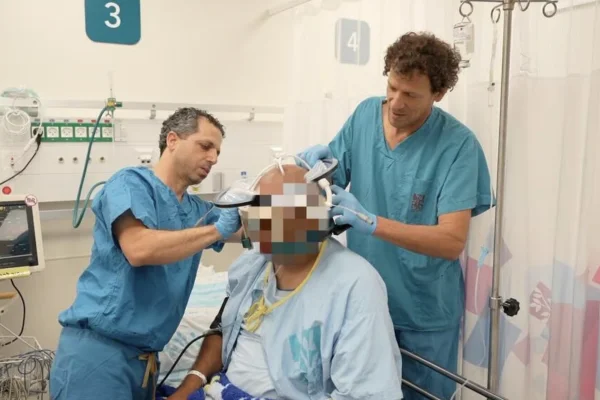
For children discharged with technologies such as feeding tubes and tracheostomies, integrated planning is needed that reflects how devices, medications, and monitoring intersect in daily life.2 Planning should anticipate equipment failure, supply delays, clinical deterioration, and home care challenges, and discuss contingency plans, symptom management, and when families should seek urgent care.3
Caregivers must be taught to provide home care
Clinicians should ask caregivers to describe a typical day at home, including who is present, where care occurs, and how tasks will be sequenced.4 Teaching should be grounded in these realities rather than idealized workflows. Progressive caregiver involvement in care delivery during admission, and short home “passes” when feasible, allow families to test routines and return with questions.
Logistics should be coordinated, to reduce administrative workload for families
Discharge involves prescriptions, equipment orders, home care, funding logistics, and communication across teams. Clinicians should assign clear responsibility for each task and confirm completion before discharge. Families should leave knowing what has been arranged, what requires follow-up, and whom to contact with concerns.5
Postdischarge accountability and communication should be clarified
Uncertainty about who is responsible once home can contribute to anxiety and avoidable emergency visits. Clinicians should identify the clinician or team overseeing ongoing coordination and ensure timely communication with primary, community, and home care providers. Direct handovers and shared communication tools, created with families, support continuity of care during a vulnerable transition.6
Footnotes
-
Competing interests: None declared.
-
This article has been peer reviewed.
-
Editor’s note: Emma Luyimbazi is a parent of a child with medical complexity. Elena Mitevska is a pediatrics resident with special interest in children with medical complexity. Victor Do is a hospital and complex care pediatrician at the Stollery Children’s Hospital. In addition to Emma Luyimbazi being an author on this piece, several families with children with medical complexity were consulted in the drafting and editing of this article.
This is an Open Access article distributed in accordance with the terms of the Creative Commons Attribution (CC BY-NC-ND 4.0) licence, which permits use, distribution and reproduction in any medium, provided that the original publication is properly cited, the use is noncommercial (i.e., research or educational use), and no modifications or adaptations are made. See: https://creativecommons.org/licenses/by-nc-nd/4.0/