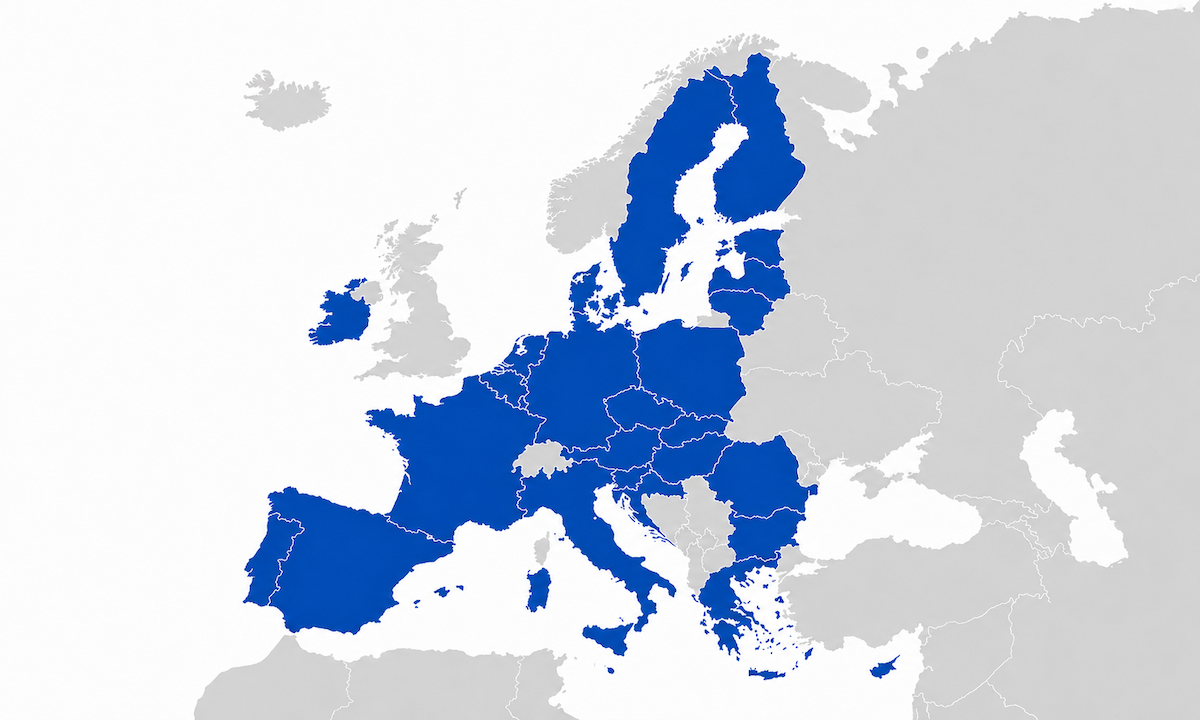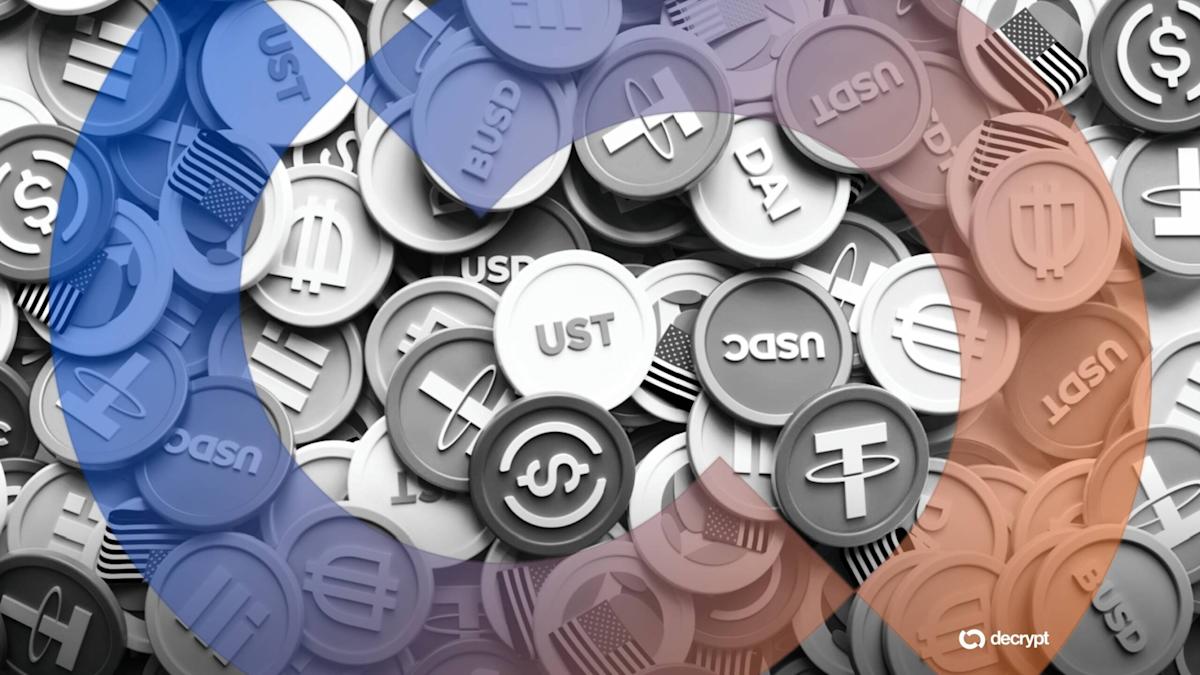
The European Central Bank has warned that a growing market for euro-denominated stablecoins could create new faultlines in euro area sovereign debt markets, as digital token issuers emerge as potentially significant holders of government bonds. In a chapter in Macroprudential Bulletin, the ECB argued that wider euro stablecoin adoption would not have a uniform effect on demand for sovereign debt. Much would depend on the identity of the issuer, the composition of reserve assets and the source of the funds flowing into the tokens.
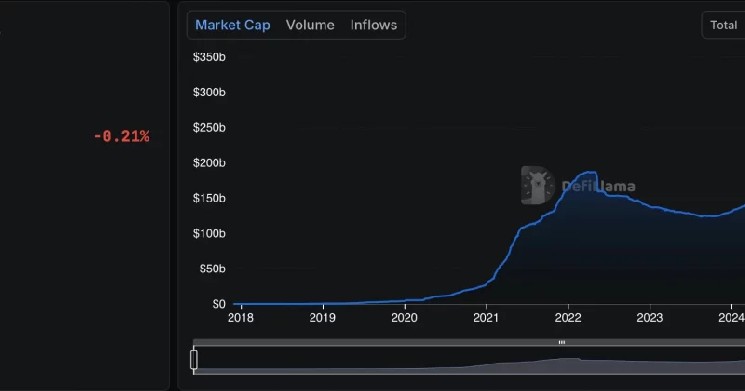
The central bank noted that the market remains small, with euro-denominated stablecoins reaching about €450m in market capitalisation in January 2026, up from €50m at the start of 2024. That is still marginal compared with the roughly $300bn market for US dollar stablecoins. But the ECB concluded that continued expansion, even from a low base, could make euro stablecoin issuers more relevant participants in euro area sovereign bond markets.
Small but not trivial
Under the European Union’s Markets in Crypto-Assets Regulation (Mica), euro-denominated e-money tokens (EMTs) must hold at least 30% of their reserves with credit institutions, rising to 60% for significant issuers. The remainder must be invested in low-risk, highly liquid assets such as sovereign bonds, meaning strong growth in euro stablecoins could create a new source of demand for government debt.
The ECB, however, argues that the relationship is more complex than that. To assess it, the central bank developed what it termed a pass-through rate, measuring the extent to which growth in stablecoin issuance would translate, directly or indirectly, into sovereign bond holdings. A pass-through rate of 1 would imply that sovereign bond holdings rise by the same amount as stablecoin issuance, while a rate of 0 would mean no additional demand for sovereign bonds. A rate of 0.5, by contrast, would indicate that sovereign bond holdings rise by half the increase in stablecoin issuance.
Using that measure, the ECB found that the effect could vary widely depending on whether the stablecoin is issued by a bank or an e-money institution, as well as on the issuer’s reserve allocation and appetite for liquidity risk. In the ECB’s illustrative scenarios, the estimated direct holdings pass-through for the three largest euro stablecoins currently observed in the market stood at just 0.08. For an e-money institution-backed stablecoin with 40% of reserves invested in sovereign bonds, it rose to 0.40. In some bank-issued cases, it was higher still, reaching 1.26 for a liquidity-risk-averse bank, compared with 0.74 for a bank with a median liquidity risk profile.
In other words, the impact on sovereign bond demand could range from minimal to significant. A pass-through rate of 0.08 suggests that €1 of additional stablecoin issuance would translate into just €0.08 of extra sovereign bond holdings. A rate of 0.40 implies a stronger effect, with bond holdings rising by €0.40 for every €1 of additional stablecoins issued. A rate above 1, by contrast, suggests that the increase in sovereign bond demand could exceed the growth in stablecoin issuance itself, reflecting broader balance sheet effects in the banking system.
Source of inflow matters
The ECB’s broader point is that the effect on sovereign bond demand depends not only on what stablecoin issuers buy, but also on where the money comes from in the first place. The market impact, in other words, will vary depending on how euro stablecoins are used.
If euro stablecoins gain ground in everyday payments, households would most likely move money out of retail bank deposits and into digital tokens. In that case, the ECB found that the offsetting effect on banks’ sovereign bond holdings would be relatively limited, because retail deposits are treated as a stable source of funding under liquidity rules. In its estimates, the pass-through rate for euro stablecoins funded by retail deposits ranged from 0.80 to 0.88 for e-money institution-issued tokens and from 0.25 to 1.20 for bank-issued euro stablecoins, depending on reserve structures and banks’ liquidity preferences.
The effect could look very different in wholesale markets. If stablecoins are funded instead by non-operational deposits, particularly those placed by financial institutions, the offsetting effect on banks can be much larger. In one ECB scenario based on non-operational deposits from financial customers, the pass-through rate to net sovereign bond demand fell below zero for some structures, including -0.04 and -0.03 for e-money institution-issued stablecoins and as low as -0.50 for a bank-issued token with a higher tolerance for liquidity risk.
For the ECB, that distinction is important. Euro stablecoins would not affect sovereign bond markets in the same way across all use cases, whether in retail payments, wholesale transactions, store-of-value products or instruments used by overseas investors seeking euro exposure.
Put simply, euro stablecoins are more likely to support demand for sovereign bonds when they replace retail deposits than when they displace non-operational corporate or financial sector deposits.
Double-edged Mica
The ECB also pointed to a regulatory feature that could both mitigate risk and create new vulnerabilities. Under Mica, e-money institutions must hold part of their reserves as bank deposits. In a stress scenario, that could provide an initial buffer, as redemptions would first draw down those deposits before forcing the sale of sovereign bonds or other reserve assets. The paper noted that significant e-money institution-issued stablecoins could absorb redemptions of up to 60% of supply in this way, avoiding immediate sales of sovereign debt.
But the same structure could also create a new channel of contagion into the banking system. The ECB warned that if reserve deposits are concentrated among a small number of lenders, a run on a large stablecoin could shift stress from crypto markets into traditional finance. Draft regulatory standards therefore propose concentration limits, including a cap under which deposits held with a single systemically important bank could not exceed 25% of reserve assets, while a bank’s exposure to any single stablecoin would be limited to 1.5% of total assets.
The ECB also noted that the draft rules would allow as much as 35% of reserve assets to be allocated to a single sovereign issuer. While that may make reserve management easier, it could also increase pressure on individual sovereign bond markets if a large stablecoin sector were to build concentrated positions.
Bigger questions
The ECB is not suggesting that euro stablecoins are about to transform sovereign bond markets. It argues, however, that the market is growing and could expand further if euro stablecoins gain wider use in areas such as cross-border payments and tokenised settlement.
The US offers a clear example of how quickly such markets can scale. Dollar stablecoins have already become meaningful buyers of short-term government debt, giving European policymakers a sense of what could follow if euro-denominated tokens gain traction.
The issue has also moved beyond theory. The ECB noted that one large EU bank, Société Générale through its subsidiary SG Forge, is already issuing a stablecoin, while 12 other major EU banks have formed a to launch a shared euro-denominated coin. That suggests euro stablecoins are becoming part of broader market infrastructure plans rather than remaining a niche crypto product.
For the ECB, the implication is that stablecoins should not be seen only as a payments tool, nor dismissed because the market remains small. The more important question is what role they could come to play in sovereign funding markets, and what risks might emerge if that channel came under strain. Over time, as financial technology develops, the links between crypto markets, banks and sovereign bonds could tighten, making periods of stress harder to contain.