Key Points
-
The fact that liquidity is frequently mentioned as a benefit of ETFs has given rise to the liquidity illusion.
-
If you’re looking for a truly liquid ETF, focus on the underlying holdings.
-
The best way to avoid unpleasant surprises when the markets are under stress is to recognize that easy liquidity is not a given.
When I was first introduced to exchange-traded funds (ETFs), I was smitten. ETFs offer instant portfolio diversification, reduced market volatility risk, instant execution, attractive expense ratios, and tax efficiency. In other words, they’re everything I want in an investment that grows while also letting me sleep well at night.
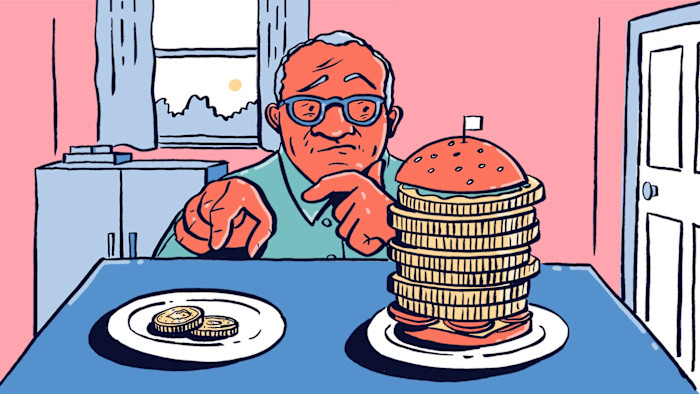
One of the things I remember liking about ETFs is how liquid they’re supposed to be. I told myself that I could sell off underlying investments if I ever needed quick cash. As I became more familiar with my holdings, though, I realized that the liquidity I dreamed of was a bit of an illusion. Here’s why.
Where to invest $1,000 right now? Our analyst team just revealed what they believe are the 10 best stocks to buy right now, when you join Stock Advisor. See the stocks »
&&
Image source: Getty Images.
Two layers of liquidity
In my mind, liquidity is about how quickly I can convert an asset into cash without significantly impacting its price. With ETFs, I imagined it to be an easy in-and-out transaction. Making such an assumption is quite unlike me. Normally, I look for the small print just to be sure that I know what I’m getting into.
Years ago, when I was first learning about ETFs, I was so taken with the (many) benefits that I overlooked the liquidity details. While it’s true that ETF shares are easily traded on an exchange, the issue is the underlying portfolio and how quickly it can be liquidated. For example:
-
ETF shares: ETFs can be bought or sold instantly during market hours, which makes them appear to provide true liquidity.
-
Underlying assets: Depending on market conditions, the stocks, bonds, loans, and other assets in the ETF may be harder to trade quickly and at stable prices. This is particularly true in emerging markets and niche sectors.
My mistake was believing that because an ETF trades smoothly, its underlying assets must be equally liquid. What I’ve learned since is that an ETF’s liquidity is directly tied to the assets it holds.
Lessons learned
Normally, the buying and selling process is quite straightforward. Authorized participants (APs) create and redeem shares by trading those underlying assets. And when the market is buzzing along normally, this process keeps the ETF’s price close to its net asset value (NAV).
Here’s where things get tricky, though. When the market is under stress, it can become hard to trade at quoted prices. The ETF can still trade “instantly,” but its price can be sharply different from its value.
Learning to navigate the risk
When discussing a diversified portfolio these days, I find myself using the phrase “take a long look under the hood” far more frequently than I once did. That’s because all investments — ETF or otherwise — should be carefully studied before money leaves your hand. Now that I’ve spent more time under the hood, I’ve accepted that some of my ETFs’ underlying holdings may take longer to sell. That’s not a bad thing, but it’s worth knowing.
Because I approach investments with a long-term mindset, I’ve never had to learn the lesson the hard way by trying to sell at the wrong time. Still, it’s good to know that I can, even if it takes a little longer than expected.
Where to invest $1,000 right now
When our analyst team has a stock tip, it can pay to listen. After all, Stock Advisor’s total average return is 936%* — a market-crushing outperformance compared to 209% for the S&P 500.
They just revealed what they believe are the 10 best stocks for investors to buy right now, available when you joinStock Advisor.
*Stock Advisor returns as of June 22, 2026.
&&
The Motley Fool has a disclosure policy.