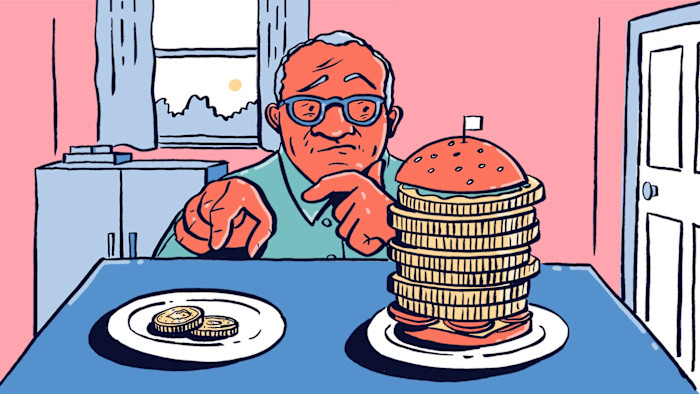
Many people in the UK save their money inefficiently and don’t earn as much as they could from their savings. In particular, and in contrast with some other countries, British people hold high levels of cash savings rather than investments like stocks and shares. Cash savings offer lower returns over the long term.
The Financial Conduct Authority (FCA) has said one of the reasons for poorer investment decisions is that few British people get financial advice. Only 9% of the UK population take financial advice and the FCA estimates over 20 million consumers currently don’t get enough advice and guidance from the markets.
The FCA has said that, in part, this is because the regulatory framework historically has not accommodated advice which is more tailored than unregulated financial guidance and information, but less tailored than regulated, individualised financial advice. The FCA has called this the “advice gap”. Firms that offer guidance have historically been wary of crossing into regulated advice territory due to potential legal liability.
To address this, HM Treasury and the Financial Conduct Authority (FCA) jointly launched the Advice Guidance Boundary Review (the Review), to explore the regulatory boundary between financial advice and guidance. The FCA has said this is a “once-in-a-generation” opportunity to close the advice gap. The Review’s three proposals are to:
- Clarify the boundary between regulated financial advice and unregulated guidance
- Establish a new regulated activity, ‘targeted support’, sitting between guidance and advice
- Create a framework for ‘simplified advice’ and simplify the advice rules more broadly
Launched in April 2026, targeted support allows authorised and regulated firms to offer proactive suggestions to groups of consumers with similar characteristics, or “consumer segments”, rather than to the individual. Firms can provide targeted support at a low cost or for free by using existing customer data held by firms for one-off interventions.
As of March 2026, the FCA was consulting on changes to its advice rules to make it easier for firms to provide simplified advice.
Industry bodies have welcomed the changes. However, there are risks. In particular, there is a risk of consumer harm if consumers believe they are receiving personally tailored recommendations under targeted support and subsequently see poor returns on their investments. There are also potential conflicts of interest with firms offering targeted support being the same firms selling investment products.