Benghazi, Libya – On 18 June 2026, Libya’s three main political bodies signed a trilateral power-sharing agreement, setting a roadmap for presidential and parliamentary elections before 17 February 2027, the first such agreement in fifteen years.
It was built directly on the April 2026 $30 billion unified state budget, the first in over a decade, brokered with US assistance to demonstrate that joint economic governance was possible.
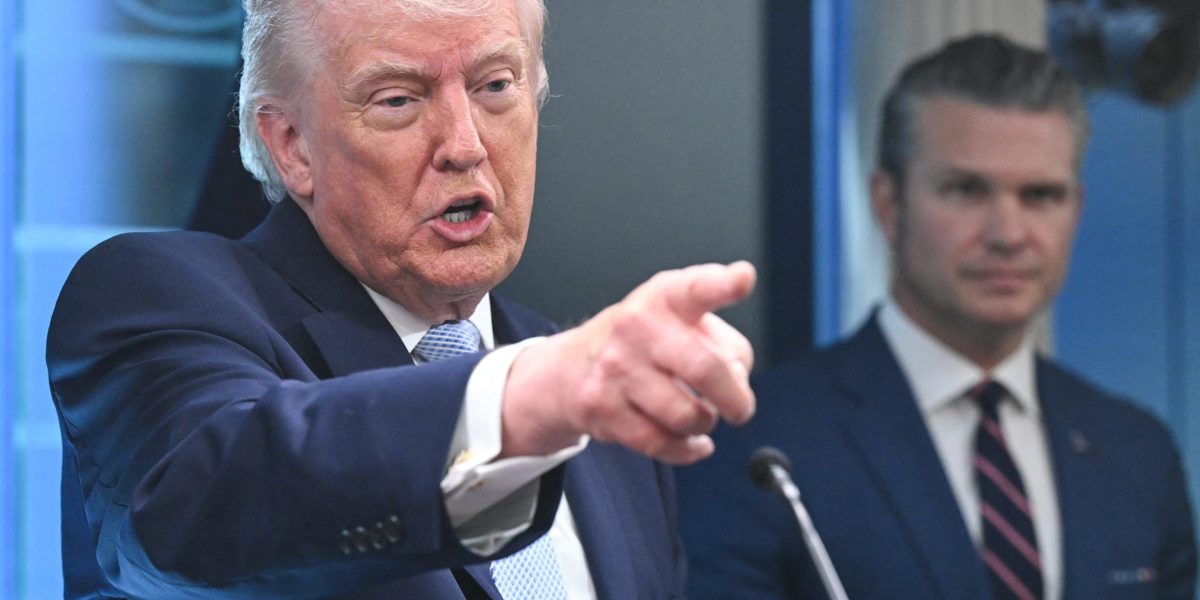
Washington declared momentum. Massad Boulos, Trump’s senior adviser for Arab and African affairs and the man who has driven this process since a secret Rome meeting in September 2025, said the plan was “designed to be inclusive, ensuring balanced representation for all stakeholders, regions and cities”.
Libyans on the ground, however, are less certain.
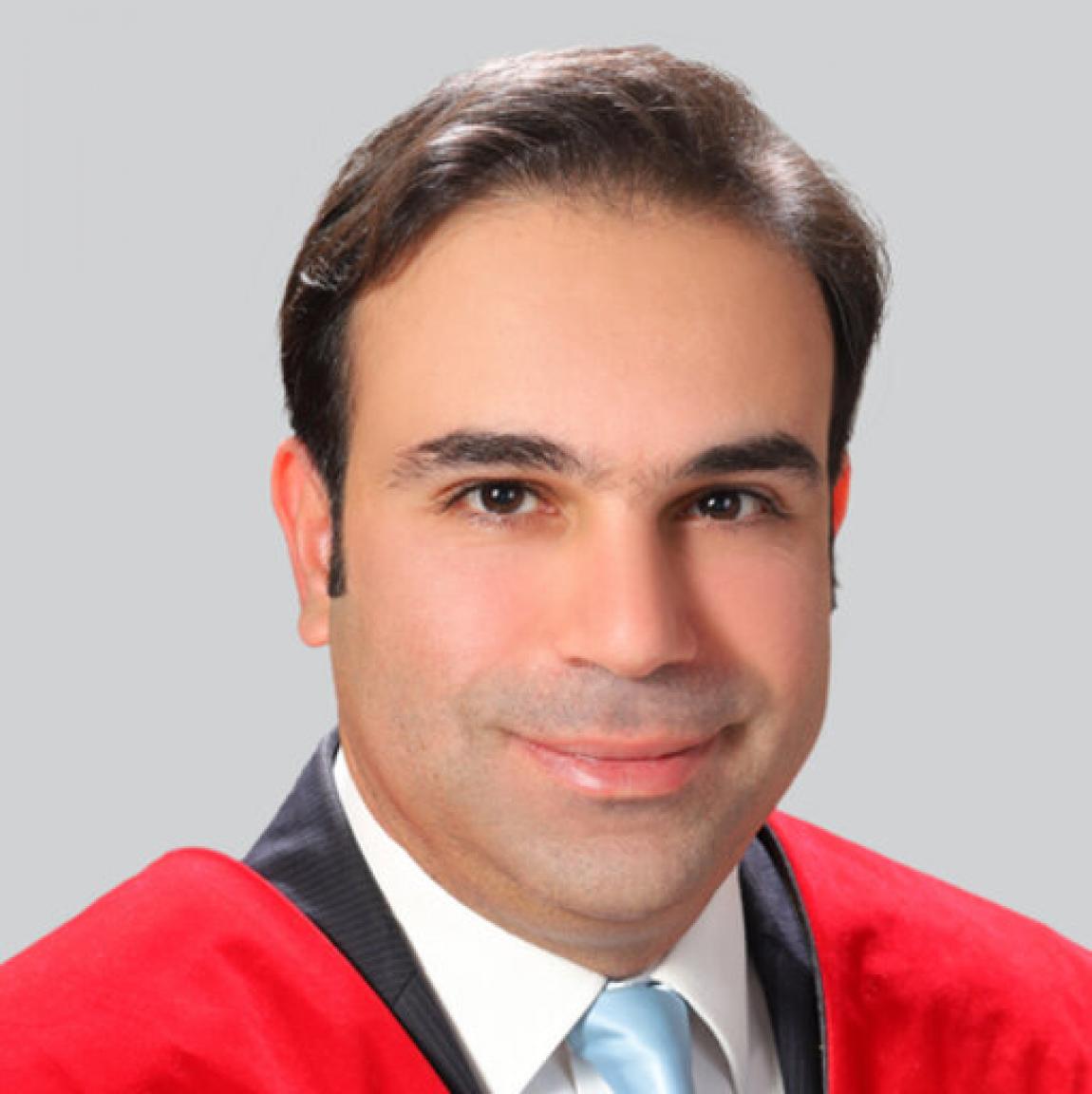
Dr Awad Mabrouk, a human resources and institutional development consultant, frames the economic argument for unification in terms that are hard to dispute. Libya holds Africa’s largest proven oil reserves, and the split has been devastatingly costly.
“Unifying the National Oil Corporation and protecting it from factional interference could push production past 1.5 million barrels per day and raise state revenues by between 20 and 30 percent,” he tells The New Arab.
“A single monetary policy under the Central Bank of Libya could eliminate the parallel exchange rate market and raise citizens’ purchasing power by an estimated 35 percent. Parallel budgets and uncoordinated spending have wasted billions.”
A unified government, he says, could cut unjustified administrative spending by up to 40 percent and direct those savings toward reconstruction.
Abdullah Izzedine, a political analyst close to the Government of National Unity (GNU) in Tripoli, makes the economic argument in its starkest form.
“Unifying the two governments will end parallel spending, and the economy will recover,” he tells The New Arab.
“Citizens will feel the economic revival in their daily lives. Oversight will return, spending controls will function, because the real problem has always been the division itself. True unification of executive authority is the first step on the ladder to a successful state.”
His proximity to the GNU means he has obvious reasons to support the Boulos initiative. But his diagnosis of the disease is not contested even by those who doubt the cure.
Mohamed Al-Fitori, a political analyst, raises the issue of sovereignty more bluntly. “Libya has become a region where every city controls a state, meaning it is lacking sovereignty,” he says.
A unified constitutional framework, he argues, is the only path to national elections that produce a legitimate and permanent authority rather than another transitional arrangement destined to repeat the same cycle.
The unified budget had rival authorities in east and west making what Boulos called compromises in the national interest. The Flintlock 2026 military exercises in Sirte, co-hosted with AFRICOM, brought forces from both sides under the same command structure for the first time. These are not nothing.
But the architecture of the deal itself is the problem.
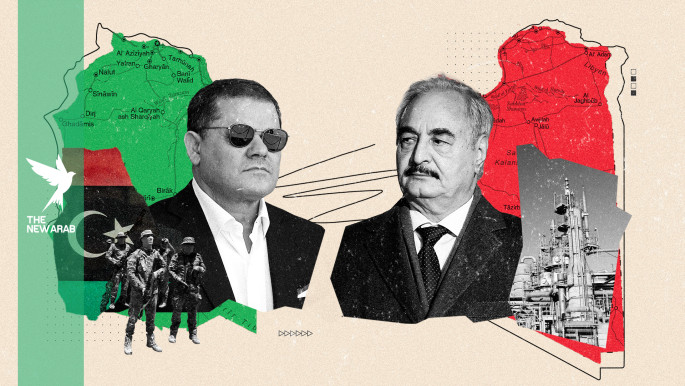
The mechanics of the Boulos plan, which have leaked in pieces over recent months, centre on a secret meeting in Rome in September 2025 at which Saddam Haftar, son and deputy commander of Khalifa Haftar, and Ibrahim Dbeibeh, nephew and adviser of GNU Prime Minister Abdul Hamid Dbeibeh, sat face to face for the first time, with Boulos mediating.
The proposal that emerged would create a new Presidential Council headed by Saddam Haftar with executive powers, alongside a unified government led by Dbeibeh, with military command divided between the families along geographic lines.
By essentially brokering a power-sharing agreement among entrenched interests, the initiative, if it comes to pass, will not solve Libya’s deeper problems.
The Libyan analyst Abdulsalam al-Rajhi has said the effort is “closer to a deal than an initiative,” designed around specific individuals rather than institutions, by a man who lacks extensive diplomatic experience and is seeking a quick geopolitical victory.
The Libyan public, civil society organisations that have spent 15 years demanding elections, the Fezzan tribes, the militias whose cooperation any government will need, the women and youth who make up the majority of the population, none of them were at the table in Rome.
What the deal means for women
Safaa Bahaa al-Din, a civil society activist and electoral awareness ambassador from Marj in eastern Libya, raises the question the deal has conspicuously not answered: what does unification mean for women’s political participation?
“The split has not been a neutral administrative inconvenience; it has been structurally damaging to women specifically. Women police officers and security employees have faced a doubled risk during the division period: the legitimacy of their ranks and decisions has been contested across jurisdictions,” she tells The New Arab.
“Female civil servants in education and health have found it nearly impossible to transfer between east and west and south because ministries do not recognise each other’s decisions,” she adds.
“Thousands of temporary or ghost contracts, of which women were the primary victims, proliferated under the parallel budget system, leaving women outside the legal protections that cover maternity leave, pension rights, and employment security.”
A unified government, Bahaa al-Din argues, could change this structurally: a single Interior Ministry could build a national strategy for gender-responsive security, train women police officers on unified mechanisms for handling cybercrime and domestic violence, and issue cabinet decisions on anti-violence policies and women’s economic empowerment that are binding on all municipalities rather than restricted to one administration’s territory.
But without a formal commitment to women’s representation in the transitional institutions and the electoral process that follows, unification will replicate the same exclusion that has characterised every previous Libyan transition.
“A deal struck between two families does not undo the social pressures, misinformation, and structural barriers that still prevent many Libyan women from registering, standing for election, or voting,” she says.
Elite deals and Libyan oil
Haneen Boushushe, a member of the UN-backed Structured Dialogue process on reconciliation and human rights, captures the tension precisely.
Any initiative aimed at unifying executive authority, she argues, must be assessed not by the quality of its political arrangements between elites but by its direct impact on ordinary Libyans. The years of division were lived as duplicated decisions, collapsed services, declining trust in state institutions, stunted development, and the systematic waste of public resources.
“Unification can represent a meaningful step forward only if it is part of a comprehensive path grounded in legitimacy, transparency, and accountability,” she tells The New Arab.
“If it amounts to nothing more than changing names or redistributing posts without addressing the root causes of the crisis, it will reproduce that crisis in a different form.”
That warning is echoed by critics across the political spectrum who argue that any political arrangement negotiated outside established UN mechanisms weakens the legitimacy of the UN-led process and reinforces elite-driven bargaining at the expense of broader national consensus.
Russia remains suspicious, seeing the Boulos initiative as an attempt to circumvent the Berlin process. Algeria and Tunisia have consistently emphasised that any solution must be Libyan-owned and Libyan-led.
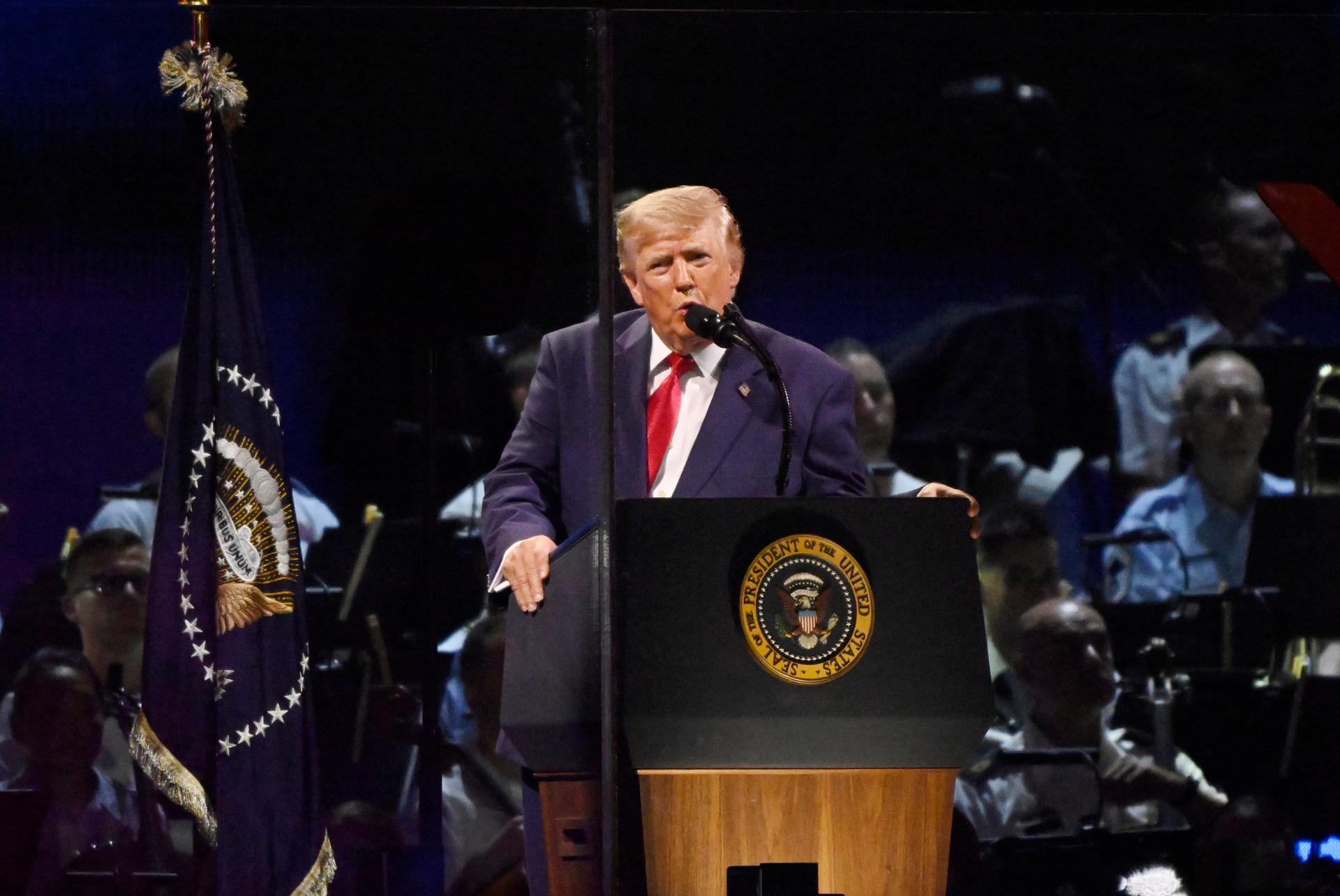
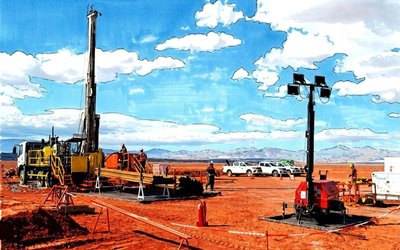
The unspoken driver of Washington’s renewed interest remains Libya’s oil. Trump has shown limited direct engagement with the Libyan dossier.
What has driven the process is the calculation that doubling output to three million barrels per day by 2030 would benefit US energy firms, including ConocoPhillips and Chevron, which have already signed agreements in 2026.
Boulos is not a career diplomat. He is a Lebanese-American businessman, and Libyans have noted with characteristic dry humour that his main qualification appears to be being Tiffany Trump’s father-in-law.
Trump’s view of Libya is primarily shaped by its oil-producing status, a calculation that recalls his earlier statement during NATO’s intervention, when he argued that the United States was entitled to half of Libya’s oil revenues in return for toppling Gaddafi.
What comes next
The 18 June agreement is the most concrete step Libya has taken toward unification in years. The unified budget is real. The military exercises happened. The elections roadmap exists on paper.
Whether any of it holds depends on whether the deal can be transformed from an arrangement between the Haftar and Dbeibeh families into something that Libyans outside those families, the women of Marj, the tribes of Fezzan, the civil society of Misrata, recognise as their own.
The history of Libya since 2011 suggests that this question has never yet been answered correctly.
Quick elite bargains without addressing root institutional weaknesses mirror past US patterns in Gaza, Lebanon, and Iran, where initial deals collapsed after Washington declared success and stepped back.
Libya has seen this before. The difference this time, if there is one, is that Libyans themselves, including the women, activists, and civil society figures who were never invited to Rome, are saying loudly that a deal between families is not a deal between a people.
Hendia Alashepy is a Libyan journalist based in Benghazi, known for her reporting on the environment, women’s issues, youth, and cultural heritage
This story was published in collaboration with Egab.
Edited by Charlie Hoyle