The Trial Balance is CFO.com’s weekly preview of stories, stats and events to help you prepare.
Part 1: Mostly Metrics releases new report highlighting CFO perspectives
A recently released qualitative survey aims to shine a light on financial operations at different types of capital-intensive companies.
Finance media company Mostly Media recently published a new report, Finance in the Real World, which features excerpts from conversations with the CFOs of Rivian, CoreWeave, Fanatics, Shield AI, Locus Robotics, Eight Sleep and Minted, along with former finance chiefs at Spirit Airlines and The North Face.
The report looks at what CFOs across different industries do to maximize the value of their finance teams. Here are some of the most notable takeaways from the finance leaders featured.
1. The North Face: Finance sometimes has to bet on the weather
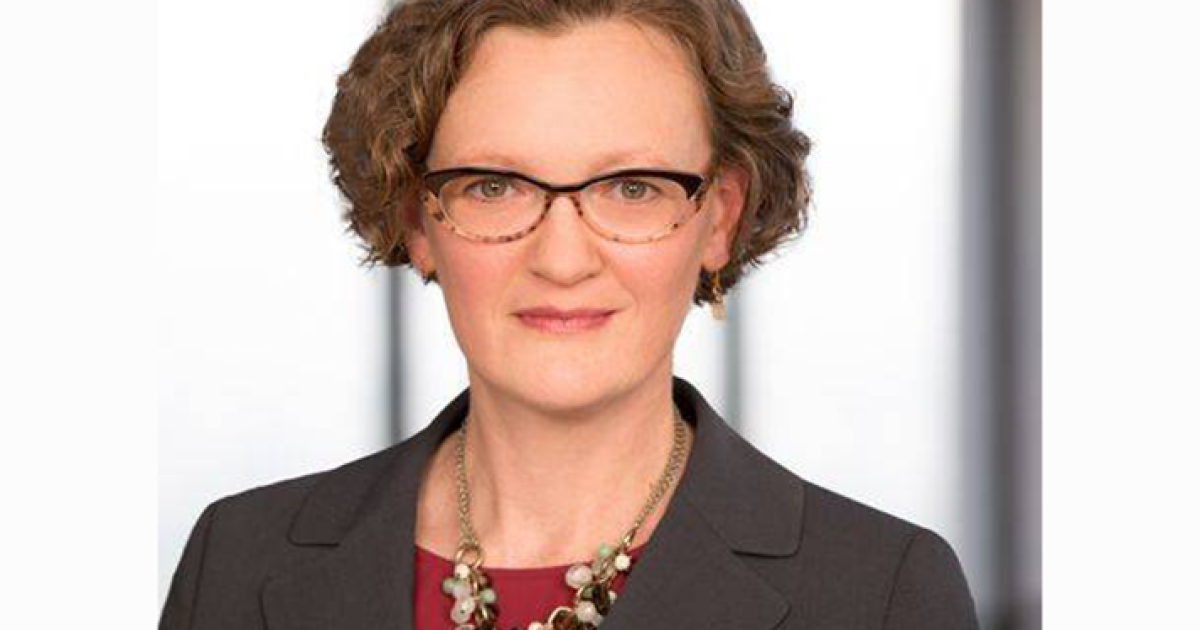
Imagine committing to a million winter jackets without knowing whether it’s actually going to be cold. That’s the type of bet former North Face CFO Angela Chen, who held the role from 2005 to 2016, faced while overseeing finance at the outdoor apparel company.
“I’m going to buy a million units of that puffy jacket without knowing what the winter is going to be,” Chen said. “That’s very nerve-wracking.”
The decision had to be made well in advance. The North Face’s product cycle stretched roughly 18 months, meaning a forecast made more than a year earlier could eventually determine whether those jackets sold at full price or ended up on clearance. The report reiterates the importance of productive working capital and strong banking relationships in seasonal businesses like The North Face.
2. Locus Robotics: Inventory is cash
“Inventory is cash sitting on the shelf,” Locus Robotics CFO Dustin Pederson said.
For a warehouse robotics company, the description is fairly literal. Locus’ robots generate revenue once they’re deployed inside customer facilities and are actively working. A robot waiting in a warehouse to ship or be repaired represents capital the company has already spent without the corresponding revenue.
That makes inventory something Pederson keeps close to. Each week, he joins a forecasting call that runs through demand, inventory on hand, the company’s build plan, what’s expected to go out the door and other operational tasks related to procurement and product delivery.
3. Rivian: Finding the right level of capacity
Working capital and inventory management have been a pain point for the auto industry for years. Rivian CFO Claire Rauh McDonough said more production capacity may appear beneficial on the surface but isn’t necessarily better from a financial perspective.
A mass-market vehicle line generally needs an annual volume of about 200,000 to 300,000 units, according to McDonough. Drop below 150,000 and much of the value of the investment can disappear. Push well beyond 300,000 and returns begin to thin.
Rivian faced that calculation with R2. The EV maker opted to launch the vehicle from its existing Illinois facility rather than wait for its planned Georgia plant, a decision that pushed roughly $2.25 billion in capital spending further into the future.
4. CoreWeave: Writing the finance playbook as you go
CoreWeave’s accounting team has its CFO encouraging them to be on the frontline of AI use in finance. CFO Nitin Agarwal made clear that he isn’t always able to look elsewhere for an example of how something should be done. “We’re forming precedents, not following them,” he said of the financial structures being developed around the AI infrastructure company’s contracts.
Overcoming CoreWeave’s main challenges will take more than improving the company’s internal accounting functions. Agarwal said educating Wall Street about how the business works remains “a work in progress.” That means part of the finance team’s job is establishing the metrics and financial framework, and then it’s his job getting investors to understand them.
5. Fanatics: Forecast what you actually know
Fanatics has spent years building a business that touches nearly every corner of the sports industry. Its portfolio includes licensing relationships with the NFL, NBA and MLB, and a new agreement will make the company the exclusive licensee for FIFA collectibles beginning in 2031.
The expansion has helped Fanatics consolidate its position in the sports collectibles and apparel market, while also attracting legal challenges and accusations of monopolistic behavior and diminishing product quality.
For CFO Glenn Schiffman, operating at that scale still means dealing with one variable nobody at Fanatics can control: what happens on the field.
“Sports, while the results are unpredictable, I know there’s going to be a Super Bowl MVP every year,” Schiffman said. “I know there’s going to be a Super Bowl winner every year. So that gives us a certain predictability and a baseline of recurring revenue.”
Fanatics has other sources of predictability, with long-term agreements across sports giving the company visibility into future business, while more than two-thirds of its commerce revenue comes from customers who purchased from the company the previous year and return to buy again.
That puts Schiffman’s focus — much of which he shared with CFO.com in an interview last year — on the parts of the business he can reasonably forecast, even when nobody knows which team or player will drive the next surge in demand.
6. Shield AI: Match the financing to the investment
Shield AI CFO Kingsley Afemikhe’s philosophy is that not every dollar on the balance sheet needs to come from the same place.
He applies that thinking to inventory and other physical investments. “Using equity at whatever higher cost of equity to purchase inventory doesn’t always make sense,” the report notes him saying.
The report uses Shield AI’s $2 billion financing as an example. The autonomous aircraft company raised $1.5 billion in Series G equity alongside $500 million of fixed-return preferred capital from Blackstone, with another $250 million delayed draw facility committed on top.
Afemikhe also said finance employees are embedded across the business, including inside manufacturing plants, giving the team a closer view of costs and production schedules before those decisions show up in financial results.
7. Eight Sleep: A green dashboard can still hide problems
Everything can look good on paper without telling the whole story, according to the take given by Eight Sleep CFO Nick Chammas.
“Our dashboards are all green, everything’s up and to the right, the metrics are all great, but when you look under the hood, I mean, we’re a product company, there’s things we need to work on,” Chammas said.
For Chammas, that means looking past a dashboard filled with positive indicators and making sure finance is measuring the parts of the business where problems can actually emerge. The report argues that companies operating outside traditional business models may need to develop their own metrics within finance.
8. Minted: Cash doesn’t arrive evenly throughout the year
Minted CFO Mateo Bryant has to plan around a business where the calendar can have an outsized impact on cash flow. “Imagine if your salary were $100 a year, but you got paid $50 in December and the other $50 was across the other 11 months,” Bryant said of the greeting card company’s seasonality.
Holiday demand may drive a large portion of the business, but expenses continue throughout the year. That makes liquidity planning particularly important during periods when significantly less cash is coming through the door.
Bryant also looks at payment terms as a working capital lever. He recalled hearing about a large beer manufacturer that paid for hops 180 days after receiving them, allowing the company to repeatedly turn the inventory into sales before paying for the original inputs.
9. Spirit Airlines: Reforecast as quickly as the business changes
At Spirit Airlines, former CFO Scott Haralson — who now holds the CFO seat at Hertz since June of 2024 — dealt with inventory that disappeared every time a plane left the gate when he was CFO of the now-shuttered airline.
“We have to sell every seat on every plane, over and over and over again,” Haralson said.
Rather than simply forecasting revenue, Spirit broke the business into the factors driving it, including destination, time of day, load factor and customer spending on bags and seat selection. With variables such as weather, fuel and air traffic control conditions capable of changing quickly, the finance team didn’t wait for the next quarterly planning cycle.
“We are always rebudgeting or re-forecasting the business,” Haralson said. “And in fact, we do it every week.”
Part 2 — This week
Here’s a list of important market events slated for the week ahead.
Monday, Aug. 10 — None scheduled
Tuesday, Aug. 11
Wednesday, Aug. 12
Thursday, Aug. 13
Friday, Aug. 14
Part 3 — Quote of the week
“Orient around getting to ‘yes.’ It’s easy for finance leaders to show up with constraints or to say ‘no’ to investments or new projects. It looks disciplined, but it doesn’t move the company forward.”

Matt Klitus
CFO, Honor Technology
Last week, Honor Technology’s CFO Matt Klitus shared how he applies his finance and operations expertise to help transform home care delivery for seniors aging in place.