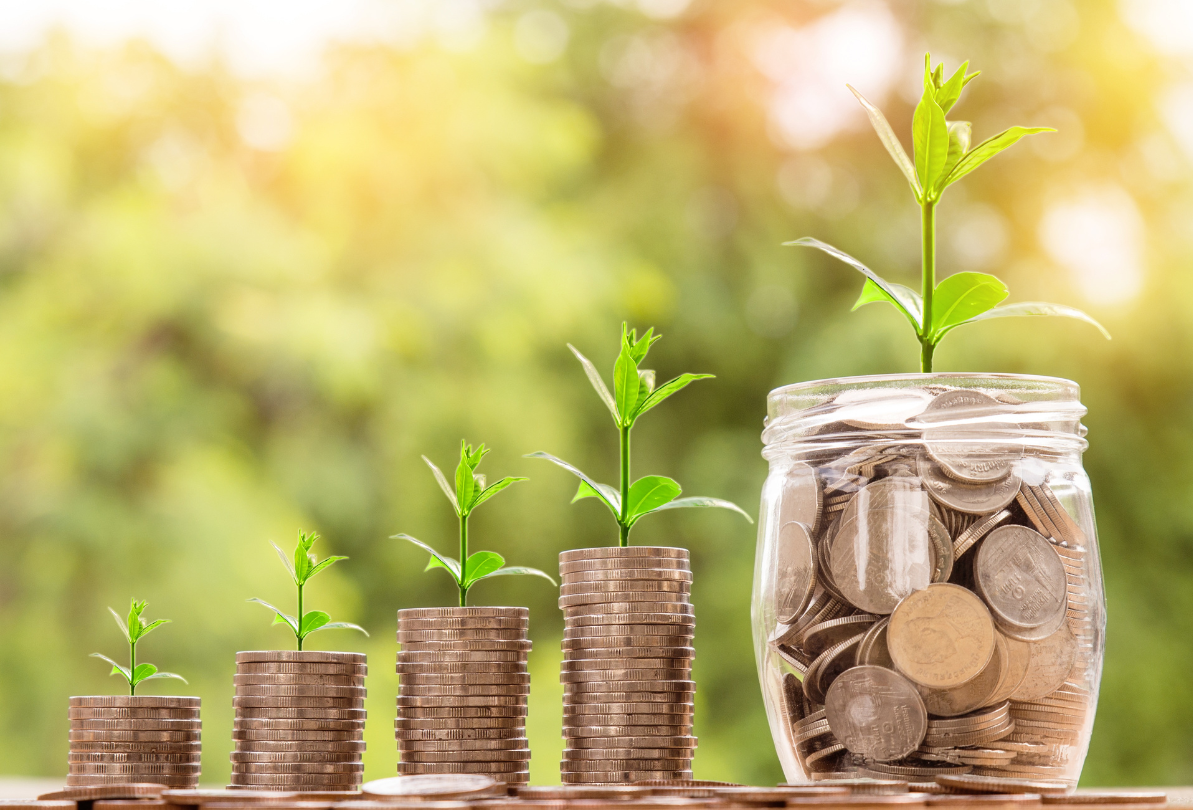
© Olezzo / Shutterstock.com
A $38,000 income is not a fantasy number. It is close to the annual earnings of many full-time workers after taxes and below the national average starting teacher salary of $48,112 for 2024-25. The headline is arithmetic, not marketing: a portfolio that pays $38,000 today can approach $84,000 in about a decade without a single additional dollar of contributions, provided the dividends keep compounding at a high enough rate. The yield you buy today matters less than the yield you own five, ten, and twenty years from now.
The Capital Required Today
Divide the income target by the yield and you get the capital required:
- Conservative tier, 3% to 4% yield. Dividend-growth equities and broad-market index funds. A 3.5% yield needs roughly $1.09 million to throw off $38,000. The principal is most likely to grow alongside the income stream.
- Moderate tier, 5% to 7% yield. REITs, preferred shares, covered-call equity income funds, and high-dividend blue chips. A 6% yield gets to $38,000 on about $633,000. Income comes faster; growth slows or caps out.
- Aggressive tier, 8% to 14% yield. Business development companies, mortgage REITs, high-yield bond funds, leveraged option-income products. A 10% yield produces $38,000 on $380,000. The check is bigger relative to capital, but distributions and principal often erode over time.
Every tier hits $38,000. Only one tends to hit $84,000 later without new money going in.
Why Choose the Lowest Yield?
A 12% distribution that never grows is worth $38,000 in year one and less in real terms as prices rise. CPI-U rose 0.5% on a seasonally adjusted basis in May 2026 and was up 4.2% over the prior 12 months, but one monthly reading should not be treated as a permanent inflation rate. A 3.5% yield growing at 8% a year roughly doubles the income in about nine years. Run the numbers: $38,000 compounded at 8% annual dividend growth reaches about $82,000 after 10 years and about $177,000 after 20 years, all from the same underlying shares if the payout growth continues. The 10-year Treasury near 4.5% looks tempting next to a 3% dividend yield until you remember that a Treasury coupon does not raise itself.
What 8% Growth Actually Looks Like
Johnson & Johnson has raised its payout for 64 consecutive years, taking the annualized dividend from $3.15 in 2016 to about $5.28 in 2026, a compound annual growth rate above 5%. Procter & Gamble (NYSE:PG | PG Price Prediction) is on its 70th straight annual increase and expects to return roughly $10 billion in dividends in fiscal 2026. Coca-Cola (NYSE:KO) moved from $0.35 quarterly in 2016 to $0.53 in 2026. Lowe’s (NYSE:LOW) took its quarterly payout from around $0.28 in 2016 to $1.25 in 2026, a growth rate north of 15% annually.
Lower-yielding names extend the same lesson further. Microsoft (NASDAQ:MSFT) yields under 1%, but the quarterly dividend has gone from $0.13 in 2010 to $0.91 in 2026. Visa yields under 1% and moved from $0.105 quarterly in 2008 to $0.67 in 2026. Investors who took the small check up front got the enormous check later, plus capital appreciation of 741% for Microsoft over the past decade and 394% for Visa.
Three Things Worth Doing This Month
If reaching $38,000 in reliable dividend income (and then watching it grow toward $84,000) is the goal, do these:
- Price out your actual spending, not your salary. Many households need to replace 60% to 75% of gross income once payroll taxes, retirement contributions, and commuting costs disappear. The capital requirement drops sharply when the target does.
- Compare 10-year total returns on a dividend-growth fund against a high-yield income fund. Include reinvested distributions. The gap usually shocks people who chose the higher current yield.
- If you are within five years of retirement, stress-test the tax treatment. Qualified dividends in a taxable account, ordinary-income REIT distributions, and BDC payouts all land in different brackets. The 3.75% Fed funds rate and today’s yield curve reward doing this math before you pull the retirement trigger.
The Raise Hidden Inside the Portfolio
The $38,000 to $84,000 leap is simple arithmetic, but it is not automatic. It requires companies that keep raising payouts, a portfolio that avoids reaching too far for yield, and an investor with enough patience to let compounding do its job.
The point is not that every low-yield stock wins or every high-yield fund fails. The point is that a retirement paycheck should be judged by where it can go, not just where it starts. A portfolio that grows its income can turn a modest first-year check into something much closer to a second salary later.
Contact [email protected] for any questions or corrections.