On June 23, members of Congress did something commendable and all too rare: They came together to pass legislation in a broadly bipartisan move to address the housing affordability crisis in the U.S. The new law, designated the 21st Century Road to Housing Act, includes an expansive compilation of 56 separate provisions aimed at increasing the supply of housing, improving access to financing and limiting ownership by large financial institutions.
The act is more evolutionary than revolutionary, since many of the barriers are down to state and local zoning and building codes that are beyond the reach of the federal government. Still, the measure creates a framework for streamlining local permitting, removes several obstacles to expansion of manufactured homes and includes many incremental incentives that should materially improve the supply of residential housing units over time.
Housing affordability has emerged as a public policy priority in recent years, as costs have accelerated faster than incomes since the COVID pandemic. The median price of a single-family home today is $440,000, up 50% over the past six years according to the National Association of Realtors. Zillow reports that the cost to rent a single-family home has risen by 45% over the same period, while apartment rents are up 28%. Meanwhile, median nominal household income has risen by just 25% since 2020.
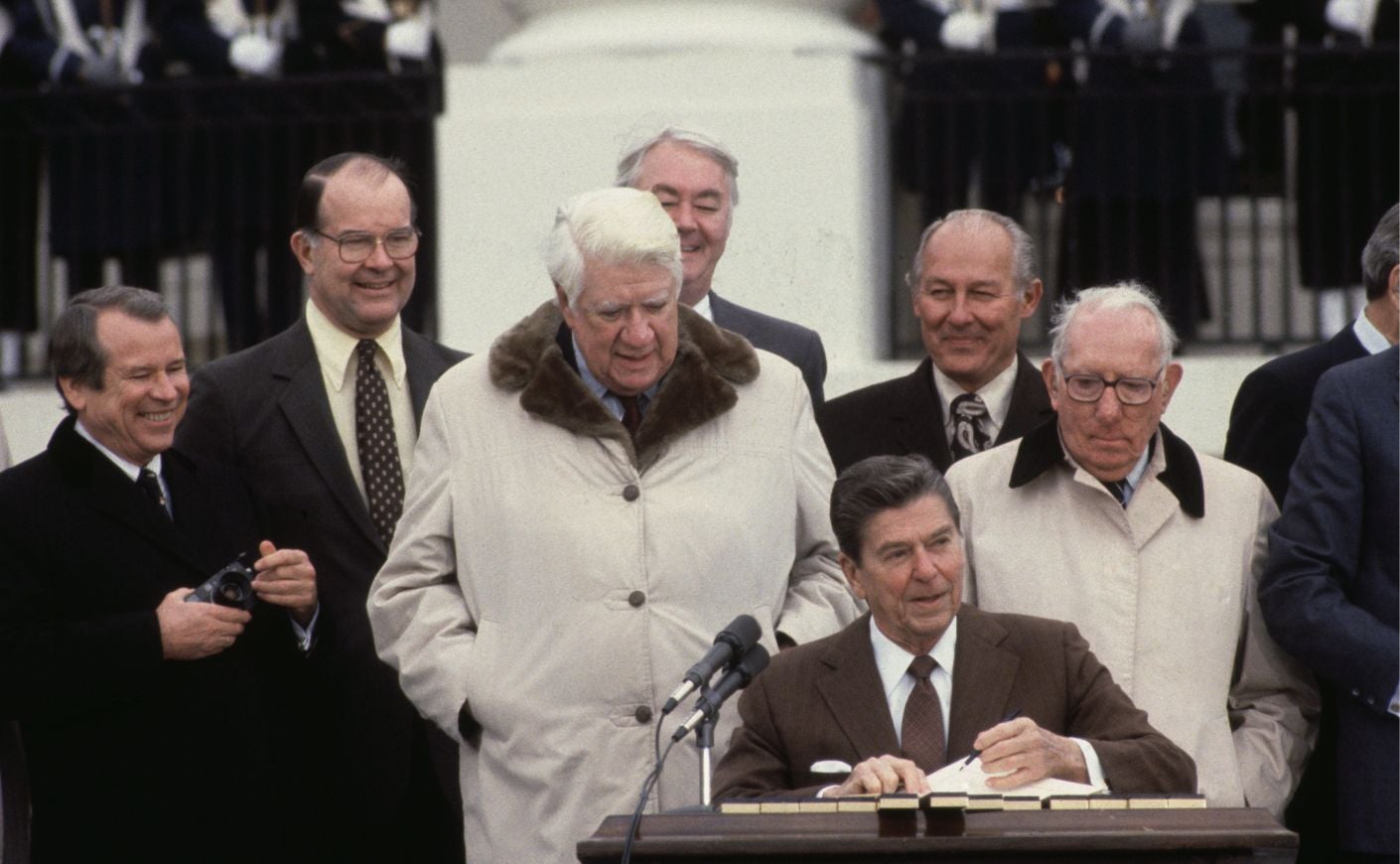
The housing bill cleared the House of Representatives on a vote of 358 to 32 and passed in the U.S. Senate by a margin of 85 to 5, a commendable accomplishment. However, on June 24, the president abruptly cancelled a scheduled signing ceremony in reaction to the Senate’s unwillingness to pass new voter restrictions, calling the housing act a “big yawn.” Legislators from both parties were blindsided, having anticipated a high-profile bipartisan victory to tout in advance of the approaching midterm elections.
The president’s action did provide Americans with an interesting constitutional lesson. When Congress passes a bill, the president may either sign it into law or veto the bill, challenging Congress to muster a 2/3 majority to override the veto. However, the president can also simply refuse to sign, in which case the bill becomes law after 10 calendar days, excluding Sundays, if Congress is in session. The 21st Century Road to Housing Act therefore went into effect automatically at midnight on July 11.
Among the numerous provisions in the law, a few stand out as particularly promising.
Manufactured housing. In what may be the most impactful action, the act eliminates one of the biggest impediments to expanding manufactured housing: the permanent chassis requirement. Since 1976, thanks to lobbying from traditional homebuilding interests, the federal government has forbidden the removal of the heavy steel trailer on which the unit was built even though 90% are never moved, and many are set on permanent foundations. This rule is risibly applied even in cases where an additional unit was stacked to form a second story. As I wrote in this space in October, factory-built homes can be produced more efficiently and therefore more affordably through mass production techniques. Eliminating the useless chassis after delivery could save a typical buyer an additional 5% and 10% of the purchase price as well as qualifying for more traditional mortgage financing.
Financial incentives to cities. Although the act does not include any additional federal funding, it directs a significant reallocation of existing incentives. The 1970s-era Community Development Block Grant program is reimagined, providing extra grant funding to high-cost metro areas that move aggressively to build affordable housing. The program is cost neutral, transferring funds from other cities that continue to discourage new unit construction through restrictive local policies.
Improving access to financing. Nearly half of the surge in housing costs is due to sharply higher mortgage interest rates since 2020. The housing act cannot impact rates, but it does provide additional access to financing. Small dollar loans of $100,000 or less will now be eligible for Federal Housing Administration guarantees, providing more access to lower-income buyers. The act also more than doubles the Federal Housing Administration loan limit for multifamily housing units.
Promoting rental homebuilding. The role of large institutions in purchasing single-family homes since the 2008 financial crisis has garnered significant public attention. The housing bill strikes a constructive balance.
“Large institutional investors”, defined in the bill as investors holding 350 or more single-family residences, are now prohibited from acquiring additional homes subject to specific exemptions. For instance, homes purchased for the specific purpose of renovation for rental are excluded. These institutional investors are also not required to divest their existing holdings.
Importantly, the restrictions do not apply to so-called build-to-rent acquisitions wherein large investors purchase newly constructed homes specifically for rental. Economic research generally finds that large investor ownership tends to push up home purchase prices to buyers but reduces pressure on rent costs by adding to supply, just what the doctor ordered.
Local zoning and permitting reforms. As mentioned above, states and municipalities retain jurisdiction for their own local building and zoning codes, many of which have served to hinder the construction of more affordable residential units. The new housing act directs the Department of Housing and Urban Development to create a template incorporating best practices for modernizing zoning and land use policies to support more housing construction and renovation.
A curiously unrelated addition to the bill forbids the Federal Reserve from issuing a digital cryptocurrency version of the U.S. dollar, called a stablecoin, until 2030. The crypto industry has vigorously opposed an official U.S. stablecoin and accounted for nearly half of all corporate political contributions to federal election candidates in 2024. The president himself has amassed $1.4 billion in profits from his various crypto ventures since taking office in 2025.
Additional elements include a variety of incremental pilot projects, regulatory reforms and tweaks to existing federal housing programs that, taken together, could also have a meaningful impact and set the stage for further progress based upon the results. And perhaps most important: bipartisan cooperation, compromise and agreement.
Christopher A. Hopkins, CFA, is a co-founder of Apogee Wealth Partners in Chattanooga.