
Why Customer Concentration Is Not Automatically a Problem, What Buyers Really Look At, and How to Prepare for a Sale If You Have a Very Large Customer
“One customer accounts for 70% of my revenue. Can I still sell my company?”
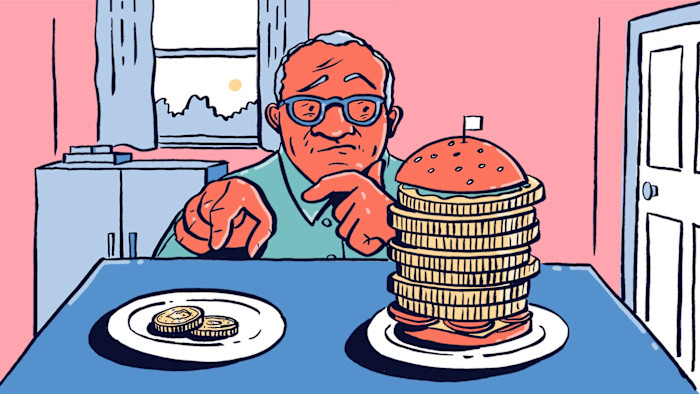
What is clear is that no buyer likes seeing that figure. The reason is obvious: if that customer leaves, a large part of the business goes with it, and very likely most of the profitability as well. The company could even become unviable without that customer.
When I speak to a company with this type of concentration, entrepreneurs almost always give me this explanation in the first meeting:
“I know it’s a lot of concentration, but it’s a very good customer, extremely loyal, we’ve been working with them for years and they’re delighted with us. They’re not going anywhere. We’ll be able to explain it properly to potential buyers.”
The buyer may even believe it. The problem is that, even if they do, they are still buying a considerable risk package. After an acquisition, things change. Sometimes the founder leaves, sometimes part of the team managing the account leaves, sometimes the customer itself changes management, ownership, priorities or runs into financial difficulties…
Okay, I understand, but can I sell or not?
But are there buyers for a company with 50% customer concentration or, worse still, two-thirds of its sales coming from one customer? Certainly. What I can tell you is that it does not help the sale or the valuation, but it is not an automatic “no”. It depends on a number of factors.
The public markets are full of examples of companies with extremely high customer concentration that are sold or acquired without any major problem.
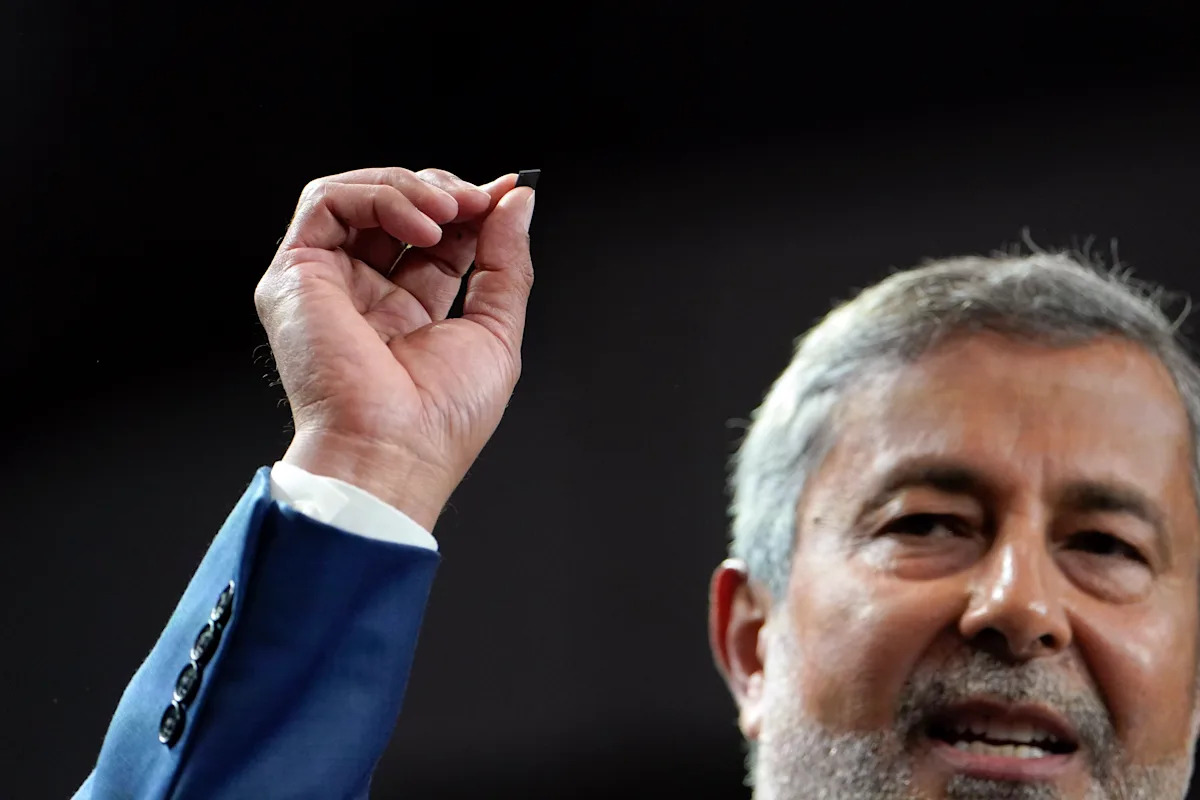
Cirrus Logic designs the audio and haptic chips used inside iPhones, customised for each product generation. It trades at around 11x EBITDA, with Apple accounting for 91% of its fiscal 2026 sales. That represents a discount to the semiconductor sector average, which is around 17x, but it is still a significant valuation for what is essentially a single-customer company, partly because it would also take Apple years to qualify another supplier for those components.
Lockheed Martin is the world’s largest defence contractor, manufacturing the F-35 fighter jet and missile systems through programmes that can sometimes last more than 40 years. It trades at around 16x EBITDA, with a market capitalisation of $135 billion, and 72% of its sales come from a single customer: the US government, a customer that very few companies in the world have the technology and certifications to replace.
The most interesting case is Spirit AeroSystems. Boeing acquired the company in 2025 and took it private, paying $37.25 per share, a premium of approximately 30% over the share price before the announcement. Spirit had originally been a Boeing division and was spun off as an independent company in 2005. It never stopped depending on Boeing and manufactured critical structures such as the 737 fuselage. Boeing was buying control over a strategic supplier, production quality and supply-chain stability.
None of these three companies trades as if concentration were, by itself, an insurmountable problem. They trade according to how the market understands that risk in each specific case.
What we look at when concentration is high
When we assess whether a company like this is sellable, we mainly look at five things.
Customer quality. It is not the same to depend on Apple, the US government, a Fortune 500 company or an IBEX 35 company as it is to depend on an unknown SME. In many cases, the reason for buying you is precisely that access. The more recognised your customer’s brand, the easier it is to identify in advance the group of buyers that would be interested specifically in gaining that access. A company in your sector, or one that already sells to the same purchasing decision-maker, may buy you to gain access to that customer. If it is large enough, your 70% concentration becomes 1% of its €1 billion in revenue and, obviously, the situation looks quite different.
The long-term contract. It is not enough for a contract to exist; its quality matters. Are price increases indexed, or do they have to be negotiated every year? Does the customer have an easy exit, or is there a penalty for terminating the agreement early? Is there a guaranteed minimum purchase volume? And how many years are actually left? Two years and five years are not the same. All of this helps create a perception of continuity, although it does not eliminate solvency risk where such risk exists.
How much it really contributes to margin and profit, not just revenue. Large customers tend to negotiate better terms, so it is common for gross margins with them to be lower than with the rest of the customer base. If that is the case, that 70% of revenue may represent only 35% of gross margin, and even less of EBITDA. Even so, that customer remains critical. Often, it is precisely that volume that covers a significant part of fixed costs and depreciation and provides room for investment. But this needs to be explained very clearly in the information memorandum, because it can significantly change the buyer’s perception of risk.
Integration and the customer’s actual dependence on you, demonstrated with evidence. It is not enough to say that the customer needs you; you have to prove it. Price increases that the customer has accepted without resistance, higher margins with that customer than with the rest of the portfolio, processes or systems integrated with theirs (an EDI connection, a shared ERP, employees specifically trained for the account), certifications that are difficult to obtain (working with the military, demanding quality certifications), or simply the absence of a genuine alternative in the market. The more time and money it would cost the customer to switch suppliers, the stronger your negotiating position, and this should be demonstrated with specific data.
Granularity within the customer itself. A large customer is almost never just one thing. It may have several separately signed contracts, different product lines, departments or subsidiaries that purchase independently, and even different decision-making centres within the same group. Breaking this down, if the facts support it, rather than simply showing “Customer X: 70%”, makes it clear that losing one contract or product line does not necessarily mean losing the entire account overnight.
The same risk, seen from a different angle
Concentration does not always come from the customer side. Sometimes it comes from the channel or the supplier, and the mechanism is essentially the same.
Imagine an IT consultancy that does not sell anything directly. Seventy percent of its projects come through Telefónica as a channel, with the remainder coming through another partner. The buyer will ask exactly the same question as with a concentrated customer: how easy would it be for that consultancy to change channels if Telefónica decided tomorrow to develop the service internally or work with another provider?
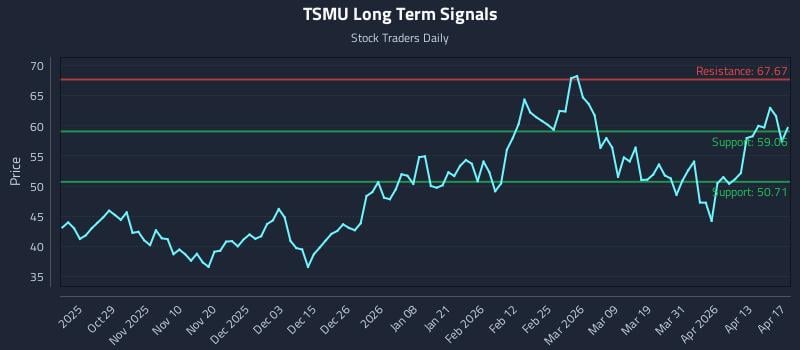
The same can happen with suppliers, although not always. In general, the market views supplier concentration as a risk just as seriously as customer concentration. But when the dependency is structural across an entire sector, tolerance increases, just as it does with Lockheed Martin’s 72% exposure to the US government. Apple, Nvidia, AMD and Qualcomm depend almost exclusively on TSMC to manufacture their most advanced chips, and none of these companies trades at a significant discount because of it, because the entire industry operates this way.
The question a buyer asks, whether the concentration is with a customer, channel or supplier, is always the same: how feasible, expensive and time-consuming would substitution be?
There is a variation of this issue that deserves an article of its own. Sometimes the supplier or channel you depend on is precisely the party that wants to buy you, as in the case of Spirit AeroSystems and Boeing mentioned above. The negotiation becomes more complicated in that situation, because the buyer knows that part of your business exists thanks to them. They can use that not only as a price lever, but directly as leverage: “If you don’t sell to me, I’ll stop buying from you.” I’ll leave that topic for another day.
The earn-out you won’t like, but may have to accept
If, after all this work, you remain convinced that you will retain that customer, the earn-out should not scare you quite so much. It is, quite literally, betting on yourself with someone else’s money.
What is worth negotiating is real control during the earn-out period. Maintaining commercial terms, the team managing the account and pricing flexibility. An earn-out tied to a customer you no longer genuinely control is a lottery, not an incentive.
When I am asked what the best thing to do with high customer concentration is, the answer I usually give is:
“Sign more customers and reduce that percentage.”
It is fairly useless advice, frankly, because any sensible entrepreneur is already trying to do that anyway, whether or not they are preparing for a sale.
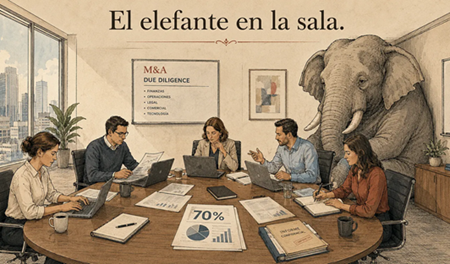
So if you are going to sell and you have not had time to change the picture, the only thing you can really do is prepare solid arguments explaining why the risk is not as great as it appears: the five points we have discussed, backed up with data. The large customer will be the elephant in the room throughout the entire process. You cannot avoid that.
You also have to be prepared to assume part of that risk yourself, through a variable component of the consideration. Most buyers will not want to bear all of the customer risk on their own. If you expect them to do so, the most likely outcome is that there will be no deal.
Joshua Novick, Managing Partner at Bondo Advisors.
- By Bondo Advisors
- 09/08/2026
- Factors Affecting M&A Valuations