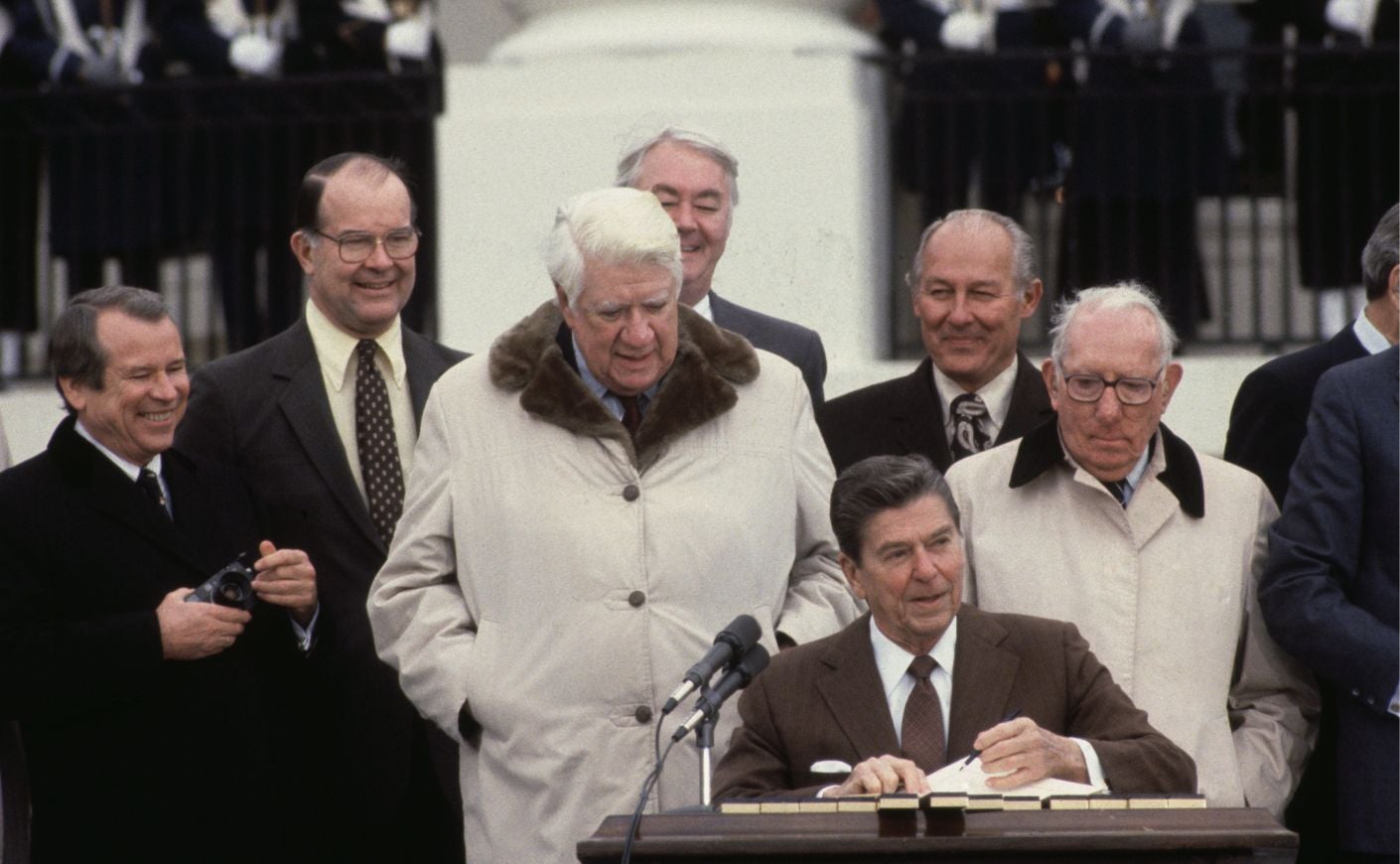
In June 2023, President Joe Biden and then-Speaker of the House Kevin McCarthy reached a bipartisan agreement to raise the debt ceiling in exchange for some modest restraint in the growth of federal spending. At the time, the national debt stood at $32 trillion. That brief détente seems almost quaint considering the latest borrowing data from the U.S. Treasury.
On Aug. 18, gross federal debt crashed through $40 trillion, 25% higher than just three years ago. We are now adding debt at the fastest clip in our history, $1 trillion every five months, during a period of relatively stable employment, modest economic growth, stubborn inflation and robust corporate profits. The Congressional Budget Office expects that burden to reach $63 trillion by 2036 if we proceed along the current path.
We no longer rely on deficit spending only to address cyclical weaknesses like recessions or geopolitical crises. We are addicted to permanent fiscal and monetary stimulus that is saddling our progeny with a lower standard of living. How did we get here?
The terms “debt” and “deficit” can easily be confused. A budget deficit occurs when spending exceeds tax revenues during a single year. During the fiscal year ending Sept. 30, 2025, the federal government spent $7.01 trillion but collected only $5.23 trillion in tax revenue. That gap of $1.78 trillion was the deficit for fiscal year 2025. Like a family, government must borrow money to make up the difference, which it does by issuing U.S. treasury bonds that are purchased by individuals, institutions and foreign governments.
Also akin to a household budget, successive annual shortfalls add up. The national debt is the sum of all previous yearly deficits, net of any surpluses, and now exceeds $40 trillion. That is how much we as a country owe to all the creditors who are financing our lifestyle by buying our bonds. If you were given the lucky task of spending $40 trillion at a rate of $1 million per day, it would take you 110,000 years.
A portion of this massive obligation is called intergovernmental debt, including treasury bonds held in the Social Security and Medicare trust funds totaling around $7.7 trillion which the government owes itself. The remainder, $32.3 trillion, is called debt held by the public and is the relevant metric since these are obligations the U.S. government owes to external creditors.
In household finances, a family’s affordable level of debt is determined by its annual income. The principle is the same, with government debt as a function of total economic output or Gross Domestic Product (GDP). The current ratio of debt held by the public to GDP is 100%, a level surpassed briefly during Covid but otherwise not since 1946, after four years of a devastating world war.
Traditionally, deficit financing was a tool primarily reserved for combatting emergencies like wars or recessions. It is only during the 21st century that running large deficits and amassing debt during periods of economic growth has become the norm. The new paradigm of ever-expanding indebtedness is also remarkably bipartisan. The last time the U.S. ran a surplus was 2001. Since then, the debt in real 2025 dollars has grown by $22 trillion under Democratic presidents and $21 trillion under Republicans. President Trump has now surpassed Barack Obama in presiding over the largest increase of any president and is on track to add another $4 trillion by 2029.
The dramatic devolution of America’s financial situation since the last balanced budget can be broadly explained through demographic factors, responses to unexpected crisis and a series of tax cuts that dented federal revenues.
In 2001, 12% of Americans were age 65 or older. That share will be nearly 22% by 2036, and with that shift comes a surge in expenditures for key entitlements like Social Security and Medicare. These programs plus Medicaid, federal retirement benefits and other safety net benefits are referred to as mandatory spending and make up 60% of all federal outlays. These programs are created or modified through major legislation and spending is largely on autopilot based on defined triggers like retirement or unemployment and are typically indexed to inflation. About one third of the debt surge is due to growth in mandatory spending.
Another 15% of spending is interest on the massive debt, projected to exceed $1 trillion this fiscal year. Interest on the national debt is now the second-largest expense behind Social Security and will soak up 29% of all spending by 2056 on the current trajectory.
The remaining 25% of government outlays is called discretionary spending, which Congress determines each year through the appropriations process. Defense makes up over half of discretionary spending, while everything else that government does accounts for only $1 out of every $8 of total outlays. Discretionary spending has tripled in dollar terms since 2001, largely in response to wars, recessions and the Covid pandemic passed without additional revenues to offset the costs. These emergency measures are responsible for around one quarter of the increase in the national debt.
While two thirds of the deficits since 2001 arose from spending increases, one third is due to various tax cuts enacted over the past 25 years that produced a drop in federal revenues of $8.7 trillion, according to the Peterson Institute. Congress has adopted seven major tax-cutting bills this century, generally accompanied by some version of the myth that lowering taxes can stimulate growth to offset the lost revenue. It is certainly true that reducing the tax burden can encourage capital investment and economic growth, but nowhere near enough to replace the lost inflows.
It is (or should be) alarming to all Americans that the national debt stands at 100% of our entire economy.
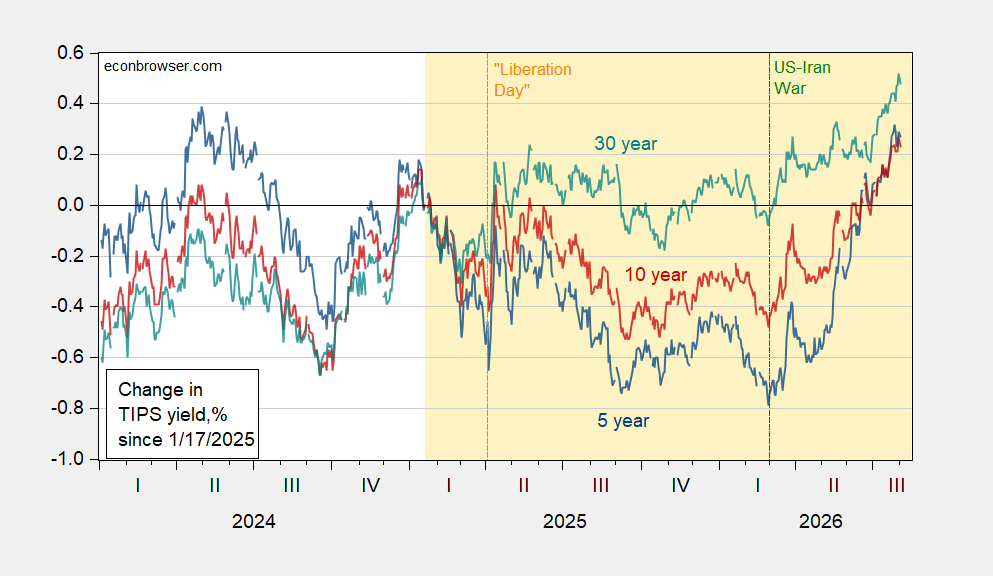
Under current law, that burden grows to 175% by 2056. Except, it can’t. Something will break first, and recent turmoil in the bond market suggests that investors are nervous, driving bond yields to 19-year highs. Next week, we’ll look at some possible solutions.
–––
Christopher A. Hopkins, CFA, is a co-founder of Apogee Wealth Partners in Chattanooga.