Growing adoption in electronics, construction, and pharmaceuticals, sustainability drives, regulatory changes, digital solutions, and sourcing strategies present key market opportunities.
Bromine derivatives are pivotal in driving innovation across various sectors, such as electronics, construction, and pharmaceuticals. With growing operational complexities and evolving regulations, industry leaders must grasp the nuances of the bromine derivatives market to maintain a competitive edge.
Market Snapshot: Bromine Derivatives Market Size and Growth Outlook
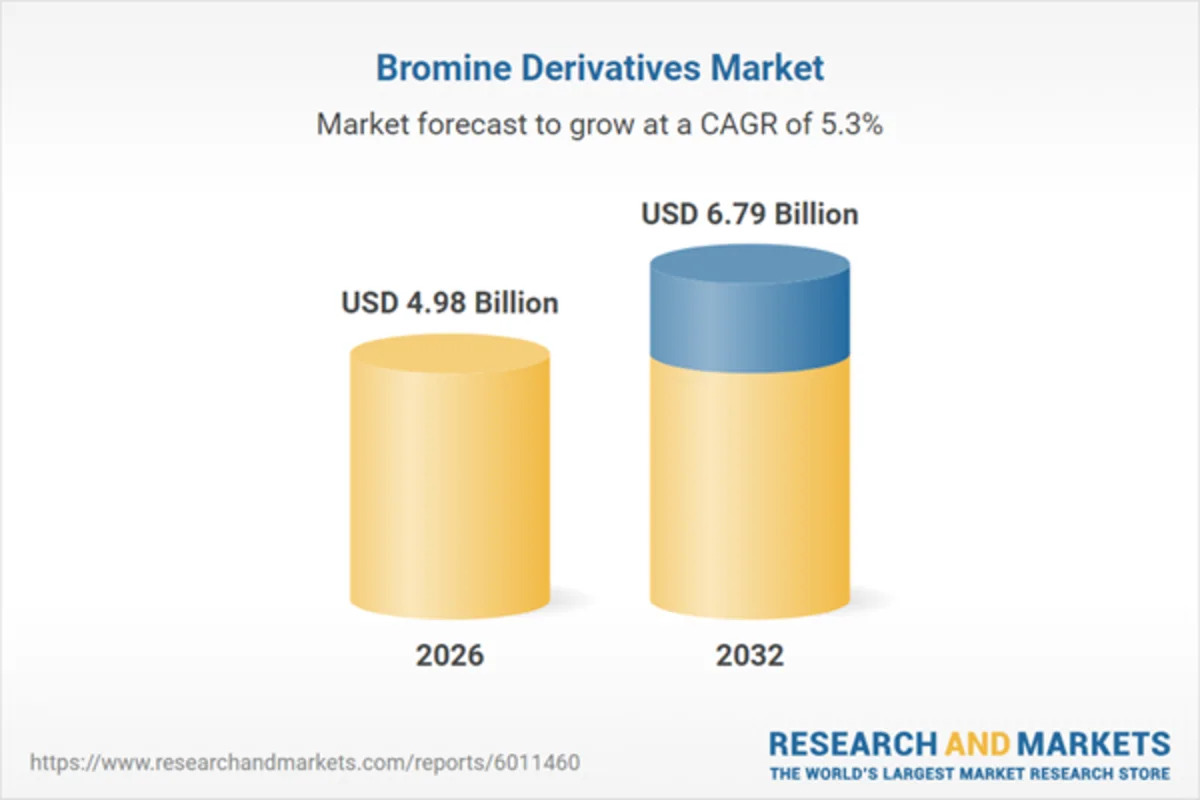
The bromine derivatives market is set to grow from USD 4.73 billion in 2025 to USD 6.79 billion by 2032, reflecting a CAGR of 5.29%. This development is attributed to the increasing use of brominated compounds in high-value industrial applications. Factors such as demand in electronics, regulatory scrutiny, and efforts to enhance supply chains underpin this growth. This analysis provides insights that assist strategic planning and risk mitigation.
Scope & Segmentation
This comprehensive overview of the bromine derivatives sector is crafted to support decision-makers in identifying growth avenues and mitigating risks. Below is a segmentation overview crafted for efficient top-level review:
Application Areas: Use in crop fumigation, oil and gas drilling fluids, flame retardants, pharmaceutical intermediates, and water treatment.
Derivative Types: Brominated epoxy for composites, ethylene dibromide for soil treatment, methyl bromide as a fumigant, tetrabromobisphenol A for fire resistance.
End-User Industries: Sectors include agriculture for pest management, oil and gas for fluid enhancement, construction and electronics for flame retardants, and pharmaceuticals for intermediate compounds.
Distribution Channels: Direct sales, distributor networks, e-commerce, and specialized web portals for varied procurement strategies.
Chemical Forms: Available as liquids, granules, and powders, with specific handling and packaging protocols.
Purity Grades: Industrial and laboratory grades, based on application needs.
Production Methods: Byproduct recovery, catalytic bromination, and chemical synthesis including chlorination and bromination.
Regional Markets: Analysis covers the Americas, Europe, the Middle East & Africa, and Asia-Pacific, each with unique demand and regulatory environments.
Tariff Impact: Shifting Sourcing and Contractual Strategies
Recent tariff changes on chemical imports and intermediates require companies to adjust sourcing and procurement strategies for bromine derivatives. Shifts include recalibration of logistics, lead times, and risk management, prompting near-shoring and flexible agreements with regional partners. These changes promote innovation in product formulation and ensure market competitiveness.
Organizations are revising product compositions and qualifying alternative chemistries to counter cost variability, maintaining supply continuity. This process involves rigorous product testing and compliance documentation, especially critical amid a changing regulatory landscape, thereby fostering competitive strategies.
Key Takeaways from This Report
Implementing sustainability and lifecycle analysis encourages investment in emissions reduction, feedstock efficiency, and waste management.
Adopting digital solutions enhances transparency, quality control, and supply chain agility in response to policy and market shifts.
Regulatory updates drive companies to elevate stewardship and develop environmentally sustainable products.
Collaborations among producers, research entities, and users accelerate the development and commercialization of specialized bromine chemistries.
Key Attributes:
Report Attribute
Details
No. of Pages
194
Forecast Period
2026 – 2032
Estimated Market Value (USD) in 2026
$4.98 Billion
Forecasted Market Value (USD) by 2032
$6.79 Billion
Compound Annual Growth Rate
5.2%
Regions Covered
Global
Key Topics Covered:
1. Preface 1.1. Objectives of the Study 1.2. Market Definition 1.3. Market Segmentation & Coverage 1.4. Years Considered for the Study 1.5. Currency Considered for the Study 1.6. Language Considered for the Study 1.7. Key Stakeholders
2. Research Methodology 2.1. Introduction 2.2. Research Design 2.2.1. Primary Research 2.2.2. Secondary Research 2.3. Research Framework 2.3.1. Qualitative Analysis 2.3.2. Quantitative Analysis 2.4. Market Size Estimation 2.4.1. Top-Down Approach 2.4.2. Bottom-Up Approach 2.5. Data Triangulation 2.6. Research Outcomes 2.7. Research Assumptions 2.8. Research Limitations
9. Bromine Derivatives Market, by Derivative Type 9.1. Brominated Epoxy 9.2. Ethylene Dibromide 9.3. Methyl Bromide 9.4. Tetrabromobisphenol A
10. Bromine Derivatives Market, by End User Industry 10.1. Agriculture 10.2. Construction 10.3. Electrical Electronics 10.4. Oil Gas 10.5. Pharmaceuticals
11. Bromine Derivatives Market, by Distribution Channel 11.1. Direct Sales 11.2. Distributors 11.3. Online 11.3.1. E-commerce 11.3.2. Web Portals
12. Bromine Derivatives Market, by Chemical Form 12.1. Liquid 12.2. Solid 12.2.1. Granules 12.2.2. Powder
13. Bromine Derivatives Market, by Purity Grade 13.1. Industrial Grade 13.2. Laboratory Grade 13.2.1. Analytical Grade 13.2.2. Research Grade
14. Bromine Derivatives Market, by Production Method 14.1. Byproduct Recovery 14.1.1. Chlor-Alkali 14.1.2. Oil Refining Tail Gas 14.2. Synthetic 14.2.1. Catalytic Bromination 14.2.2. Chemical Synthesis 14.2.2.1. Chlorination Route 14.2.2.2. Direct Bromination
15. Bromine Derivatives Market, by Region 15.1. Americas 15.1.1. North America 15.1.2. Latin America 15.2. Europe, Middle East & Africa 15.2.1. Europe 15.2.2. Middle East 15.2.3. Africa 15.3. Asia-Pacific
16. Bromine Derivatives Market, by Group 16.1. ASEAN 16.2. GCC 16.3. European Union 16.4. BRICS 16.5. G7 16.6. NATO
17. Bromine Derivatives Market, by Country 17.1. United States 17.2. Canada 17.3. Mexico 17.4. Brazil 17.5. United Kingdom 17.6. Germany 17.7. France 17.8. Russia 17.9. Italy 17.10. Spain 17.11. China 17.12. India 17.13. Japan 17.14. Australia 17.15. South Korea
About ResearchAndMarkets.com ResearchAndMarkets.com is the world’s leading source for international market research reports and market data. We provide you with the latest data on international and regional markets, key industries, the top companies, new products and the latest trends.