While geopolitical headlines continually send traders rushing to the Oil charts, history shows that the biggest market moves often begin when liquidity disappears, not when crude spikes.
Rising bond yields, particularly in Japan and Switzerland, threaten to trigger the unwinding of one of the largest leveraged trades in financial history. As borrowing costs increase, watching the global bond market could prove far more critical to risk assets than tracking crude Oil prices.

Looking beyond Oil
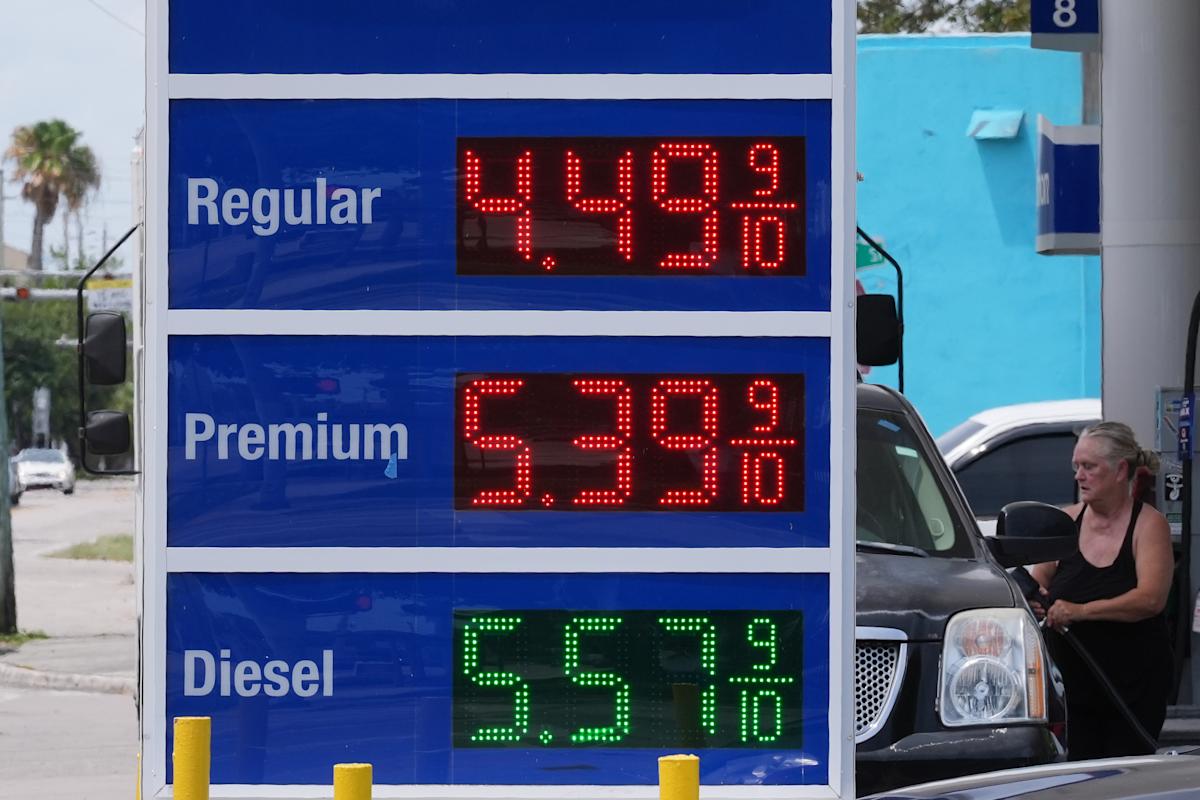
Every missile fired in the Middle East and every headline about the Strait of Hormuz prompts traders to ask the same question: “Will oil hit $120? Will inflation surge?”
Every geopolitical crisis creates the same narrative: Oil rises, inflation rises, central banks stay hawkish, and markets tend to fall. It is a simple story, but history shows that it is often not what ultimately drives the biggest market moves. Markets do not usually break because Oil rises; they break when liquidity disappears. Today, one of the largest sources of global liquidity stems from a mechanism many investors overlook: the Japanese Yen (JPY) carry trade.
Understanding the global carry trade
To understand the threat, it helps to look at how a carry trade operates. For decades, investors could borrow money almost for free in Japan, where the Bank of Japan kept interest rates close to zero for years. Hedge funds, pension funds, and global investors borrowed cheap Yen, converted it into dollars, and bought higher-yielding assets such as US Treasuries, Nasdaq stocks, emerging market bonds, corporate credit, and even cryptocurrency.
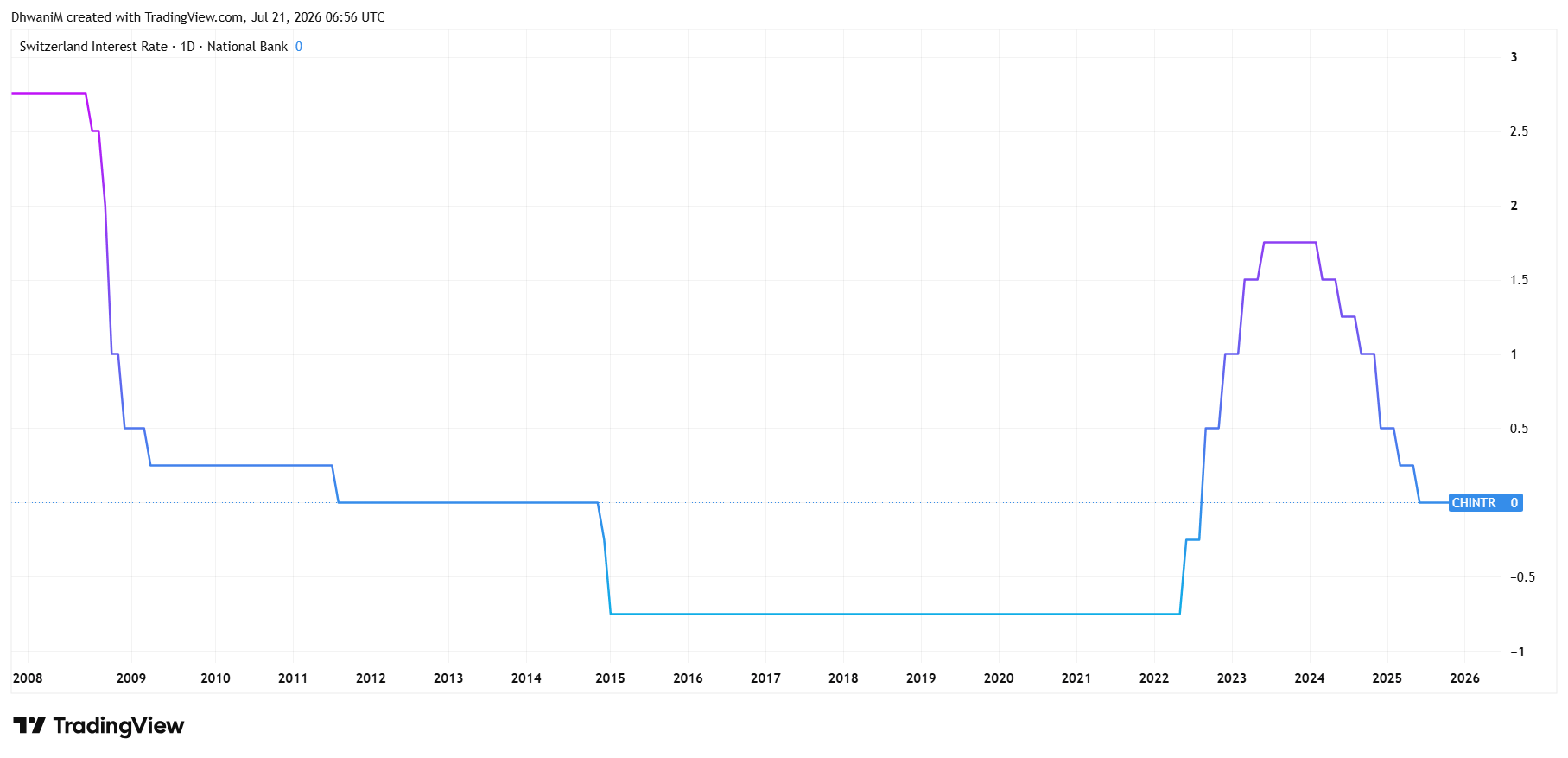
That difference between borrowing cheaply and investing at higher yields became one of the most profitable trades in global finance. The Swiss Franc (CHF) has similarly served as a low-yield funding currency, acting as another pillar of global carry trades. Together, these funding currencies have supported risk assets around the world.
The threat of unwinding leverage
This mechanism only works while funding remains cheap and currencies stay weak. When cheap funding vanishes, the trade can unravel rapidly.
In August 2024, the Bank of Japan surprised markets by signaling a faster-than-expected policy normalization. That shift sparked a sharp unwind in yen-funded carry trades, sending the Nikkei down roughly 12% in a single session, strengthening the Yen, and triggering a spike in global volatility before markets stabilized.
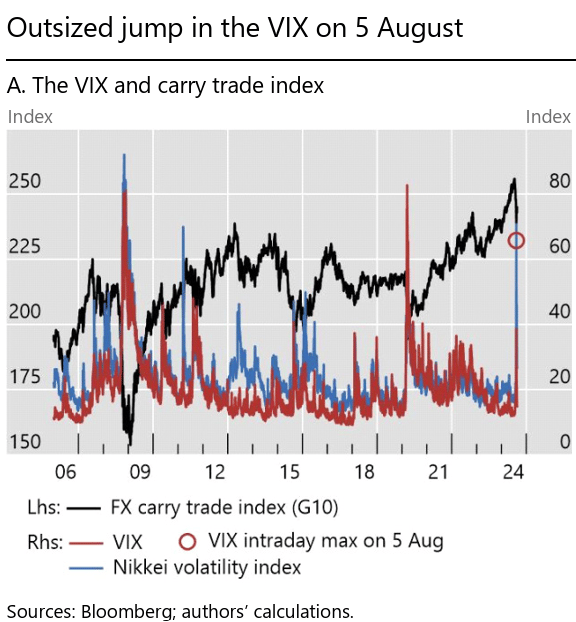
The episode demonstrated how quickly leveraged positions can unravel when funding assumptions change: one central bank, one policy surprise, and one funding currency were enough to send volatility surging across global markets.
The changing foundation of funding currencies
While Oil can certainly push inflation higher, higher bond yields alter the mathematics of every leveraged investment. As Japanese government bond yields continue moving higher, borrowing in Yen becomes significantly more expensive.
The benchmark 10-year Japanese government bond yield hit a 30-year high of 2.90% earlier this month. At the same time, a stronger Yen increases the cost of repaying those loans. When the carry trade no longer makes financial sense, investors do not simply stop opening new positions; they begin selling existing ones. That is when liquidity disappears, volatility spikes, and risk assets come under severe pressure. It is not the price of Oil doing the damage; it is the repricing of leverage.
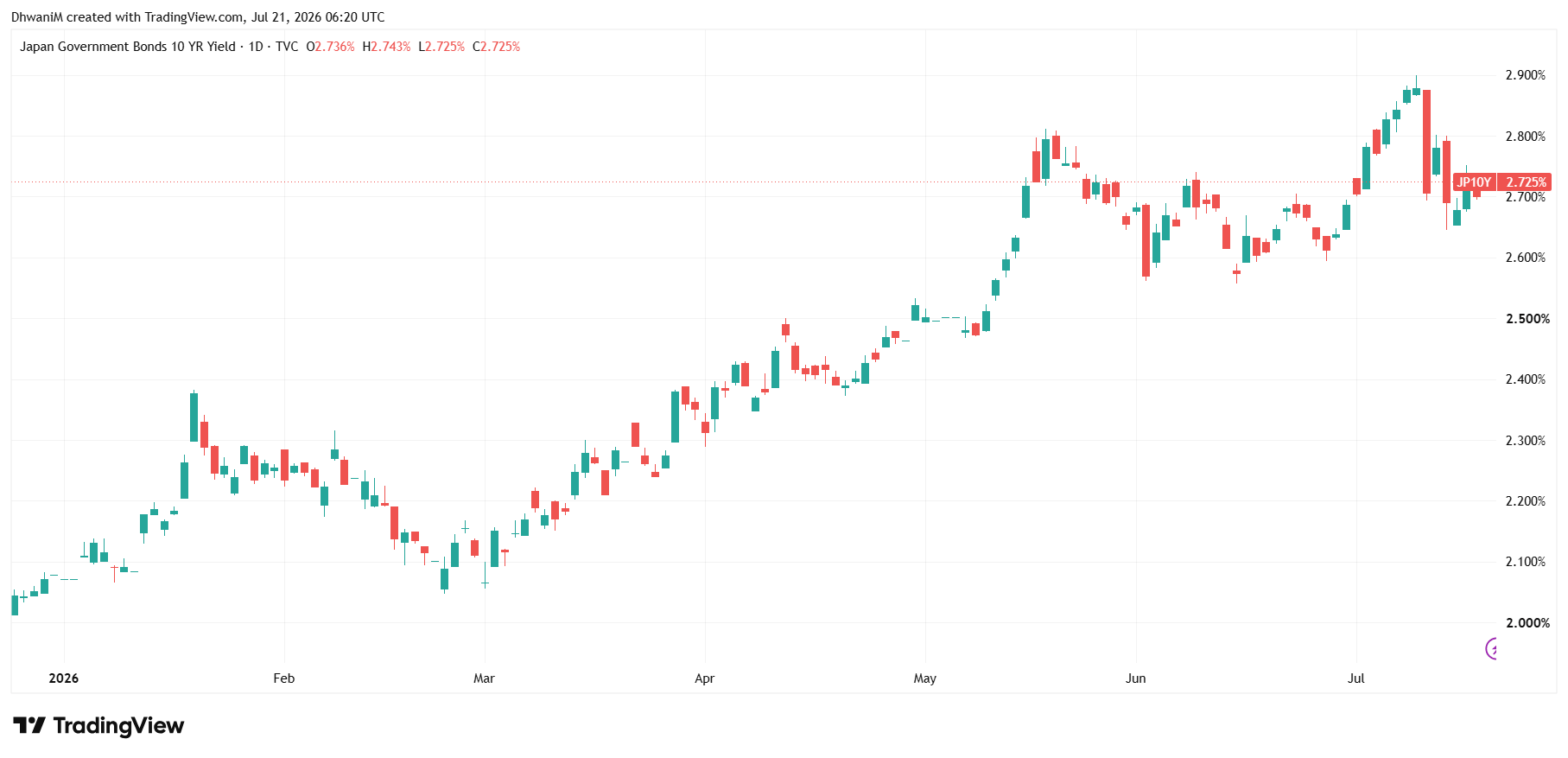
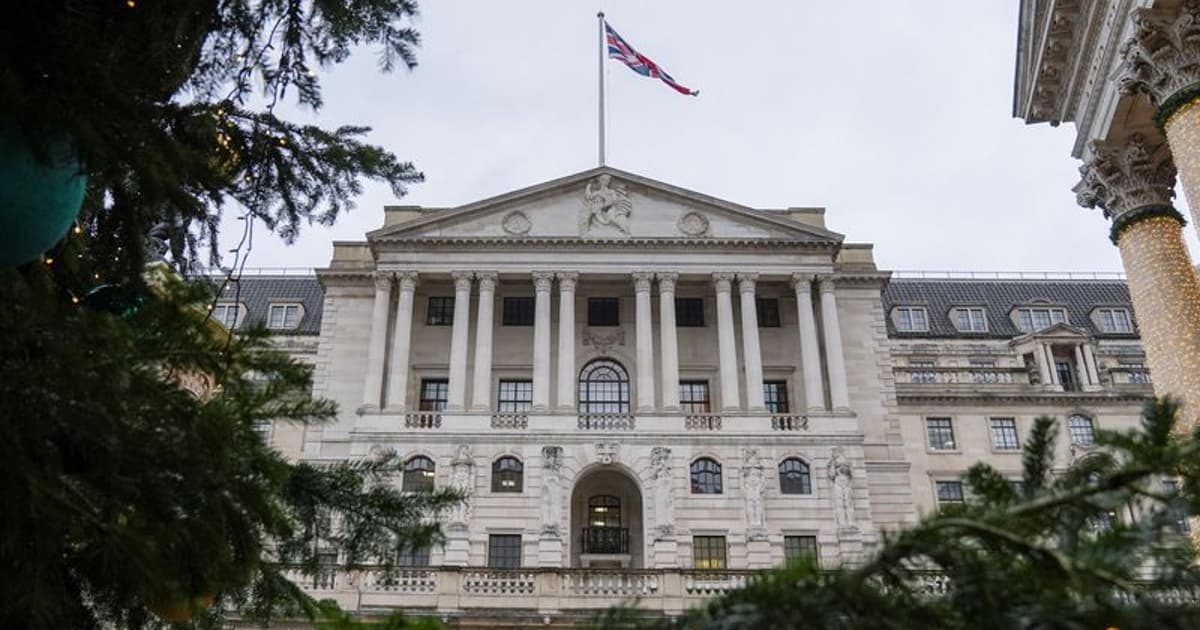
The Bank of Japan is no longer ultra-dovish. Policy rates are at their highest level in decades, and officials continue debating how quickly to normalize monetary policy.
Rising Japanese government bond yields are creating pressure for companies and policymakers, while former BoJ officials have warned that excessive yield increases could eventually force renewed bond purchases to stabilize markets. Meanwhile, the Swiss National Bank has also moved away from emergency policies, meaning both of the world’s largest funding currencies are becoming less accommodative.
Key indicators for investors
Whether you are trading Gold, US equities, or cryptocurrency, tracking Japanese bond yields provides far more insight into global liquidity than another Middle East headline. Specifically, investors should keep a close eye on:
- Japan’s 10-year government bond yield
- Bank of Japan policy meetings and guidance
- USD/JPY price action, especially around intervention-sensitive levels
- Swiss National Bank policy signals
- US Treasury yields, which often move alongside global funding conditions
These indicators serve as an early warning system for whether carry trades are expanding or beginning to unwind.
The real catalyst for the next market move
Oil dominates headlines because it is visible, whereas bond yields are often overlooked. Yet history demonstrates that markets rarely crash because everyone was watching the wrong chart; they crash because they ignored the right one.
The next major move in global markets may not begin in an Oil field. It is far more likely to begin in the global bond market, particularly in Japan. If the world’s biggest carry trade starts unwinding again, every trader will suddenly care about yields.
(This article was created with the help of an Artificial Intelligence tool and reviewed by an editor. Know more.)