
EXECUTIVE SUMMARY
- Southeast Asia’s agri-food sector generated 55 per cent of the region’s greenhouse gas emissions in 2022 and 10 per cent of global agri-food emissions. However, decarbonisation efforts remain under-prioritised and poorly funded. Emissions continue to rise as the sector expands to keep pace with growing food demand, trade insecurities and climate-related yield declines.
- The region’s voluntary carbon market is nascent but maturing, as observed in exchanges, local registries and a developing ASEAN Common Carbon Framework (ACCF). Yet the agriculture sector has issued less than one per cent of Southeast Asia’s carbon credits to date, despite the sector’s high climate mitigation potential and an estimated US$100 billion annual financing gap that carbon markets could potentially help narrow.
- Four areas offer great potential for agri-sourced credits: preventing organic soil (peatland) drainage, mitigating methane from rice cultivation, reducing enteric fermentation in livestock, and integrating agriculture nature-based solutions (ag-NbS). Proven and often low-cost techniques exist for each, though development is held back by producer fragmentation, costly monitoring, weak baseline data, and difficulty in proving additionality.
- A conservative thought experiment suggests the region could earn between US$2.1 billion and US$12.6 billion annually from carbon markets. While a far cry from the US$100 billion gap, this is still sizeable complementary private capital to support the region’s climate ambitions.
- ASEAN Member States (AMS) need to pass enabling legislation aligned with Article 6 of the Paris Agreement, embed agri-sector mitigation into national strategies, invest in data and MRV infrastructure, while the private, NGO and farmer sectors develop aggregators, pilots and methodologies.
ISEAS Perspective 2026/53, 23 July 2026
*Paul Teng is Visiting Senior Fellow, Climate Change in Southeast Asia Programme, ISEAS – Yusof Ishak Institute and Senior Consultant, NIE International Pte. Ltd.. Elyssa Ludher is a food security policy researcher. and Visiting Fellow at same programme at ISEAS – Yusof Ishak Institute. The authors would like to thank Rachel Koh, Origination Manager at Carbon ImpactX and Björn Fondén, International Policy Manager and APAC Lead at IETA, for their advice and review of early drafts of this paper
INTRODUCTION
Southeast Asia’s agriculture and food systems (agri-food) sector contributed 55 per cent or 1,627 million tonnes carbon dioxide equivalent (MtCO₂eq) of the region’s total greenhouse gas (GHG) emissions in 2022.[1], [2] Yet the sector is under-prioritised for decarbonisation, and attracts woeful funding.[3] Emissions have consequently risen as the sector expands to meet growing food demand, trade insecurities, and climate-related yield declines.
Southeast Asia’s agri-food sector’s emissions stem mainly from food production, waste, and deforestation, but the sector has high mitigation potential through climate-smart regenerative and nature-based agriculture solutions. The region could potentially draw from carbon markets to partially fund the estimated annual US$100 billion gap between articulated demands and current financing in the sector.[4] Carbon markets are markets in which carbon units, representing emission reductions, are exchanged within a defined framework.[5] This could support ASEAN Member States (AMS) in implementing climate mitigation and adaptation measures, including compensating those harmed by climate change.
Yet how viable is it to depend on carbon markets to finance improvements in the agri-food sector? Thus far, few carbon credits—less than one per cent—have been issued from this sector in this region compared to other sectors such as forestry or energy.[6] This paper examines Southeast Asia’s carbon market landscape and its links to the agri-food sector. It also assesses and hypothesises the monetary potential and offers some recommendations.
SOUTHEAST ASIA’S CARBON MARKET LANDSCAPE AND THE AGRI-FOOD ECOSYSTEM
Carbon markets were primarily established in 1997 through the Kyoto Protocol.[7] In Southeast Asia, the voluntary carbon market (VCM) has been actively developing and selling carbon credits since the early 2000s. It is estimated that Southeast Asia has issued between 200 to 350 million carbon credits between 1996 till 2024.[8], [9] The bulk of this was issued from Indonesia, Cambodia and Vietnam (Table 1). Only 0.2 per cent of this has been in agriculture; according to one database, and mainly from Thailand.[10]
Southeast Asia’s VCM is considered a relatively nascent but maturing market with segments across the value chain having established a presence there (Figure 1). The region has founded several exchanges—one each in Indonesia and Malaysia, and three in Singapore—though most credits still trade on international exchanges. Thailand and Indonesia have their own carbon registries, facilitating the development of local standards, while also using international registries. Discussions for the ASEAN Common Carbon Framework (ACCF) were launched in 2024 to create a unified, transparent regional market that builds trust, expands the ecosystem, and accelerates the low-carbon transition.[11]
Table 1: Cumulative carbon credit issuance 1996 to 2024, in millions
| Forestry & Land Use | Renewable Energy | Household & Community | Waste Management | Agriculture | Other | Total | Share of ASEAN credits by country | |
| Cambodia | 47.74 | 0.03 | 5.94 | 0.00 | 0.00 | 0.00 | 53.71 | 24.7% |
| Indonesia | 76.66 | 18.84 | 0.74 | 0.31 | 0.00 | 0.51 | 97.06 | 44.6% |
| Laos | 0.39 | 1.25 | 1.46 | 0.00 | 0.00 | 0.00 | 3.11 | 1.4% |
| Malaysia | 6.34 | 0.01 | 0.00 | 0.04 | 0.00 | 0.00 | 6.39 | 2.9% |
| Myanmar | 0.29 | 0.00 | 0.37 | 0.00 | 0.00 | 0.00 | 0.66 | 0.3% |
| Philippines | 0.01 | 0.99 | 0.49 | 0.00 | 0.00 | 0.00 | 1.49 | 0.7% |
| Singapore | 0.00 | 0.00 | 0.07 | 0.00 | 0.00 | 1.74 | 1.81 | 0.8% |
| Thailand | 0.00 | 8.15 | 0.22 | 9.52 | 0.35 | 1.97 | 20.21 | 9.3% |
| Timor-Leste | 0.13 | 0.00 | 0.00 | 0.00 | 0.00 | 0.00 | 0.13 | 0.1% |
| Vietnam | 0.00 | 12.76 | 17.88 | 2.25 | 0.00 | 0.00 | 32.89 | 15.1% |
| Total | 131.57 | 42.03 | 27.17 | 12.12 | 0.35 | 4.23 | 217.46 | |
| Share by Type | 60.5% | 19.3% | 12.5% | 5.6% | 0.2% | 1.9% |
Note: Other refers to Industrial & Commercial, Chemical Processes, Carbon Capture & Storage and Transportation; Data for Brunei unavailable. Source: Berkeley Carbon Trading Project[12] Note: World Bank database has recorded higher number of credits issued from SEA, at >350 million.
Figure 1: Actors and examples of entities along the carbon market value chain in Southeast Asia

Source: Author’s compilation, adapted from CIX’s value chain framework presented at AlterCOP 2025.
POTENTIAL FOR AGRI-SOURCED CARBON CREDITS IN SOUTHEAST ASIA
While Southeast Asia’s share of GHG emissions is only 5.68 per cent of global emissions, its agri-food emissions have contributed a significantly higher share of global agri-food emissions, at 10.0 per cent in 2022 (Table 2). The top 5 sources are Indonesia, Thailand, Myanmar, Vietnam, and the Philippines.
The emissions originate from farm inputs, on-farm activities, forest and peatland conversion, fires, waste management, and post-harvest activities. The highest specific contributors are: drainage of organic soils—mainly peatland and wetland drainage—for farming or plantations; rice cultivation; agri-food waste; household consumption; and enteric fermentation (Table 3). Indonesia’s highest emissions are from drainage of organic soils, whereas the main emissions from Myanmar, the Philippines, Thailand, and Vietnam are from rice cultivation.
As agri-food waste and household consumption have millions of point sources, developing carbon credits for these is currently not economically viable. Thus, this paper will focus on the potential for developing carbon credits from reducing emissions from (1) organic soil drainage, (2) rice cultivation, (3) enteric fermentation; and (4) agriculture nature-based solutions.
Table 2: Agri-food sector greenhouse gas emissions in Southeast Asia, 2022
| Area | Net GHG Emissions, all sectors (MtCO₂eq) | GHG Emissions (MtCO₂eq) from Agri-food |
| Brunei Darussalam | 11.91 | 1.64 |
| Cambodia | 47.10 | 60.81 |
| Indonesia | 1,181.30 | 788.79 |
| Lao PDR | 38.50 | 28.16 |
| Malaysia | 121.08 | 120.36 |
| Myanmar | 312.75 | 178.16 |
| Philippines | 242.60 | 107.35 |
| Singapore | 71.91 | 4.92 |
| Thailand | 417.77 | 185.46 |
| Timor-Leste | 1.93 | 2.02 |
| Vietnam | 494.47 | 149.56 |
| Southeast Asia (SEA) | 2,941.32 | 1,627.23 (55.3% of SEA total emissions) |
| World | 51,748.12 | 16,240.23 |
| SEA as % of World | 5.68% | 10.02% |
Source: EDGAR[13] for net GHG emissions, FAOSTAT (AR5) for Agri-food emissions[14]
Table 3: Breakdown of sources of agri-food emissions (MtCO₂eq) in Southeast Asia and from top emitters in the region, 2022.

Source: FAOSTAT (AR5)[15]. Note: Drained organic soils refer to wetland, peatlands and other organic-rich ecosystems; colours in the table are to ease viewer differentiation.
- Carbon credits from preventing organic soil drainage.
Anthropogenic drainage of peatland, swamps, and mangroves (grouped as organic soils), where accumulated vegetative matter decomposes slowly under low-oxygen conditions, contributes substantial GHG annually.[16] Indonesia (73 per cent), Malaysia (14 per cent), Myanmar (7 per cent), and Vietnam (2 per cent) account for over 90 per cent of emissions in this category in Southeast Asia.[17] A primary driver is the development of new farm and plantation lands (especially palm oil), and aquaculture.This segment is already a major source of carbon credits. This is due to early conservation efforts, including the REDD+ (Reducing Emissions from Deforestation and Degradation plus conservation, management, and enhancement of forest stocks) framework[18], under the United Nations Framework Convention on Climate Change (UNFCCC). One REDD+ indicator is tonnes of CO₂ against the established Forest Reference (Emissions) Level (FREL). Hence, accounting and MRV frameworks are more established and, to date, more than 400 million credits have been issued from this sector globally, with billions more in the pipeline.[19]
Such high-integrity projects are popular, as they carry social and environmental co-benefits.[20], [21] One well-known project is the privately-owned Katingan Mentaya Project, which has conserved and restored approximately 149,000 hectares of peatland forest in Kalimantan, Indonesia, and issued about 40 million carbon credits since 2018. Prices started at US$5 and have since increased to more than US$10 per credit.[22] Another highly-rated project is the Sumatra-Merang Peatland project which has reforested 22,920 hectares of peatland, and has been producing 1.3 million carbon credits per year since 2019; its price reached nearly US$19 at its peak.[23]
There is much potential to develop carbon credits with higher prices from this segment. Southeast Asia has 44 million hectares of peatland forests, but 239,723 hectares are being lost every year,[24] contributing to the 300 MtCO₂eq GHG emissions annually. However, the development of carbon credits has been slow due to concerns over quality and credibility of credits. Challenges include misalignment of commonly-accepted certification criteria, a lack of clear and stable domestic regulations, uneven understanding of demand, transparency concerns, troubling land grabbing reports and dislocation of indigenous communities.
Moving forward requires collaboration between governments, private, not-for-profit organisations, and civil society to collectively develop high-integrity carbon projects. Efforts such as the ASEAN Peatland Management Strategy can advance the cause, but in the end, AMS leadership is crucial to its realisation.
- Carbon credits from mitigation in rice cultivation
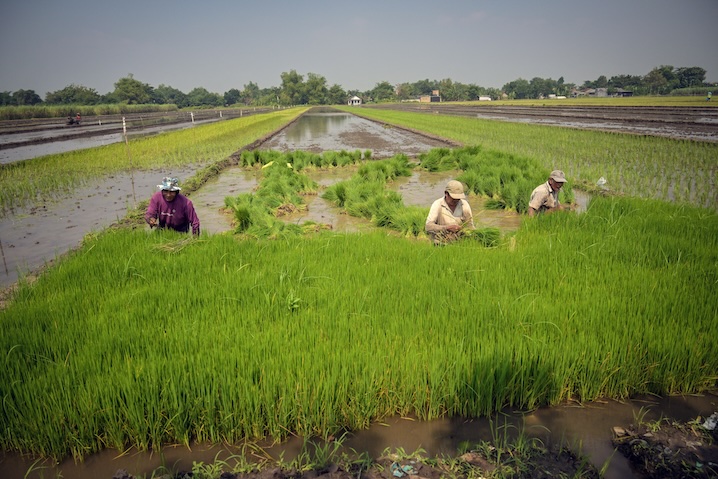
Southeast Asia’s 45 million hectares of rice fields, which are equivalent to the size of Sweden, contribute 243 MtCO₂eq of GHG annually.[25] This stems mainly from methane (CH₄), a potent GHG with a Global Warming Potential (GWP) 28 times that of carbon dioxide (CO₂) over a 100-year time horizon.[26] Conventionally, rice paddy is flooded for most of the growing season, creating an oxygen-deprived environment where micro-organisms break down organic matter and produce methane as a by-product.[27]Solutions are available. Alternate Wetting and Drying (AWD) – the periodic draining of fields to inhibit methane-producing microbes – combined with Direct Seeded Rice (DSR), which is the direct sowing of seeds into dry soil, has been proven to reduce methane by between 47 and 96 per cent.[28], [29], [30], [31] It requires a change in farming techniques that involves minimal capital investment, saves water, and reduces chemical runoff, though not all rice farms are suitable for these methods. Other solutions include the use of low-methane rice varieties and the application of methane-oxidising bacteria in soils.
Currently, many rice-producing AMS are trialling or scaling up low-carbon rice projects. The largest programme is the nationally backed project in Vietnam called “Sustainable development of 1 million hectares of high-quality, low-emission rice”. The pilot phase has indicated a reduction of between 4 and 12 tCO₂eq per hectare, alongside production gains and input cost savings.[32], [33]
As of 2025, rice-sourced carbon credits are just starting to be registered, with sales set in the future.[34] The slow development of these credits is due to a lack of baseline data, high cost of MRV due to fragmented producers, difficulty in proving additionality,[35] policy and institutional hurdles, and limitations in traceability and certification. It also suffers from the shadow of previous cases of overstating emissions, impacting trust in the sector.[36] High-integrity credit development may require the use of costly granular satellite imagery and even artificial intelligence to monitor key variables such as water levels (for AWD), seeding techniques (for DSR), and cropping cycles. Greater demand for low-carbon rice may also provide the market signal for wider adoption.
- Carbon credits from mitigation of enteric fermentation
Enteric fermentation, which refers to the release of methane from the belching and flatulence of ruminant livestock (cows, sheep and goats), is the largest source of methane emissions globally (27 per cent), higher than oil and gas (22 per cent) and landfill and waste (18 per cent).[37] In Southeast Asia, emissions from this subsector are low due to the region’s relatively small ruminant population, but are projected to increase due to the growing demand for meat and dairy, increasing from 3.3MtCH₄ in 2022 to 4.3MtCH₄ by 2030 (33 per cent increase) and 5.5MtCH₄ by 2050 (68 per cent increase), with the highest growth projected in Myanmar, Vietnam, and the Philippines.[38]National governments are promoting herd expansions to reduce import dependencies. For example, Vietnam’s 2022-2030 Agriculture Plan seeks to increase livestock production by 4.5 to 5.5 per cent annually.[39] Pro-nutrition policies are also encouraging the expansion of dairy farms.[40
Methane reduction solutions for enteric fermentation include introducing more digestible feed or feed additives that reduce methane-producing bacteria activity. One commercially available inhibitor claims to reduce methane production by 30 to 45 per cent in head of cattle.[41] Similarly, research has suggested that Asparagopsis seaweed-derived feed additives can inhibit methane and are currently being farmed in Southeast Asia. Feed additives are, however, not suited for grazing cattle, which is a dominant feature in the region. A more suitable solution would be to breed ruminants with low methane release. One study has found that some cattle emit 22 per cent less methane per kg of milk than the average.[42] These traits could yield longer-term reductions but require considerable R&D investment. These credits are not common in Southeast Asia; however at least one company has recently announced enteric fermentation credit development in Laos.[43]
- Opportunities in agriculture-nature based solutions
Agriculture nature-based solutions (ag-NbS) are practices that protect, manage and restore ecosystems while also delivering the triple benefits of sustainable and resilient food, enhanced nature and biodiversity, and carbon sequestration. It aligns with regenerative farming practices and indigenous land management.[44] Much of Southeast Asia’s virgin forests and mangroves have been converted to farming and aquaculture; integrating ag-NbS can secure food production while protecting these sensitive, valuable ecosystems. It can also help reverse land degradation. More than half of global agricultural land is moderately or severely degrading.[45] Southeast Asia faces similar statistics.Promising ag-NbS solutions in Southeast Asia include soil carbon farming, biochar, agroforestry, and crop rotation and diversification. Soil carbon farming in the region generally includes cover cropping, organic matter addition, tree planting and/or reducing tillage. Biochar is developed by converting agricultural bio-waste in low-oxygen, high temperature environments into carbon-rich material which is then applied to soils to improve soil health, retain water and nutrients, and sequester microbial biomass. Agroforestry in the region typically relates to growing a variety of trees and crops alongside grazing livestock to create biodiverse, symbiotic, self-sustaining systems. It has gained traction in improving the resilience of plantations, including those for rubber, cocoa, and coffee. Similarly, crop rotation and diversification involve shifting from monoculture to a wider mix of crops for environmental and economic benefits. In the process, all of these sequester carbon.
The biggest challenges with ag-NbS are the need for site-tailored solutions, the wide range of stakeholders involved, upfront costs, and long lead times before farmers see direct income benefits. Land tenure issues, lack of technical expertise, and financial constraints frequently hinder its scaling. Furthermore, there is a permanence risk should a destructive event such as a wildfire or typhoon occur. However, when done well, it can achieve improved soil fertility, reduced soil erosion, water conservation, enhanced biodiversity, diversified incomes, the integration of indigenous knowledge, and improved livelihoods for communities.
Given each ag-NbS solution’s site-specific nature, sequestration rates—and hence carbon credit potential—vary. Aside from agroforestry (usually developed with reforestation or afforestation activities), few ag-NbS carbon credits exist, with the most active being in Thailand.
POTENTIAL VALUE OF AGRICULTURE CARBON MARKETS
Official estimates of the potential size of the agriculture VCM in Southeast Asia are not available. As such, the authors’ thought experiment below estimates this potential using an arbitrary twenty per cent adoption rate across the four high-emission sectors above and data from existing projects. Twenty per cent was hypothesised based on conservative estimates of what is realistically possible based on existing limitations, particularly the likely slow adoption rate from the hundreds of thousands of smallholder farmers.
Table 4: Scenarios for calculation of potential income from each decarbonisation solution
| Decarbonisation solution | Size of the challenge in Southeast Asia using examples | Hypothetical Reduction scenario based on 20% adoption rate |
| 1) Reducing organic soil degradation and emissions | The region has 44 million ha of peatland forests, of which 239,723 ha are being lost every year.[46] This contributes 300 MtCO₂eq annually. | Avoiding 20% of peatland forest losses annually (by slowing/banning peatland forest conversion for agriculture) |
| 2) Decarbonising rice cultivation | The region has 45 million hectares of rice fields[47]. Projects in Vietnam indicate an average reduction of 8 tCO₂eq per ha annually. | Convert 20% of total rice fields to low-methane rice cultivation techniques |
| 3) Decarbonising through enteric fermentation | The region’s ruminant sector released 91.5 MtCO₂eq in 2022.[48] | Removal of 20% of carbon released annually by targeting methane reduction in large ruminant farms. |
| 4) Integrating ag-based NbS in plantations | The region has 53 million hectares of plantation farms^.[49] Rough estimates indicate a reduction of 7.5 tCO₂eq/ha annually from introducing ag-NbS.* | Integrate NbS in 20% of all plantation farms. |
Note: ^ refers to permanent cropland in FAOSTAT. *7.5tCO₂eq/ha reduction was derived from two ag-NbS project in Thailand, a rubber plantation[50] and a community agroforest.[51]
Table 5: Potential 1 year income from carbon markets based on Table 4 scenarios
| Decarbonisation scenario | Current price band for such credits based on category (US$) | Lower to upper limit based on current prices (million US$) | Projected price band based on 50% unit price increase (million US$) | Projected price band based on 100% unit price increase (million US$) |
| 1) Reducing organic soil degradation and emissions | Forest Avoidance/ Peatland Conservation: $7-20 [52] | 19.8 – 56.6 | 29.7 – 84.9 | 59.4 – 169.7 |
| 2) Decarbonising rice cultivation | Methane reduction: $10-$25 [53] | 720.0 -1,800.0 | 1,080.0 – 2,700.0 | 2,160.0 – 5,400.0 |
| 3) Decarbonising through enteric fermentation | Methane reduction: $10-$20 [54] | 183.0 – 366.0 | 274.5 – 549.0 | 549.0 – 1,098.0 |
| 4) Integrating ag-based NbS in plantation farms | Afforestation, Reforestation, and Revegetation (ARR): $15-$25 [55] | 1,192.5 – 1,987.5 | 1,788.8 – 2,981.3 | 3,577.5 – 5,962.5 |
| Total in one year (no cumulation) | — | 2,115.3 – 4,210.1 | 3,173.0 – 6,315.1 | 6,345.9 – 12,630.2 |
Source: Current prices based on range of sources, including from Planet2050[56], CIX carbon daily newsletter, price of carbon credits from Sumatra-Merang Peatland project, correspondence with Mittilab, and advice from industry experts.
The different decarbonisation solutions currently attract different prices based on the complexity of the technology, permanence of reduction, risks associated, environmental and social safeguards, co-benefits, quality of methodologies, additionality, ratings, and other factors. Furthermore, the scenarios in Table 4 are based on conservative action, and it is hoped that the benefits accruing from decarbonisation will be higher, given additional measures and the development of an ASEAN Decarbonisation Roadmap.[57] One report by BloombergNEF projects that carbon prices will increase multi-fold in the coming years,[58] so the calculations in Table 5 may be underestimating future revenue. However, a substantial supply increase may also result in a drop in carbon prices if demand does not increase in-step as well.
CAN CARBON MARKETS SUPPORT CLIMATE ACTION IN THE AGRI-FOOD SECTOR?
In summary, carbon markets, particularly VCMs, can support climate action and economic growth in Southeast Asia’s agri-food sector. Using scenario-based estimates as presented in Table 5, the region could accrue between US$2.1 billion (at the low end of US$7.66 per credit) to US$12.6 billion (should prices rise by two times) annually if only some actions were taken in the following four areas: addressing drained organic soils, rice, enteric fermentation and ag-NbS. While a far cry from the US$100 billion funding gap, it is still a sizeable source of complementary private capital that could support the growth aspirations of the region.
Whether the agri-food sector can seize this opportunity in time remains to be seen. The key obstacles to overcome are high perceived risks, producer fragmentation, few bankable projects, fragmented national policies and targets, scarce data and immature digital MRV, insufficient research to support carbon projects, the vulnerability of local populations to unjust treatment, and costly methodology and certification development.
ENDNOTES
For endnotes, please refer to the original pdf document.
| ISEAS Perspective is published electronically by: ISEAS – Yusof Ishak Institute
30 Heng Mui Keng Terrace Singapore 119614 Main Tel: (65) 6778 0955 Main Fax: (65) 6778 1735 Get Involved with ISEAS. Please click here: /support/get-involved-with-iseas/ |
ISEAS – Yusof Ishak Institute accepts no responsibility for facts presented and views expressed.
Responsibility rests exclusively with the individual author or authors. No part of this publication may be reproduced in any form without permission. © Copyright is held by the author or authors of each article. |
Editorial Chairman: Ng Chee Khern
Editorial Committee: Terence Chong, Cassey Lee, Norshahril Saat, and Hoang Thi Ha Managing Editor: Ooi Kee Beng Editors: William Choong, Lee Poh Onn, and Lee Sue-Ann. Comments are welcome and may be sent to the author(s). |