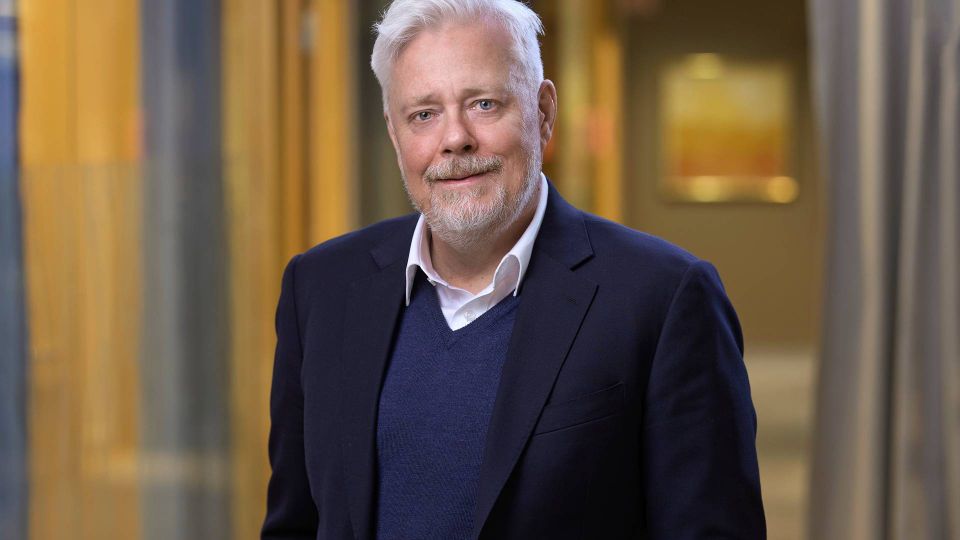
Kenya, August 17, 2026 – The era when Kenyan banks could comfortably generate net interest margins of 9 to 10% is coming to an end as lower interest rates continue to squeeze lending yields, KCB Group Chief Financial Officer Lawrence Kimathi has said.
Kimathi said the Kenyan banking market is entering a new environment where net interest margins could settle at between 6.5 and 7%, provided banks manage their funding costs efficiently.
“Especially in the Kenya market, the days of having NIMs of 9-10 per cent are gone. They’re long gone,” Kimathi said during an interview.
His comments come as the Central Bank of Kenya maintains a significantly lower policy rate than in previous years, with the Central Bank Rate currently at 8.75% after the rate was held unchanged for the third consecutive meeting on August 11.
The easing cycle has already filtered through to commercial bank lending rates. According to CBK data cited by People Daily, the average lending rate fell to 14.3% in July 2026, down from 17.2% in November 2024.
For borrowers, the decline represents cheaper credit.
For banks, however, it means the income generated from loans is being compressed.
Net interest margin measures the difference between what a bank earns from interest-generating assets, such as loans and securities, and what it pays for funding such as customer deposits.
It is therefore one of the most important indicators of how effectively a bank turns its balance sheet into interest income.
When the CBK lowers its policy rate, commercial banks generally follow by reducing lending rates. That reduces the return banks earn from loans.
The challenge is that banks cannot necessarily reduce the cost of deposits at the same speed.
Customers can move their money into alternative investments, including government securities, if those instruments offer better returns.
Kimathi illustrated the competition using Treasury bills.
“If you come and give me 10 billion and I tell you I’ll pay you seven, you tell me the 91-day bill is at eight. That is even supposed to be risk-free. I’ll go there,” he said.
This means banks must continuously balance what they charge borrowers against what they must offer depositors to retain funding.
KCB has already managed to reduce its cost of funds from 3.9% to 3.4%, helping cushion some of the pressure on its margins.
But Kimathi’s comments suggest that lower margins are becoming a structural feature of the Kenyan market rather than a temporary problem.
The changing interest-rate environment is forcing banks to reconsider how they generate earnings.
For KCB, one answer is volume.
The group’s loan book grew by about 14% in the first half of 2026, while deposits increased by 15%. New customers accounted for approximately 15% of the loan growth.
The strategy is straightforward: if the bank earns less from each shilling lent, it can partly compensate by increasing the amount of business it conducts.
But volume alone is not enough.
A rapidly expanding loan book can also increase credit risk if loans are not properly assessed and managed.
KCB appears to be addressing that pressure through a combination of stronger loan growth and improved asset quality.
The bank’s non-performing loan ratio fell to 15.1%, its lowest level in 57 months. Kimathi said the stock of non-performing loans had declined by about KSh30 billion over the previous 15 months, following restructuring, settlements, recoveries and write-offs.
That improvement matters because every loan that goes bad eats into a bank’s income through provisions and eventual losses.
The other major shift is away from relying almost entirely on interest income.
KCB’s non-funded income, money generated through fees, commissions, foreign exchange and other services, is becoming an increasingly important part of its business.
The bank said service fees increased by 13%, while its digital business was processing approximately KSh1.7 billion in transactions every day.