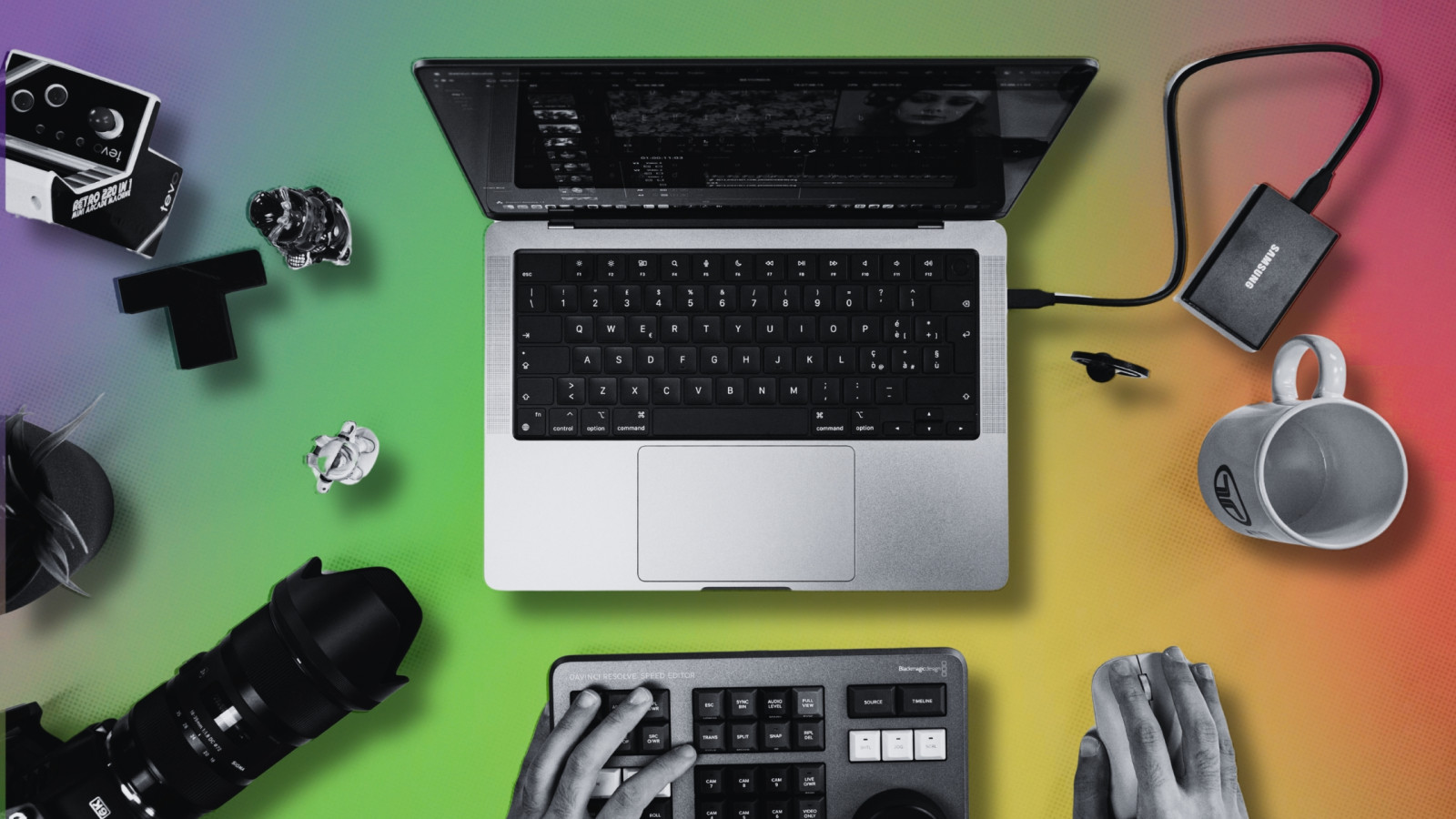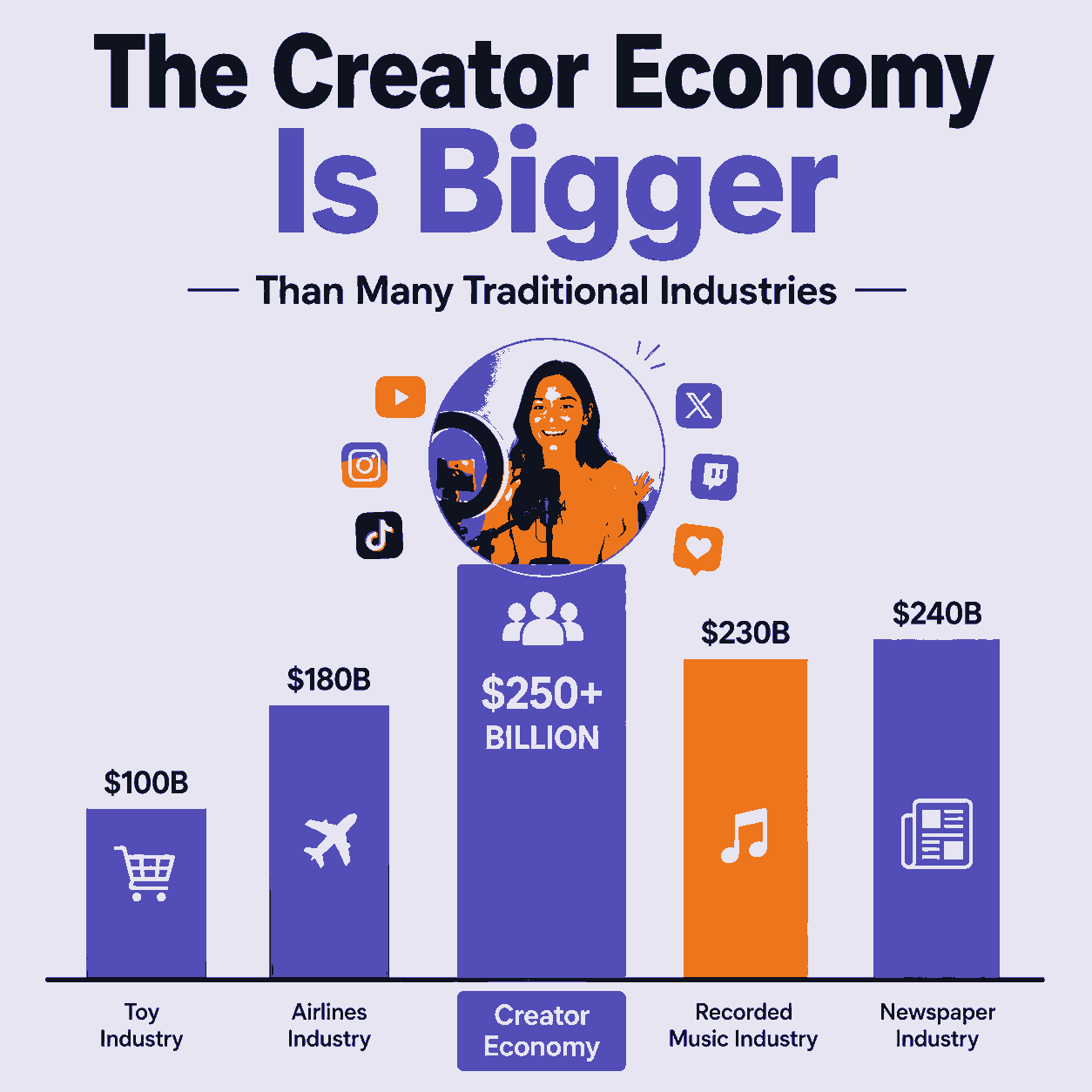
A few years back, if someone told you they were a full-time content creator, most people would ask — “okay but what do you actually do for work?” That reaction is slowly fading. Because right now, the creator economy is worth over 250 billion globally, and that number is still climbing. To put that in perspective — that is bigger than many industries that have existed for over a century. We are not talking about a passing trend.
We are talking about a real shift in how people work, earn, and build things.And the best part? This is not just a story about big YouTube stars or viral Instagram accounts. It is about regular people, a school teacher in Pune, a home baker in Jaipur, a finance nerd in Chennai, who decided to share what they know, and found an audience willing to pay attention.
What Is the Creator Economy, Really?
Strip away all the jargon, and the creator economy is simple: people making money by putting content online. That content can be anything — a YouTube channel, a podcast, a paid newsletter, an Instagram page, an online course. The creator economy is the full system that makes that possible — the platforms, the tools, the brand partnerships, the payment methods, and the audience.
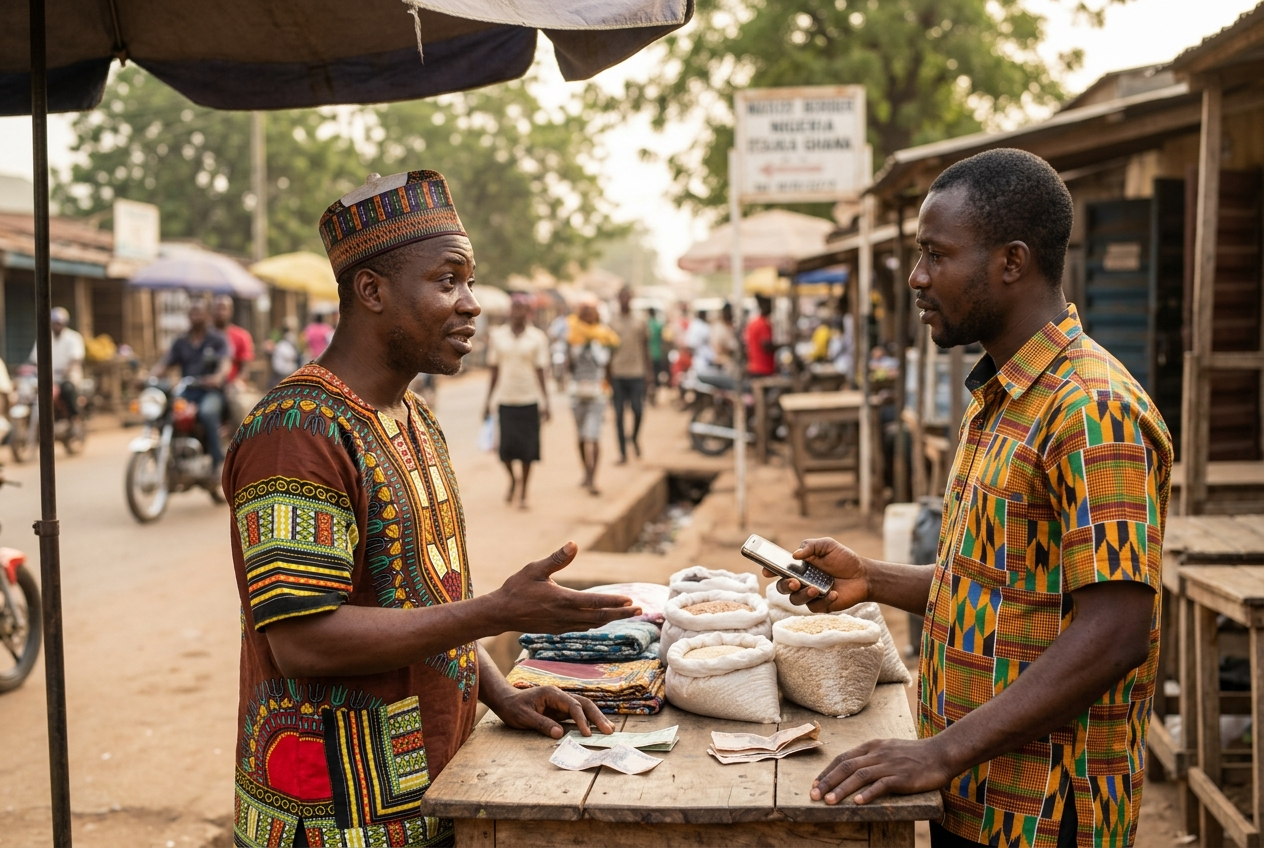
What changed in the last decade is access. Earlier, if you wanted to reach a large audience, you needed a TV channel or a publishing deal. Now, a person with a phone and something useful to say can reach lakhs of people — from their bedroom. There are over 200 million content creators worldwide right now. Not all of them are earning crores. But a growing number are building real, steady income — and some are building businesses that last.
Why Brands Started Taking Content Creators Seriously
For years, big companies saw content creators as second-tier — nice to have, but not a serious marketing channel. That thinking is completely gone now. Brands figured out something important: people trust creators more than they trust ads. When someone you follow recommends a product, it does not feel like advertising. It feels like a friend telling you about something they actually use. That is the foundation of influencer marketing — and it works.
Influencer marketing has grown into a multi-billion dollar industry because brands can see results. Not just views, but actual sales, sign-ups, and clicks. Creators who can show strong engagement — not just big follower counts — are the ones brands want to work with.
Here is why brands choose content creators over traditional advertising:
- They reach the right people — A skincare creator’s audience is mostly people who care about skincare. That targeting is hard to replicate with a generic TV ad.
- Their content feels real — Creators know how to talk to their audience. A product placed in that context feels natural, not forced.
- Engagement is higher — Comments, shares, saves — creator content gets way more of this than brand-produced content.
- It is often more affordable — Working with mid-tier creators can cost far less than a big media campaign, with better ROI.
Building an Online Business as a Creator
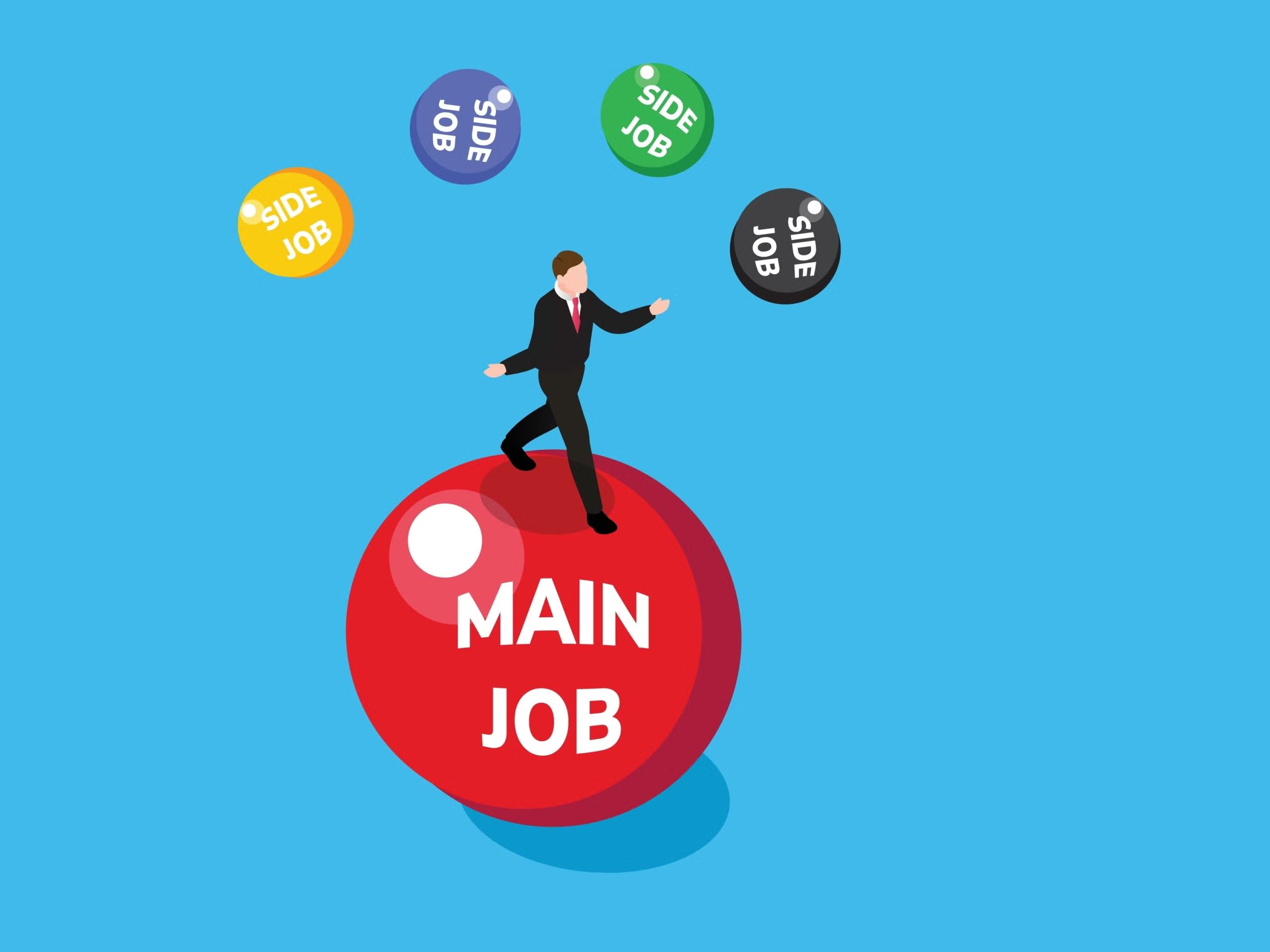
Here is where it gets really interesting. Content creators are not just doing brand deals anymore. Many of them are building full online businesses. This is what makes the online business model so attractive for creators. You are not dependent on one employer or one platform. You build multiple income streams that work even when you are not actively working.
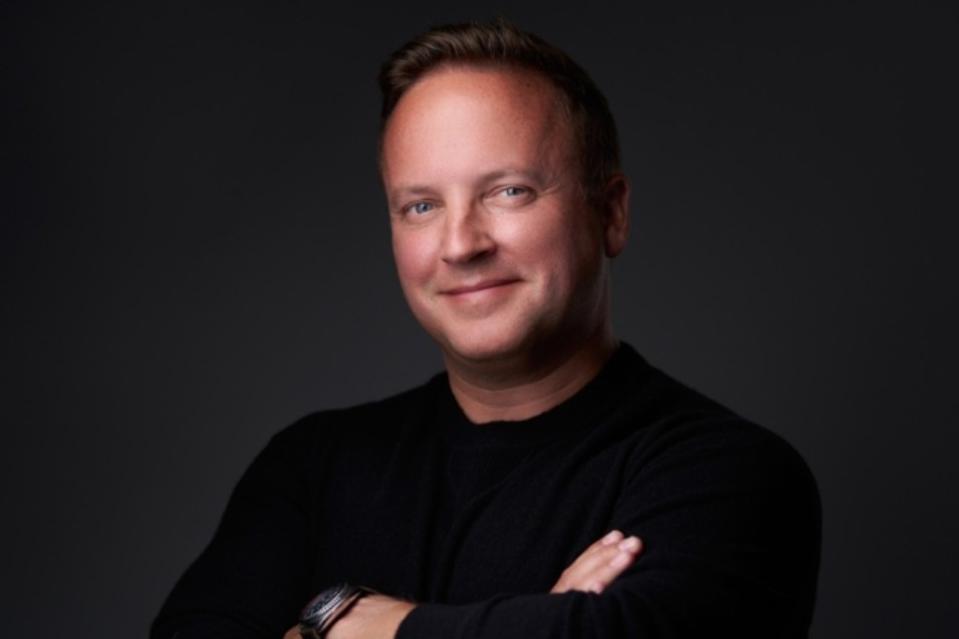
Ankur Warikoo is a good example of this. He started sharing personal finance and career advice on social media. Over time, that grew into books, online courses, speaking engagements, and brand partnerships. He did not wait until he had millions of followers. He started building an online business early, and the audience followed.
How Creator Income Actually Works
People are curious about money. That is fair. So let’s talk about it honestly. Creator income is real, but it is not simple. It is not one check at the end of the month. It comes from multiple places, at different times, in different amounts.
Here is how most content creators earn:
- Ad revenue — YouTube, Facebook, and other platforms pay creators based on views and watch time
- Brand sponsorships — Companies pay creators to feature or review their products; this is the backbone of influencer marketing income
- Digital products — Courses, eBooks, Notion templates, Lightroom presets — things creators make once and sell repeatedly
- Memberships — Paid communities on Patreon, Telegram, or Discord where fans get exclusive access
- Affiliate commissions — A percentage of every sale made through the creator’s referral link
- Consulting or coaching — One-on-one or group sessions where creators charge for their expertise directly
Influencer Marketing Has Become a Serious Business Tool
Not so long ago, influencer marketing was the thing marketing teams experimented with when they had a leftover budget. Today, it is a planned, budgeted strategy for companies across every sector. In India, the influencer marketing industry is on track to cross ₹3,000 crore. Food brands, fashion labels, EdTech startups, banks, travel companies — they are all spending money on creator partnerships.
What changed is accountability. Brands can now measure influencer marketing the same way they measure other campaigns — cost per click, conversion rate, return on spend. Creators who understand this and can show real numbers are getting better deals and longer partnerships.
It Is Not All Easy — Here Are the Real Challenges
Burnout is a real problem. When your income depends on posting consistently, taking a break feels risky. Many content creators have spoken openly about the pressure of showing up every day, even when they are tired or out of ideas.
Creator income is also unpredictable, especially in the early phase. Most creators spend one to three years building before the money becomes steady. During that time, a lot of people gave up — not because they were not good, but because they ran out of patience or funds.
Where Does India Fit in All of This?
Cheap data, hundreds of millions of smartphone users, and audiences consuming content in more than 20 languages — the conditions here are unlike anywhere else. Indian content creators are not just making English content for global brands. They are building massive regional audiences in Hindi, Tamil, Telugu, Marathi, Bengali, and more.
Platforms are paying attention. YouTube, Instagram, ShareChat, Moj, and Josh are all actively investing in Indian content creators — offering fund programs, monetization features, and creator support to grow the space. With over 600 million Indians under the age of 25, this country has both the people making content and the people consuming it. That is a powerful combination.
FAQs
Q1. What is the creator economy in simple words?
It is the system where people earn money by creating content online — videos, blogs, courses, podcasts, social media posts. The creator economy includes the platforms, tools, and payment methods that make this possible for content creators around the world.
Q2. How do content creators actually make money?
Through a mix of things — ad revenue, influencer marketing deals with brands, selling digital products, running paid communities, affiliate links, and sometimes coaching or consulting. The best creators have multiple streams of creator income rather than depending on just one.
Q3. Is influencer marketing still effective for brands?
Yes, and it is growing. Influencer marketing works because audiences trust creators. Brands that work with the right content creators — even smaller ones with niche audiences — often see better results than traditional advertising.
Q4. Do you need a huge following to earn well?
No. Many content creators with 10,000 to 50,000 followers earn more than those with millions, because they have built a proper online business around their audience. Engagement and trust matter more than raw numbers.
Q5. Can someone in India build a real online business as a creator?
Absolutely. India has the audience, the platforms, and the infrastructure. Many Indian content creators have built crore-level businesses starting from zero. The creator economy here is still early, which means the opportunity is still wide open.