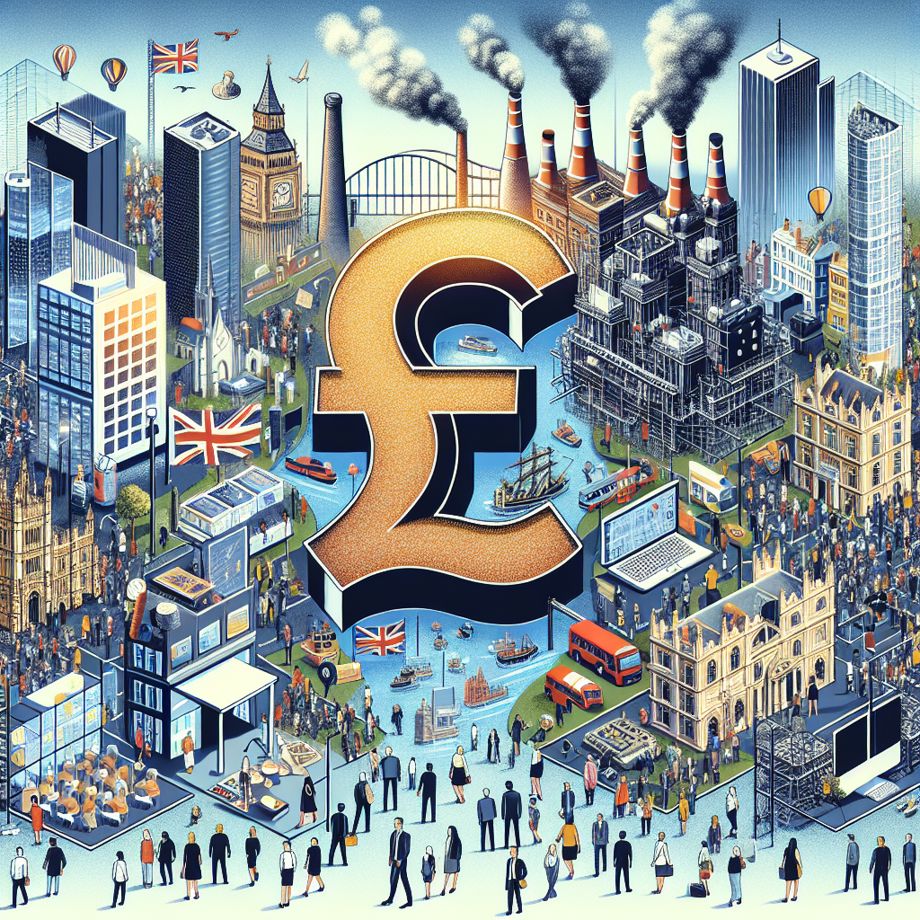
In just a few days, on the 4th of July, the United States of America will celebrate its 250th birthday. In a fitting coincidence, so will modern capitalism.
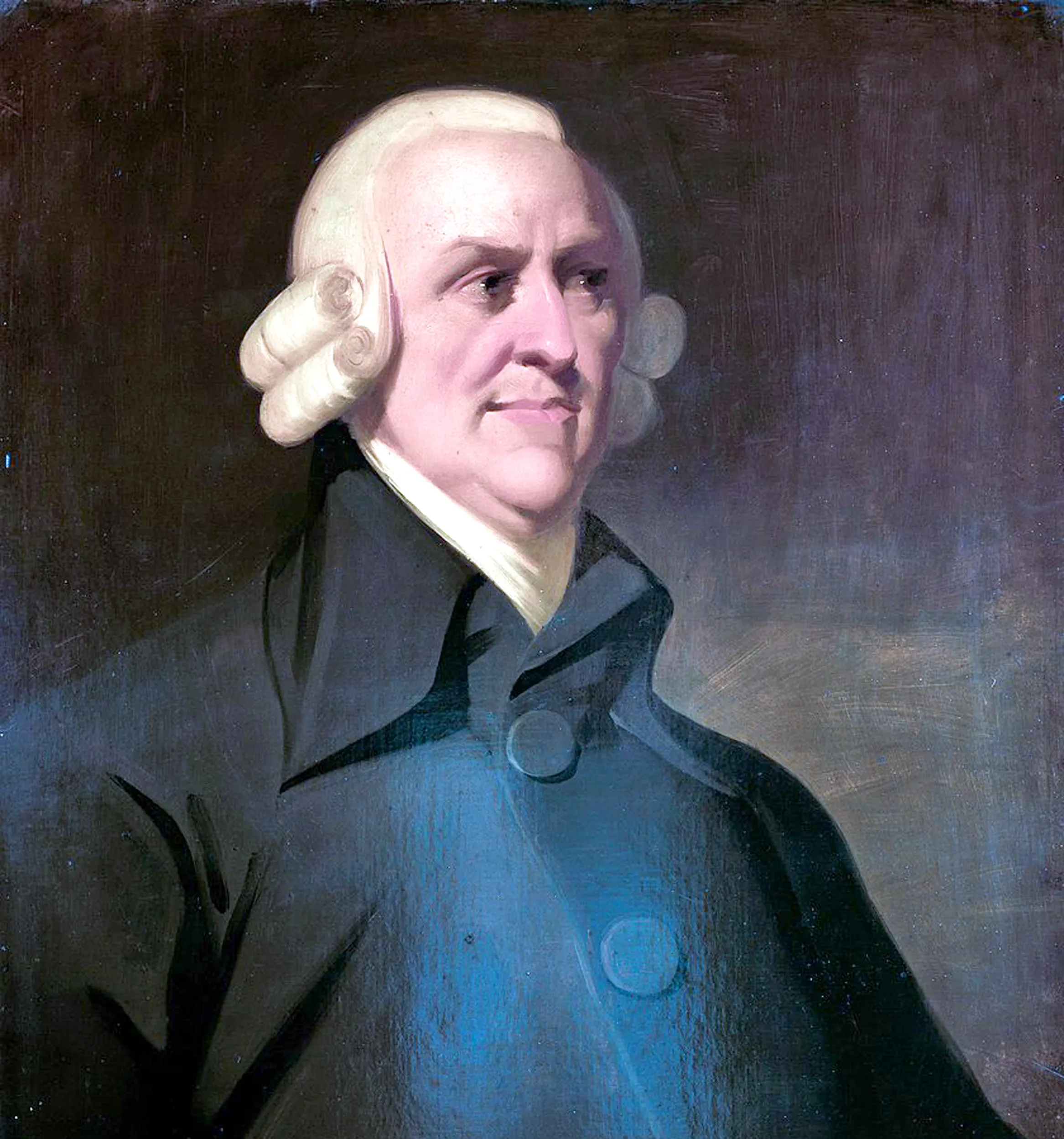
The year 1776 gave the world both the Declaration of Independence and Adam Smith’s The Wealth of Nations, the founding text of the market economy. The American republic and American capitalism came of age together, and two and a half centuries is enough time to expect a measure of maturity from both.
Yet, as evidenced as recently as last week, the American economy that is turning 250 remains stuck in a state of perpetual adolescence. As every tween parent and middle school teacher can attest, the adolescent mind is truly remarkable – enormously capable, endlessly energetic, and quick to discount the consequences of its actions, especially when those consequences are borne by others. In short, it’s only an adolescent economy that could be this profitable yet produce so little well-being.
The number we can’t ignore
When trying to account for the aggregate impact of our adolescent economy, there is one figure that sticks out among the rest: how long we live. Decades ago, the economist Samuel Preston showed that national income and life expectancy rise together; in a relationship that goes back nearly three centuries.
However, today the United States is now the rich world’s largest negative outlier on the Preston curve, living several years less than our income predicts.
Interestingly, the divergence between America’s national wealth and health is a fairly recent phenomenon. In the mid-1950s, the United States ranked near the top of the world in both output per worker (sixth) and life expectancy (eighth). More than 70 years later, our output rank has barely moved, to seventh, while our life-expectancy rank has fallen to around forty-sixth. In that time, we did not become less productive.
Instead, we became markedly worse – or less interested – at converting economic productivity into longer, healthier lives. Countries like Japan and Costa Rica turn each dollar of income into far more life-years than we do by simply allowing fewer externalized costs to go unaccounted and unpriced. It’s a simple, but fundamental equation.
Net impact – net profit = externalities
Record corporate earnings and falling life expectancy are not supposed to coexist for long. The fact that they have, for the better part of 50 years, points to something undeveloped in our economy: our accounting.
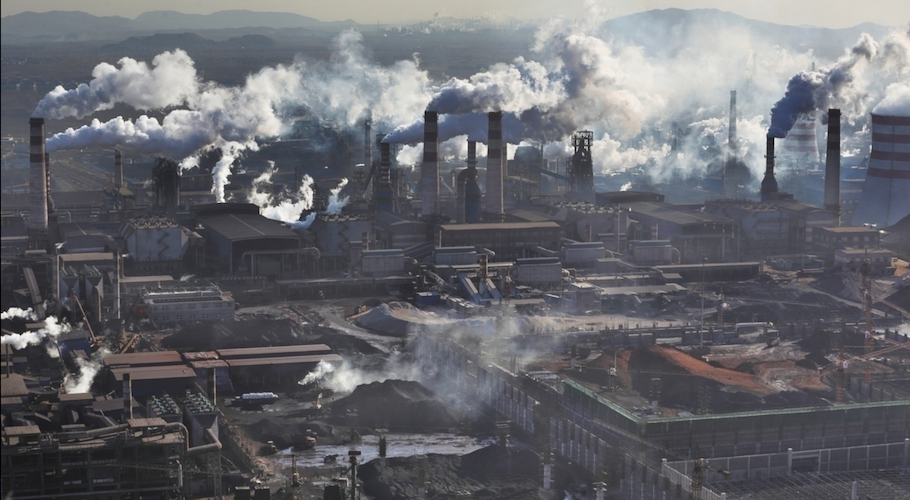
For all of the strides Corporate America has made in terms of financial accounting, we still miss the mark when accounting for costs – specifically, the cost a company can shift onto a worker, a watershed, or a county health department and never record. Economists have a clinical word for it: externalities.
When a firm records a dollar of profit by pushing a dollar of cost outside the transaction, its exploiting a loophole that’s holding back our economy. The externalizing company looks like an efficient steward of capital, even when profit is the result of a well-executed cost transfer. The income statement may show a profit of 10 dollars, but if net impact is six then the four were not earned. These four dollars were taken from workers paid less than their labor was worth, from communities that breathed preventable pollution, from public budgets and household balance sheets that were quietly eroded.
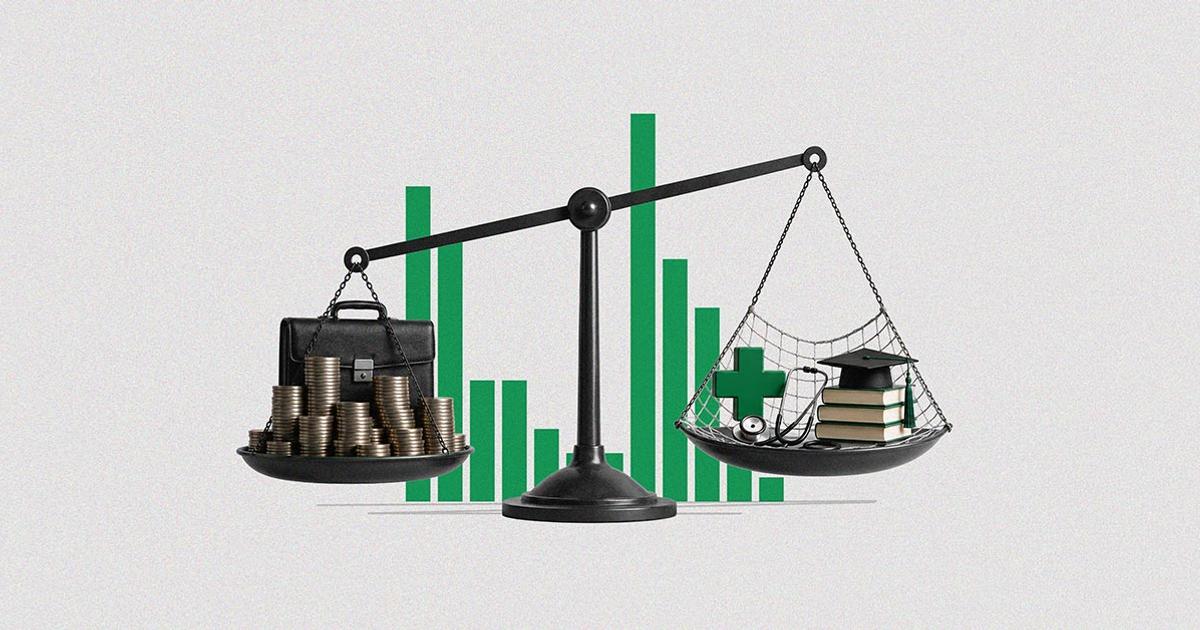
Through this lens, net impact is not an intangible, ethereal estimate of social responsibility. It is the upper limit of what a company can recoup in profit before it begins to force its costs onto society, the economy, communities and households. All net profit above net impact is a transfer of value from stakeholders to shareholders. Scaled up from the company to the economy, it’s easy to see how externalized environmental costs totaled 10 to 15 percent of US GDP in 2025.
As the loophole grows
In January, the EPA finalized new emission limits for gas-fired power turbines and, in the fine print of its economic analysis, announced that it would stop putting a dollar figure on the health benefits of its clean air rules. This action simultaneously zeros out the value and eliminates the cost associated with fewer premature deaths, fewer asthma attacks, and fewer heart attacks from reduced fine-particle and ozone pollution. The EPA will keep tallying what compliance costs industry, but it will no longer value what those rules – and 230,000 lives saved per year – are worth to the public. The stated reason for this change is “uncertainty in the estimates,” although recent advances in compute is making estimates cheaper and more accurate.
In June, the Supreme Court ruled 7–2, in Monsanto v. Durnell, that federal pesticide law bars a Missouri man, who developed non-Hodgkin’s lymphoma after roughly two decades of using Roundup, from holding the manufacturer liable for failing to warn him. The decision hinged on a letter of the law argument that, because the EPA had reviewed glyphosate and chosen not to require a cancer label, no state could subsequently require a cancer label or award damages for not doing so.
The ruling is narrow and the science has been aggressively contested, but the result is plain: a corporate cost landed on a household, and the Court closed the option for a jury to assign those costs back to the company.
Together, these actions have dramatically widened the profitable externality loophole, making it even easier for companies to benefit from harm and other externalities. One reduces the price of harm at the front end, while the other removes accountability at the back end.
From accounting to accountability
For decades, the reply to “price the externalities” was, “We can’t; it is too hard and too subjective to measure.” That was never quite true, but there were certainly cases where rigorous impact measurement was prohibitively expensive.
Today, the same exponential gains in compute that are remaking traditional accounting and finance have reached impact accounting. Advances in attribution science, satellite and sensor monitoring, and cheap large-scale modeling have driven the cost of estimating a firm’s external effects down to a fraction of the cost of auditing its books.
The question has been whether we would build the infrastructure to require impact accounting and let it travel into the decisions that allocate capital – mirroring the same leap forward we took in the 1930s, when standardized financial disclosure stopped being a courtesy and became a requirement of the market.
The honest response to the “uncertainty” the EPA invoked in January is to provide a range, not a zero. Replacing an imperfect price with no price is not a step toward better accounting . It is a thumb on the scale to discount the value of life when we budget.
The competitive case for the economy to mature
The reflex to file all of this under social responsibility is a gross mischaracterization of impact accounting and an understatement of what the profitable externality loophole costs our society. Pricing impact is, before anything else, a competitive proposition.
For an investor large enough to hold a broad slice of the economy – such as a pension, an endowment, a sovereign fund – the profitable externality loophole is a portfolio management problem. The extra dollar one company extracts by offloading harm does not disappear; it returns as the climate loss, the litigation reserve, the stranded asset, or the strained public balance sheet that drags down returns across the rest of the portfolio.
This is the inescapable beta risk that comes with universal ownership. Universal owners cannot indulge a loophole that flatters a single holding while quietly taxing the broader portfolio because they can’t diversify away from a sick economy.
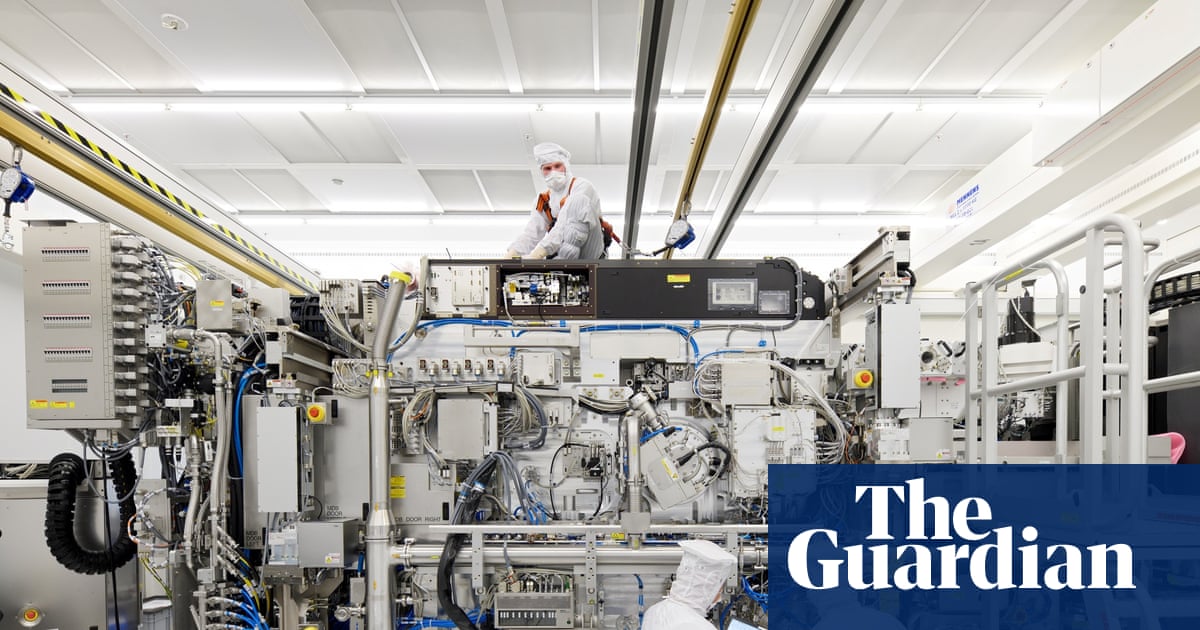
This logic also scales up to nations, which is what makes this an industrial-policy issue. After decades of deferring to the market, the United States has rediscovered the idea that government can steer capital toward strategically valuable capacity – semiconductors, clean energy, critical minerals. But US industrial policy has so far been running with its shoestrings tied together. We tend to subsidize the profits corporate America enjoys while declining to charge for the profitable externalities Main Street America endures.
An economy that lets firms compete by externalizing harm will always be hamstrung – quietly subsidizing its most extractive companies at the expense of its most productive ones. The EU has acknowledged that pricing and properly assigning impact must be at the core of industrial strategy. The 2024 passing of the Corporate Sustainability Reporting Directive is putting the EU in a position to lap the field through durable productive capacity – a healthy workforce, resilient supply chains, and efficient resource management.
In sum, impact accountability is the difference between an economy that compounds its strengths and one that borrows against them.
What growing up requires
Like raising any adolescent, encouraging the American economy to grow up will not happen on its own – it will require patience, discipline and some clear incentives.
Accounting reform. Numbers change behavior only when they carry consequences – ie standardized methodologies, independent verification, and real penalties for misrepresentation, built into the same financial infrastructure that governs capital today. We made financial fraud expensive after the 1930s. Impact misrepresentation should follow the same path.
Thesis reform. You do not need a sovereign fund’s balance sheet to adopt its logic. Everyone who lives in the economy already holds beta exposure in terms of the shared stock of health, trust, infrastructure, and climate that make a functioning economy possible. A pension fund, a family office, a community foundation, an operating company, and an individual saver are each better served by behaving as if they own the whole economy, because in the ways that compound over time, they do. The universal owner’s discipline is available to anyone willing to practice it.
Mature incentives. The company that profits by pushing its costs onto others, and then repurchases shares is using the most efficient means available to enrich its shareholders with the ill-gotten assets of workers, communities, and the public. The timing and tax advantages of share repurchases is a privilege that should be reserved for companies with positive net impact. Capital returns are a reward for value created, and the firm that imposes net costs on society should close that gap before buying back shares.
The next big birthday
At 250, the economy that Adam Smith described doesn’t need to be replaced, but it does need to grow up. It needs to finally count the full cost of what it produces and stop mistaking unpaid bills for profit.
For a person or a market, maturity begins the same way: by taking responsibility for your actions and accepting the consequences of your choices. This is the surest path to better judgment, which is the hallmark of maturity.
Adolescence is that age when we are old enough to know better but young enough to do it anyway. Let’s see if we can push American Capitalism to know better and do better by our next milestone birthday.
Napoleon Wallace is the cofounder of Partners in Equity, Next World Assets and Activest. He is a proud product of rural Eastern NC, winner of the 2022 Joan Bavaria Award, a Contributing Editor at ImpactAlpha, and subject of ImpactAlpha’s award-winning documentary short “Equity & Ownership.”