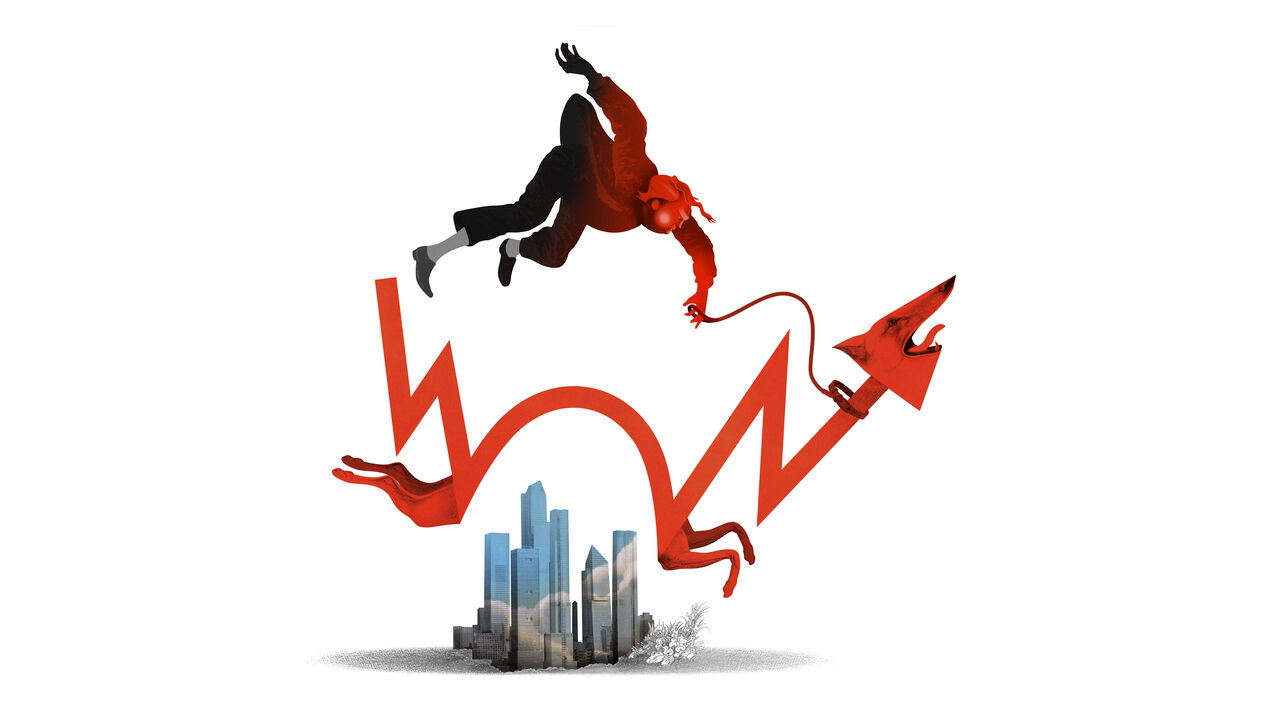
It’s a moment for both hope and hesitation: recent victories in Michigan, Colorado, Minnesota, and New York suggest gathering political momentum on the left. Yet a defeat in Wisconsin and a judge’s temporary stay of New York City’s pied-à-terre tax offer reminders that every movement for social progress breeds its own countervailing reaction. But how does that reaction itself build power? The scaffolding for backlash, as the New York City decision suggests, is often found in the legal system.
Steep barriers to court access as well as the formidably technical nature of many legal disputes mean that insiders commonly have the ability not merely to secure the outcomes they want, but also to shape the rules under which notionally fair competition unfolds. This “playing for rules,” rather than for specific results, means that law often offers the inside track for incumbents’ ground-rigging projects.
Across seemingly unrelated legal developments, lawyers and judges have been pursuing such projects of late. Each change is leading to a concentration of power in electoral politics and economic power, in ways that insulate insiders. And the effects accumulate: they feed each other, leading to a vicious circle of increasingly obdurate concentrations of power.
Until Francesca Hong’s defeat this week, it was possible to write off the central organs of the Democratic Party as wholly incapacitated by debt and internal dysfunction under the leadership of Ken Martin’s hapless Democratic National Committee (DNC). Yet the institutional party has lately gained two tools that give it greater leverage, if not to win general elections then at least to police ideological purity at the primary stage.
The first is a newfound power for partisan gerrymandering. This is a gift from our antidemocratic Supreme Court, which has anointed partisan advantage as a justification in mapmaking while dismantling the Voting Rights Act’s protections for minorities. To see the consequences, consider what unfolded earlier this year in California. Responding to Republican gerrymanders in Texas and Florida, Governor Gavin Newsom pushed through a referendum and then a new congressional map. Its lines were drawn by a “veteran Democratic redistricting expert in Sacramento” in “consultation” with the state’s Democratic congressional delegation. In court, the state’s lawyers successfully defended the map on the ground that it protected Democratic insiders’ seats.
However justified California’s response to the Texas and Florida gerrymanders may be as a matter of national politics, it illustrates an unexpected effect of the new partisan gerrymandering: It is inevitably incumbent insiders who draw the maps. Just as they can be expected to draw out their opponents across the aisle, so too they can be expected to hobble challengers from the margin. Gerrymandering does not just make general elections less competitive; it also allows the locking out of challengers at the primary stage.
The institutional party has gained further thanks to a July Supreme Court decision striking down the federal campaign finance prohibition on coordinated spending by parties for candidates. The anti-coordination measure prevented parties from becoming conduits for dark money. The decision likely helps the Republicans in the short term, but in the medium term bolsters both parties’ insiders at the expense of outsiders. To be sure, there is no assurance that Martin’s DNC will be able to capitalize on this new leverage this cycle: power matters only if you are competent enough to use it. But Democratic incompetency seems unlikely to endure forever.
At the same time that the law is making the political landscape less competitive, a series of corporate law developments are concentrating power in the commanding heights of the data economy. According to the official story of American capitalism, a corporation with publicly traded equity is strongly responsive to its shareholders. Its original technicians took pride in how their design choices ensured that minority shareholders couldn’t be exploited by managers or controlling shareholders. At least in its own telling, corporate law diffuses concentrated power, and so enables collective choice via market discipline.
Yet over the last two decades, venture capitalists in Silicon Valley have perfected corporate governance tools to circumvent even the residue of shareholder primacy. Their main instrument has been something called the dual-class share. Elon Musk’s SpaceX, the world’s largest ever initial public offering (IPO), provides an example.
SpaceX’s public offering sold one kind of equity, called Class A shares, to the public. Each share gets one vote. But there are also super-voting Class B shares, with ten votes per share. As a result of his concentrated ownership of Class B shares, Musk currently owns about 40 percent of the company’s equity capital while controlling about 80 percent of the voting rights. And the company has bound itself to selling Class B shares only to Musk and Musk-related entities in the future. In effect, the dual-class structure locks in Musk’s control — and eviscerates ordinary shareholders’ power — forever.
Dual-class shares aren’t the only legal trick for shoring up corporate insiders’ power. OpenAI and Anthropic alike use complex governance devices — a nonprofit holding company and a long-term trust — to much the same effect. As they follow SpaceX into the public equity markets, expect the founders of those firms to preserve near-total control of those companies. The result will be that the most important and wealthiest public companies in the United States will be under the almost total control of a small coterie of hyperwealthy founders, one that can comfortably fit in a conference room. The concentration of power over the economy will be immense.
Dual-class shares aren’t new. As David Kampmann has brilliantly documented, the rise of dual-class shares started in 2004 with Google’s IPO; Facebook then followed a similar route in 2012. Their success led to a wider acceptance of a “founder control” model of corporate governance. What’s different today is the fact that dual-class firms now occupy not a niche, but the most profitable and consequential sector of the US economy.
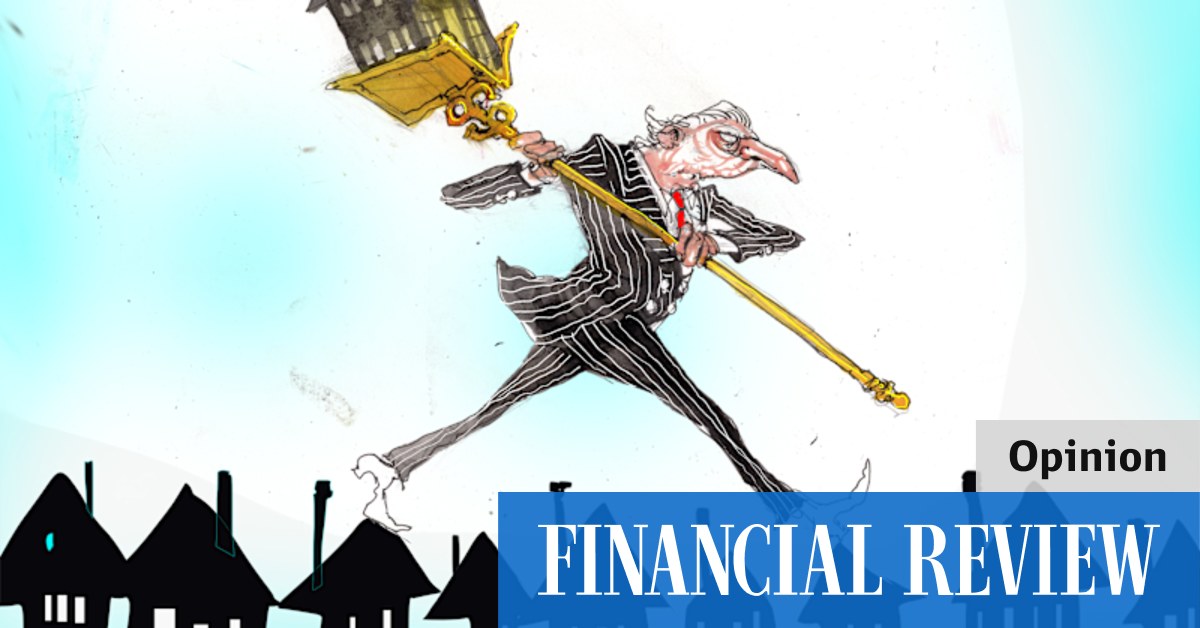
These two trends are closely connected. Contrary to some public narratives, campaign financing over the past two decades has not been the province of mainly large corporations. Rather, it has been a handful of “megadonors” — including, of course, Musk — who have increasingly dominated political spending. The durable concentrations of equity created by dual-class shares can serve as collateral for such donors, enabling them to borrow profligately for their pet political projects. This is a strategy known as “buy, borrow, die,” commonly used by the hyperrich to create liquid wealth even as they hold on to equity, then passing it on to heirs under a relatively sparing tax regime.
Founders thus become political rainmakers, while their heirs retain both a firm hold on the corporate heights and the ability to translate that corporate control into political hegemony. The potential for dynastic control, over and above the forces that ensure familial transmission of wealth and privilege in the ordinary course of things, is obvious.
The legal architectures of concentrated economic and political power are joined at the hip. This functional link between esoteric details of campaign finance law and corporate governance is easy to miss. Even legal scholars tend to look at these fields in isolation, missing their connections. Yet to grasp the scale and vector of contemporary reaction, it’s necessary to understand how the law matters to the Left’s political projects. Only an exacting accounting of the subtle filaments by which it joists economic and political power illuminates the stakes for what they truly are.